Fernandes Clara, Suares Divya, Yergeri Mayur C
Shobhaben Pratapbhai Patel School of Pharmacy and Technology Management, SVKM's Narsee Monjee Institute of Management Studies - NMIMS, Mumbai, India.
Front Pharmacol. 2018 Oct 31;9:1230. doi: 10.3389/fphar.2018.01230. eCollection 2018.
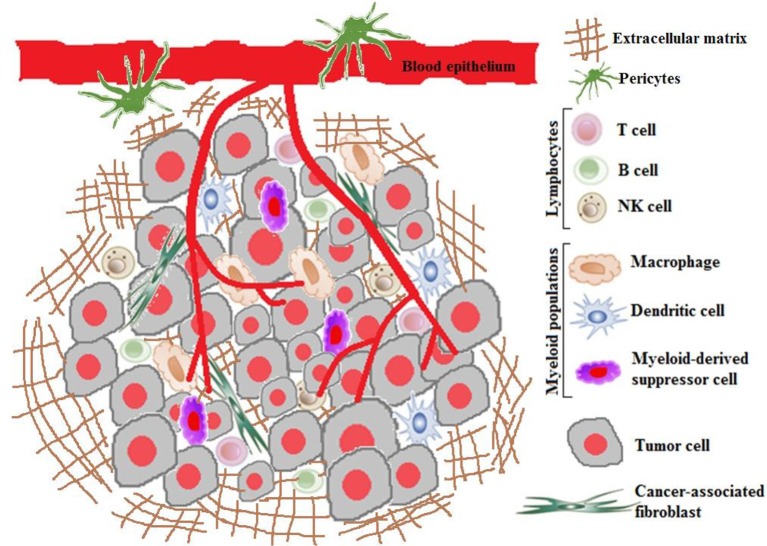
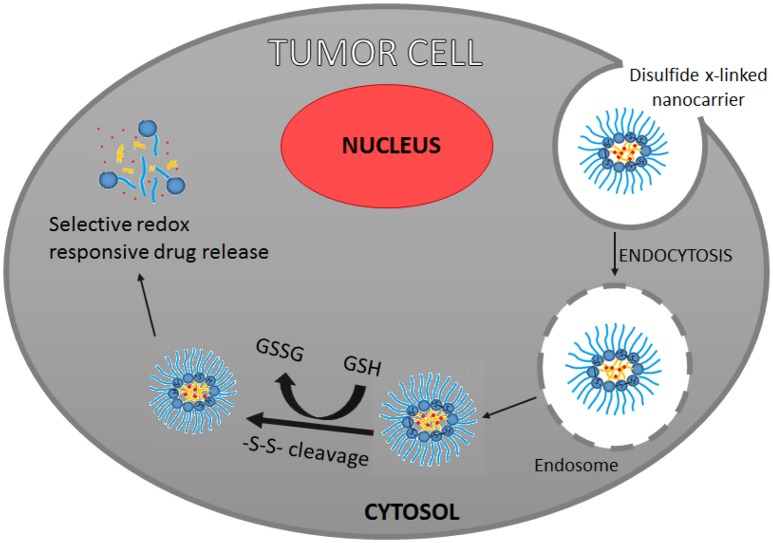
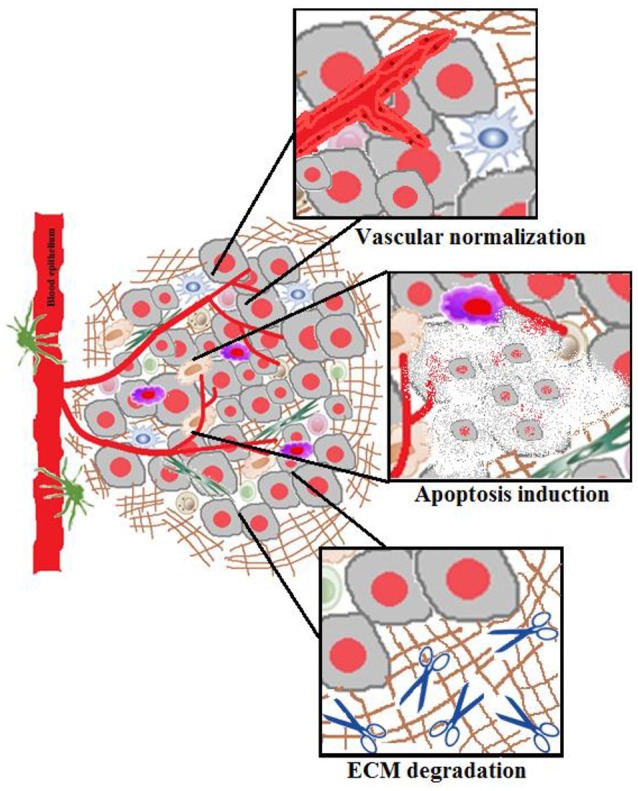
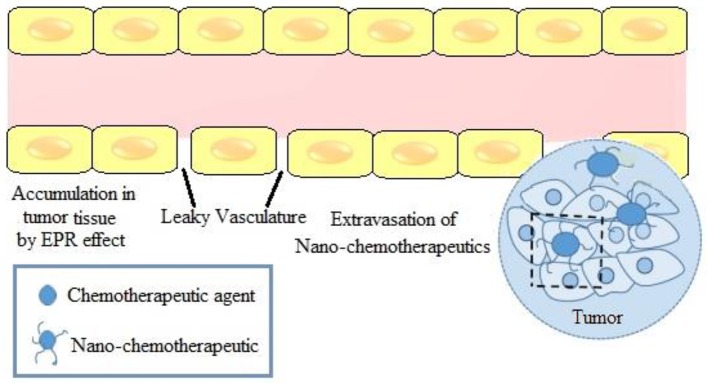
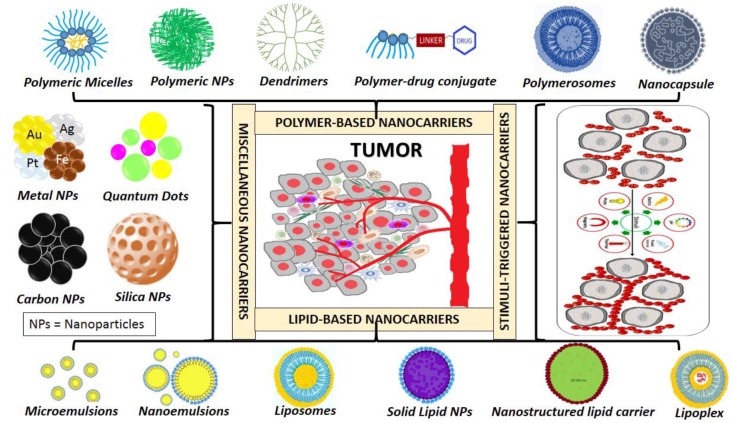
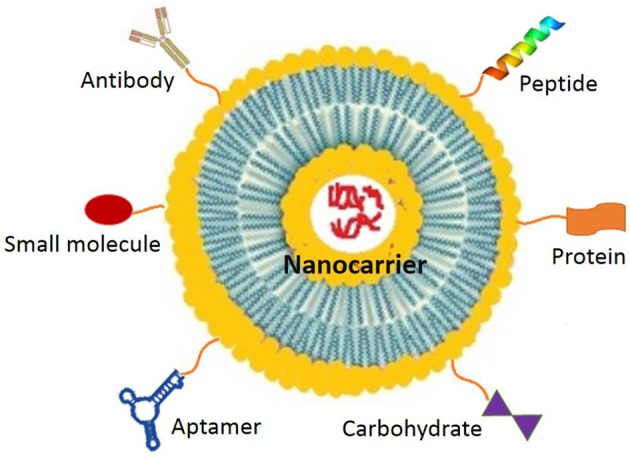
Recent developments in nanotechnology have brought new approaches to cancer diagnosis and therapy. While enhanced permeability and retention effect promotes nano-chemotherapeutics extravasation, the abnormal tumor vasculature, high interstitial pressure and dense stroma structure limit homogeneous intratumoral distribution of nano-chemotherapeutics and compromise their imaging and therapeutic effect. Moreover, heterogeneous distribution of nano-chemotherapeutics in non-tumor-stroma cells damages the non-tumor cells, and interferes with tumor-stroma crosstalk. This can lead not only to inhibition of tumor progression, but can also paradoxically induce acquired resistance and facilitate tumor cell proliferation and metastasis. Overall, the tumor microenvironment plays a vital role in regulating nano-chemotherapeutics distribution and their biological effects. In this review, the barriers in tumor microenvironment, its consequential effects on nano-chemotherapeutics, considerations to improve nano-chemotherapeutics delivery and combinatory strategies to overcome acquired resistance induced by tumor microenvironment have been summarized. The various strategies viz., nanotechnology based approach as well as ligand-mediated, redox-responsive, and enzyme-mediated based combinatorial nanoapproaches have been discussed in this review.
纳米技术的最新进展为癌症诊断和治疗带来了新方法。虽然增强的渗透和滞留效应促进了纳米化疗药物的外渗,但异常的肿瘤血管、高间质压力和致密的基质结构限制了纳米化疗药物在肿瘤内的均匀分布,并损害了它们的成像和治疗效果。此外,纳米化疗药物在非肿瘤基质细胞中的异质分布会损害非肿瘤细胞,并干扰肿瘤-基质的相互作用。这不仅会导致肿瘤进展的抑制,还可能反常地诱导获得性耐药,并促进肿瘤细胞的增殖和转移。总体而言,肿瘤微环境在调节纳米化疗药物的分布及其生物学效应方面起着至关重要的作用。在这篇综述中,总结了肿瘤微环境中的障碍、其对纳米化疗药物的相应影响、改善纳米化疗药物递送的考虑因素以及克服肿瘤微环境诱导的获得性耐药的联合策略。本综述讨论了各种策略,即基于纳米技术的方法以及基于配体介导、氧化还原响应和酶介导的组合纳米方法。