Sieberg Christine B, Karunakaran Keerthana Deepti, Kussman Barry, Borsook David
Biobehavioral Pediatric Pain Lab, Department of Psychiatry & Behavioral Sciences, Boston Children's Hospital, Boston, Massachusetts, United States.
Pain and Affective Neuroscience Center, Department of Anesthesiology, Critical Care, and Pain Medicine, Boston Children's Hospital, Boston, Massachusetts, United States.
Can J Pain. 2022 Apr 28;6(2):73-84. doi: 10.1080/24740527.2021.2019576. eCollection 2022.
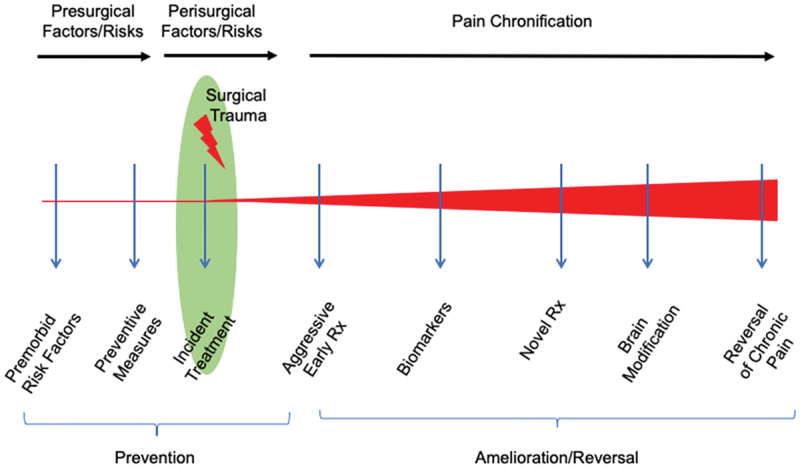
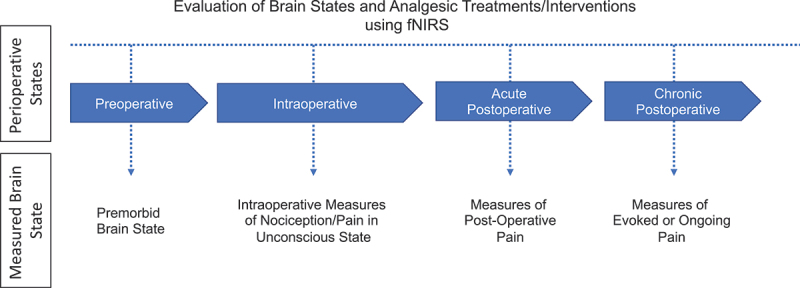
Chronic postsurgical pain (CPSP) results from a cascade of events in the peripheral and central nervous systems following surgery. Several clinical predictors, including the prior pain state, premorbid psychological state (e.g., anxiety, catastrophizing), intraoperative surgical load (establishment of peripheral and central sensitization), and acute postoperative pain management, may contribute to the patient's risk of developing CPSP. However, research on the neurobiological and biobehavioral mechanisms contributing to pediatric CPSP and effective preemptive/treatment strategies are still lacking. Here we evaluate the perisurgical process by identifying key problems and propose potential solutions for the pre-, intra-, and postoperative pain states to both prevent and manage the transition of acute to chronic pain. We propose an eight-step process involving preemptive and preventative analgesia, behavioral interventions, and the use of biomarkers (brain-based, inflammatory, or genetic) to facilitate timely evaluation and treatment of premorbid psychological factors, ongoing surgical pain, and postoperative pain to provide an overall improved outcome. By achieving this, we can begin to establish personalized precision medicine for children and adolescents presenting to surgery and subsequent treatment selection.
慢性术后疼痛(CPSP)是手术之后外周和中枢神经系统一系列事件的结果。包括既往疼痛状态、病前心理状态(如焦虑、灾难化思维)、术中手术负荷(外周和中枢敏化的形成)以及术后急性疼痛管理在内的多种临床预测因素,可能会增加患者发生CPSP的风险。然而,关于导致小儿CPSP的神经生物学和生物行为机制以及有效的预防性/治疗策略的研究仍然不足。在此,我们通过识别关键问题来评估围手术期过程,并针对术前、术中和术后疼痛状态提出潜在解决方案,以预防和管理急性疼痛向慢性疼痛的转变。我们提出了一个八步骤流程,包括预防性和预防性镇痛、行为干预以及使用生物标志物(基于脑的、炎症性的或基因的),以促进对病前心理因素、持续的手术疼痛和术后疼痛进行及时评估和治疗,从而全面改善治疗效果。通过做到这一点,我们可以开始为接受手术的儿童和青少年建立个性化精准医疗以及后续的治疗选择。