Lu Fang, Zhang Ning, Yu Donghua, Zhao Hongwei, Pang Mu, Fan Yue, Liu Shumin
Institute of Traditional Chinese Medicine, Heilongjiang University of Chinese Medicine Harbin 150040 PR China
Fist Affiliated Hospital of Guizhou University of Traditional Chinese Medicine Guiyang 550001 PR China.
RSC Adv. 2019 Oct 17;9(57):33354-33367. doi: 10.1039/c9ra03912k. eCollection 2019 Oct 15.
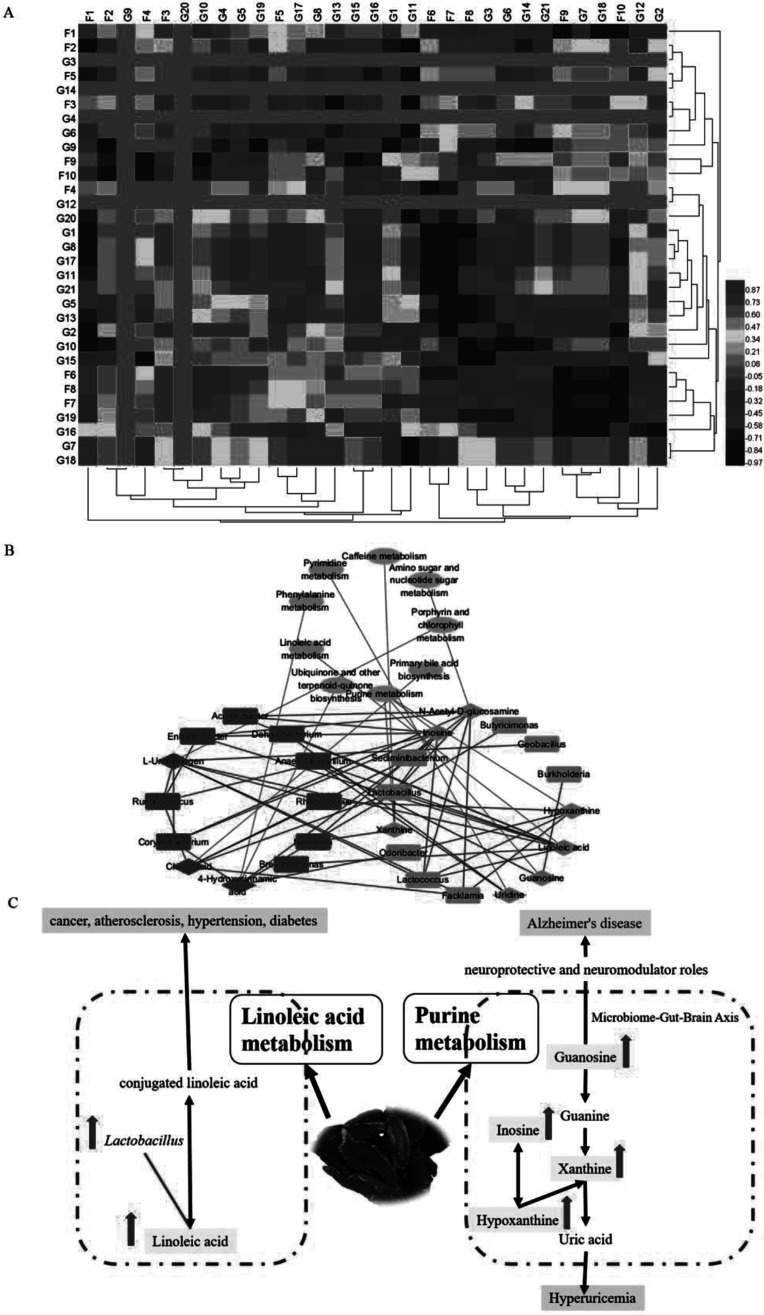
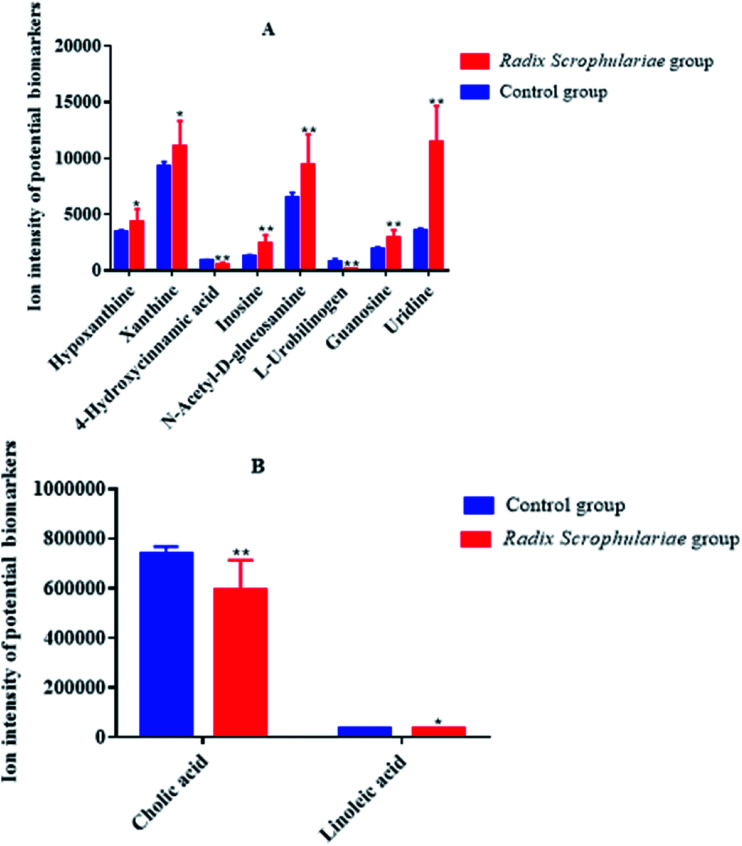
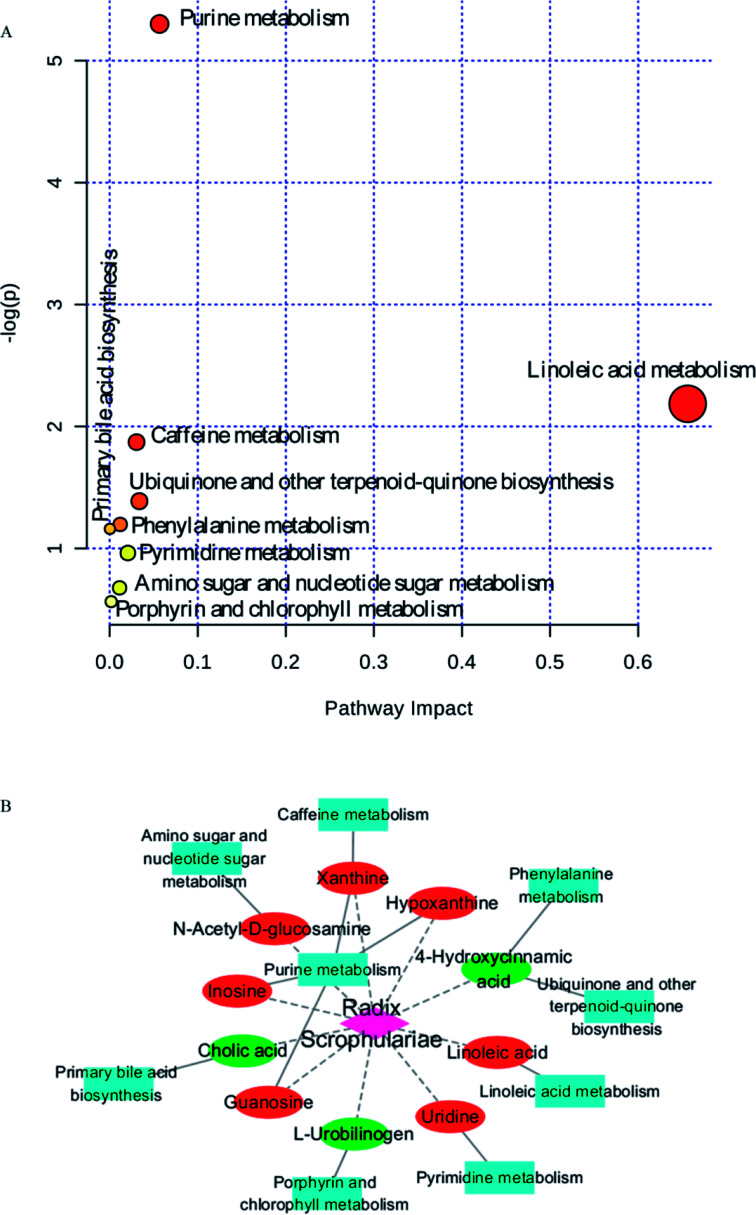
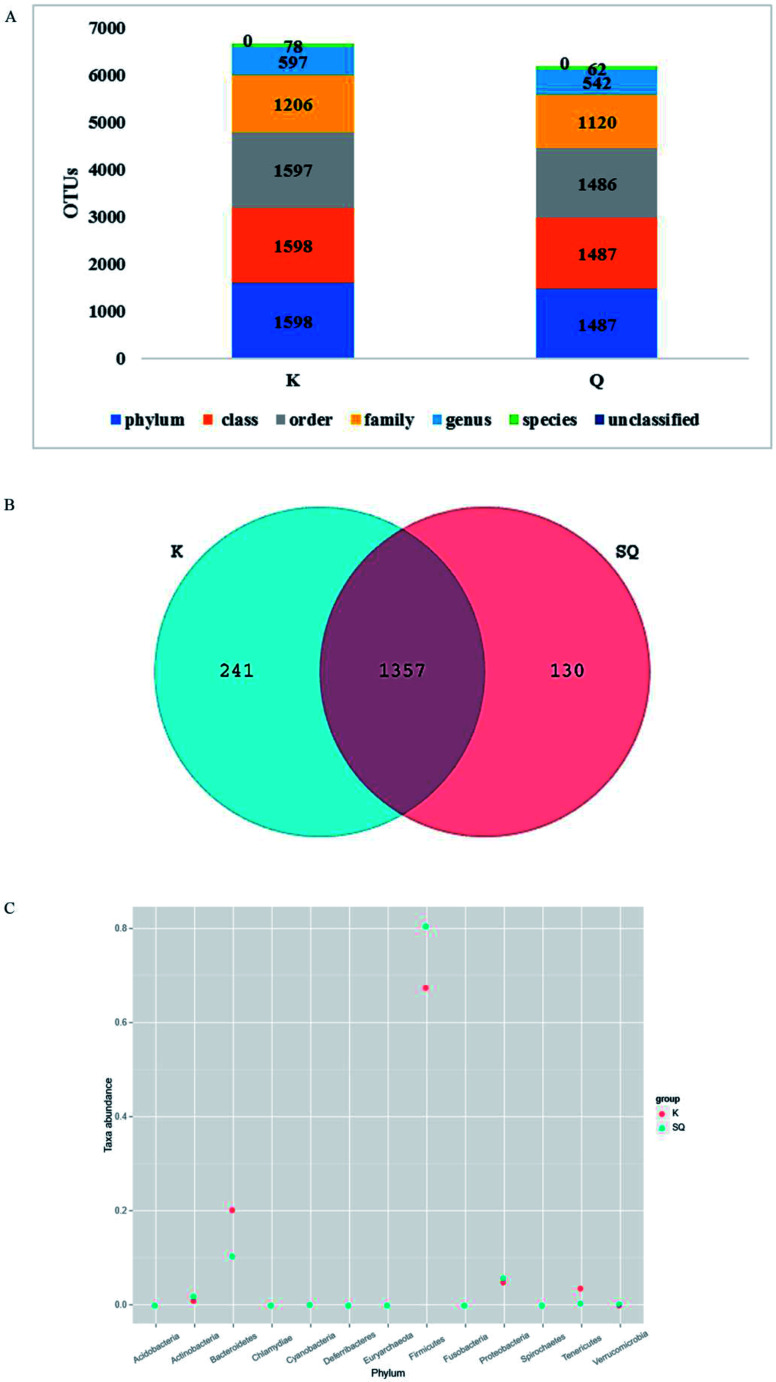
To assess the impact of the caecal microbiota on faecal metabolic phenotypes in the presence of Radix Scrophulariae (Chinese name: ), an integrated approach involving 16S rRNA gene sequencing combined with ultrahigh-performance liquid chromatography/time-of-flight mass spectrometry (UHPLC/TOF-MS)-based faecal metabolomics was applied to Radix Scrophulariae-treated rats. Interestingly, Radix Scrophulariae led to significant gut microbiota changes at the phylum and genus levels in treated rats compared to control rats. Additionally, distinct changes in faecal metabolites, including linoleic acid (LA), guanosine, inosine, hypoxanthine, xanthine, 4-hydroxycinnamic acid, cholic acid, -acetyl-d-glucosamine, l-urobilinogen and uridine, were observed in Radix Scrophulariae-treated rats. Of these, seven metabolites were up-regulated, and the remaining three metabolites were down-regulated. Moreover, there were substantial associations between altered levels of gut microbiota genera and discrepant levels of faecal metabolites, particularly for compounds involved in LA and purine metabolism. These results demonstrated that the gut microbiota is altered in association with faecal metabolism following treatment with Radix Scrophulariae. Our findings suggest that further application of this 16S rRNA gene sequencing and UHPLC/TOF-MS-based metabolomics approach will facilitate the assessment of the pharmacological action of Radix Scrophulariae and thus expand the scope of this herb.
为了评估玄参存在时盲肠微生物群对粪便代谢表型的影响,将基于16S rRNA基因测序结合超高效液相色谱/飞行时间质谱(UHPLC/TOF-MS)的粪便代谢组学的综合方法应用于玄参处理的大鼠。有趣的是,与对照大鼠相比,玄参导致处理大鼠在门和属水平上肠道微生物群发生显著变化。此外,在玄参处理的大鼠中观察到粪便代谢物的明显变化,包括亚油酸(LA)、鸟苷、肌苷、次黄嘌呤、黄嘌呤、4-羟基肉桂酸、胆酸、N-乙酰-D-葡萄糖胺、L-尿胆原和尿苷。其中,7种代谢物上调,其余3种代谢物下调。此外,肠道微生物群属水平的改变与粪便代谢物水平的差异之间存在显著关联,特别是对于参与LA和嘌呤代谢的化合物。这些结果表明,用玄参处理后,肠道微生物群与粪便代谢相关联发生改变。我们的研究结果表明,进一步应用这种基于16S rRNA基因测序和UHPLC/TOF-MS的代谢组学方法将有助于评估玄参的药理作用,从而扩大这种草药的应用范围。