Ouyang Xiaodan, Cha Yaping, Li Wen, Zhu Chaoyi, Zhu Muzi, Li Shuang, Zhuo Min, Huang Shaobin, Li Jianjun
School of Biology and Biological Engineering, South China University of Technology, Higher Education Mega Center Guangzhou 510006 China
State Key Laboratory of Applied Microbiology Southern China, Guangdong Provincial Key Laboratory of Microbial Culture Collection and Application, Guangdong Institute of Microbiology Guangzhou 510070 China.
RSC Adv. 2019 Sep 24;9(52):30171-30181. doi: 10.1039/c9ra05558d. eCollection 2019 Sep 23.
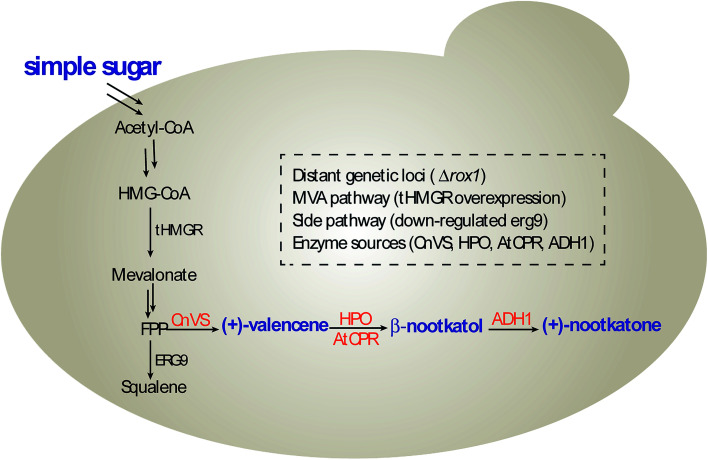
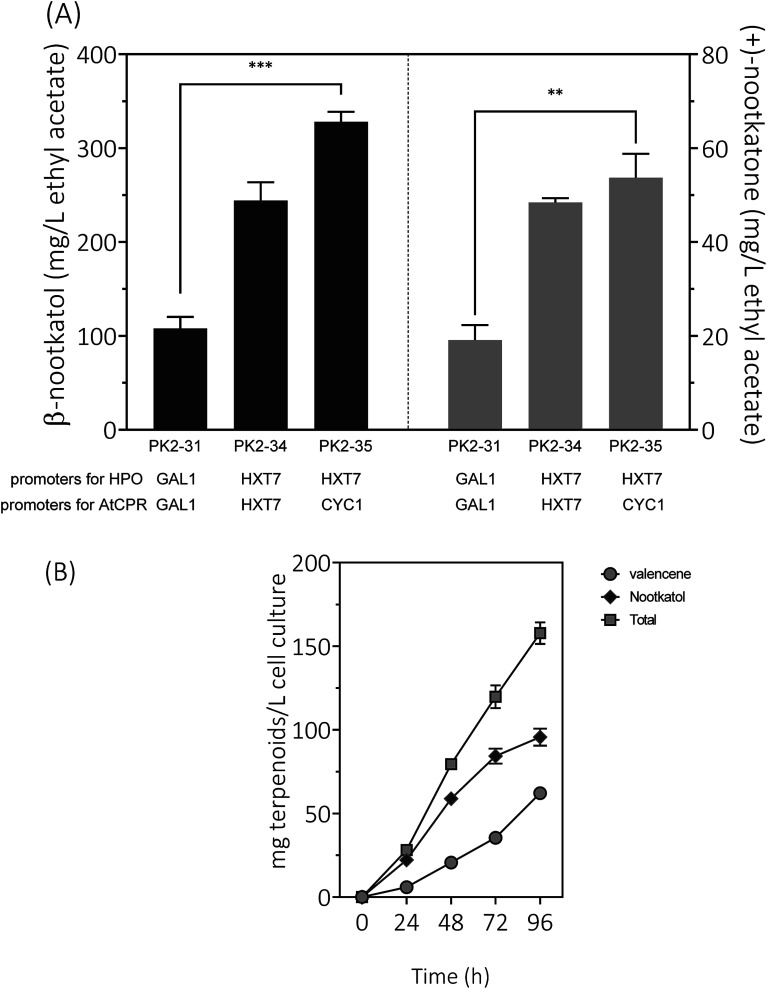
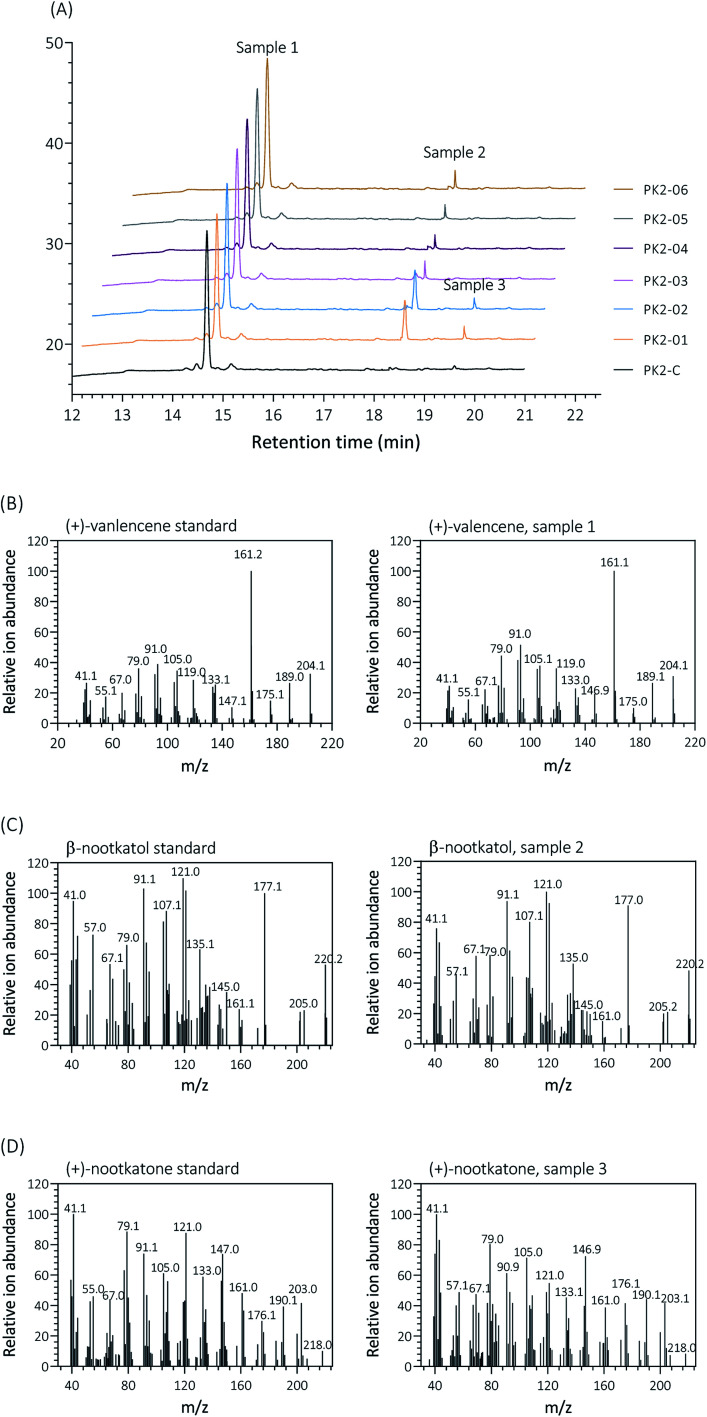
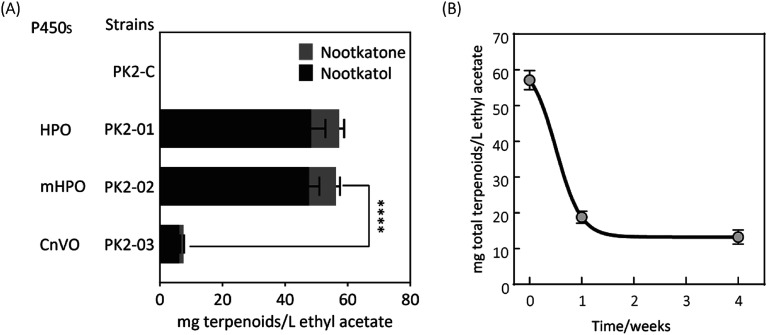
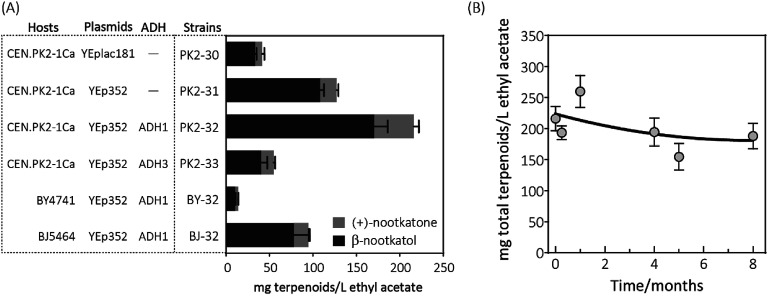
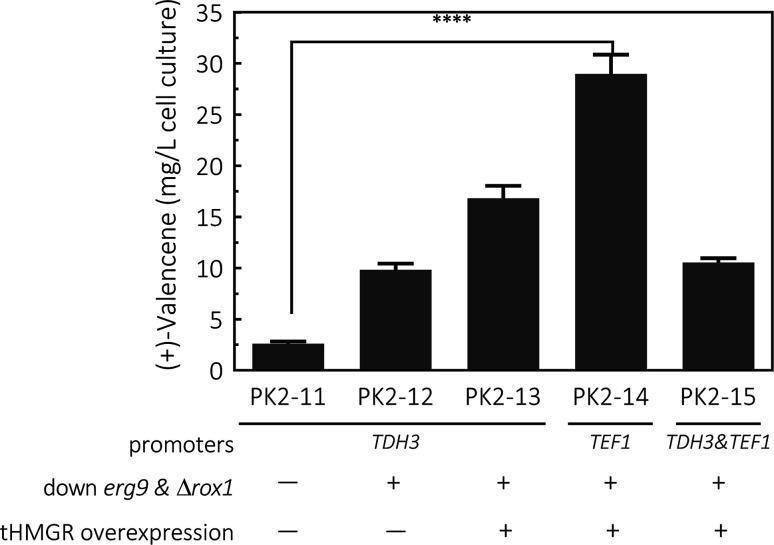
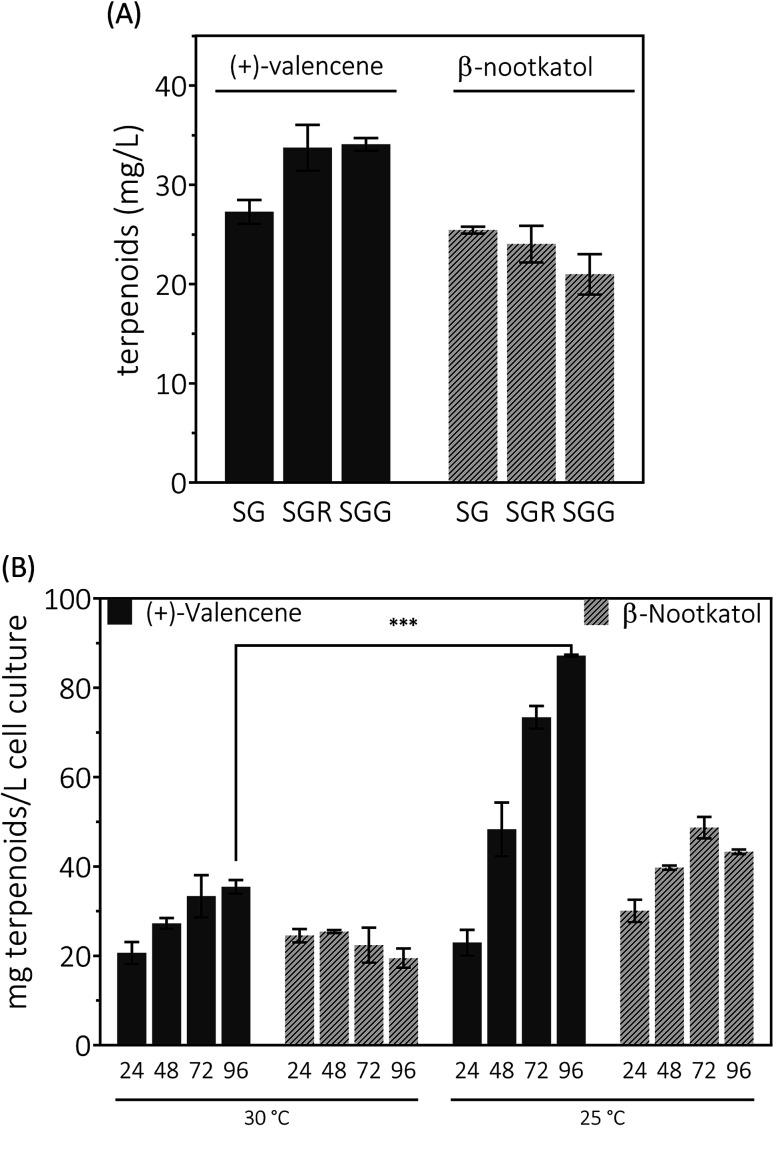
(+)-Valencene and (+)-nootkatone are high value-added sesquiterpenoids found in grapefruit. The synthesis of (+)-nootkatone by chemical oxidation from (+)-valencene cannot meet the increasing demand in natural aromatics markets. Development of a viable bioprocess using microorganisms is attractive. According to the yields of β-nootkatol and (+)-nootkatone by strains harboring different expression cassettes in the resting cell assay, premnaspirodiene oxygenase from (HPO), cytochrome P450 reductase from (AtCPR) and alcohol dehydrogenase (ADH1) from were finally selected and overexpressed in CEN·PK2-1Ca, yielding β-nootkatol and (+)-nootkatone with 170.5 and 45.6 mg L ethyl acetate, respectively. A combinational engineering strategy including promoter change, regulator ROX1 knockout, squalene pathway inhibition, and tHMGR overexpression was performed to achieve (+)-valencene production. Subsequent culture investigations found that galactose as the induced carbon source and a lower temperature (25 °C) were beneficial to target accumulation. Also, replacing the inducible promoters () of HPO and AtCPR with constitutive promoters ( and ) dramatically increased the β-nootkatol accumulation from 108.2 to 327.8 mg L ethyl acetate in resting-cell experiments using (+)-valencene as a substrate. Finally, the total terpenoid titer of the engineered strain of PK2-25 using glucose as a carbon source was improved to 157.8 mg L cell culture, which was 56 times the initial value. We present a new candidate for production of (+)-valencene and its related sesquiterpenoids with attraction for industry.
(+)-瓦伦烯和(+)-诺卡酮是葡萄柚中发现的高附加值倍半萜类化合物。通过化学氧化从(+)-瓦伦烯合成(+)-诺卡酮无法满足天然香料市场日益增长的需求。利用微生物开发可行的生物工艺具有吸引力。根据在静息细胞试验中携带不同表达盒的菌株产生β-诺卡醇和(+)-诺卡酮的产量,最终选择了来自的前鼻螺二烯加氧酶(HPO)、来自的细胞色素P450还原酶(AtCPR)和来自的乙醇脱氢酶(ADH1),并在CEN·PK2-1Ca中过表达,分别产生了170.5和45.6 mg/L乙酸乙酯的β-诺卡醇和(+)-诺卡酮。实施了包括启动子改变、调节因子ROX1敲除、角鲨烯途径抑制和tHMGR过表达在内的组合工程策略,以实现(+)-瓦伦烯的生产。随后的培养研究发现,半乳糖作为诱导碳源和较低温度(25℃)有利于目标产物的积累。此外,在以(+)-瓦伦烯为底物的静息细胞实验中,用组成型启动子(和)取代HPO和AtCPR的诱导型启动子(),显著提高了β-诺卡醇的积累量,从108.2 mg/L乙酸乙酯增加到327.8 mg/L乙酸乙酯。最后,以葡萄糖为碳源的PK2-25工程菌株的总萜类化合物滴度提高到157.8 mg/L细胞培养物,是初始值的56倍。我们提出了一种生产(+)-瓦伦烯及其相关倍半萜类化合物的新候选物,具有工业吸引力。