Oka Chio, Saleh Razwa, Bessho Yasumasa, Reza Hasan Mahmud
Functional Genomics and Medicine, Division of Biological Science, Nara Institute of Science and Technology, 8916-5 Takayama, Ikoma, Nara 6300192, Japan.
Department of Pharmaceutical Sciences, North South University, Bashundhara, Dhaka 1229, Bangladesh.
Saudi J Biol Sci. 2022 Apr;29(4):1919-1927. doi: 10.1016/j.sjbs.2021.11.056. Epub 2021 Dec 1.
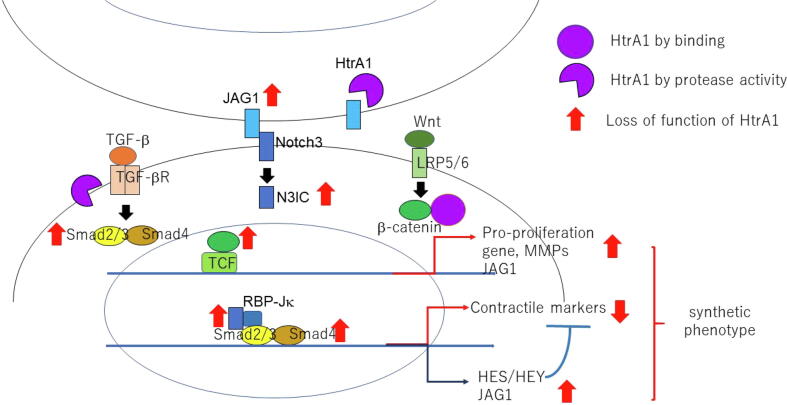
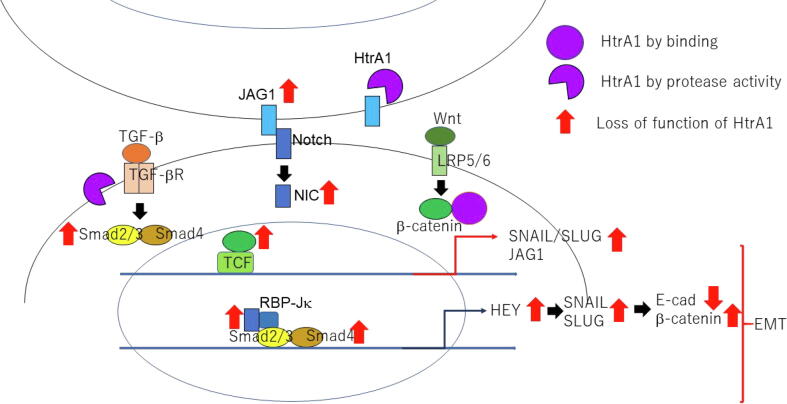
The high temperature requirement factor A1 (HTRA1) is a serine protease which modulates an array of signalling pathways driving basal biological processes. HTRA1 plays a significant role in cell proliferation, migration and fate determination, in addition to controlling protein aggregates through refolding, translocation or degradation. The mutation of HTRA1 has been implicated in a plethora of disorders and this has also led to its growing interest as drug therapy target. This review details the involvement of HTRA1 in certain signalling pathways, namely the transforming growth factor beta (TGF-β), canonical Wingless/Integrated (WNT) and NOTCH signalling pathways during organogenesis and various disease pathogenesis such as preeclampsia, age-related macular degeneration (AMD), small vessel disease and cancer. We have also explored possible avenues of exploiting the serine proteases for therapeutic management of these disorders.
高温需求因子A1(HTRA1)是一种丝氨酸蛋白酶,可调节一系列驱动基础生物学过程的信号通路。除了通过重折叠、易位或降解来控制蛋白质聚集体外,HTRA1在细胞增殖、迁移和命运决定中也发挥着重要作用。HTRA1的突变与多种疾病有关,这也使其作为药物治疗靶点的关注度不断提高。本综述详细阐述了HTRA1在某些信号通路中的作用,即在器官发生过程中以及子痫前期、年龄相关性黄斑变性(AMD)、小血管疾病和癌症等各种疾病发病机制中的转化生长因子β(TGF-β)、经典无翅/整合(WNT)和NOTCH信号通路。我们还探索了利用丝氨酸蛋白酶对这些疾病进行治疗管理的可能途径。