Biocenter Oulu and Faculty of Biochemistry and Molecular Medicine, Oulu Center for Cell-Matrix Research, University of Oulu, Oulu, Finland.
Finnish Institute for Health and Welfare, Oulu, Finland.
Physiol Rep. 2022 May;10(9):e15302. doi: 10.14814/phy2.15302.
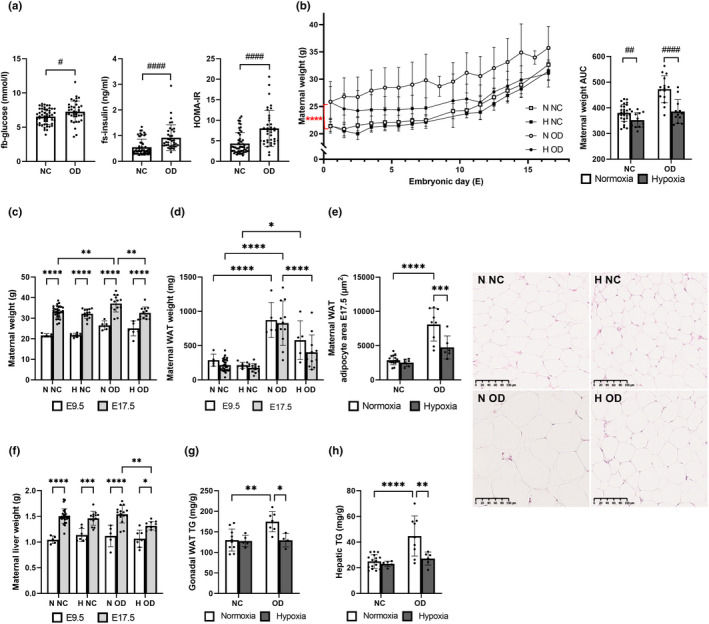
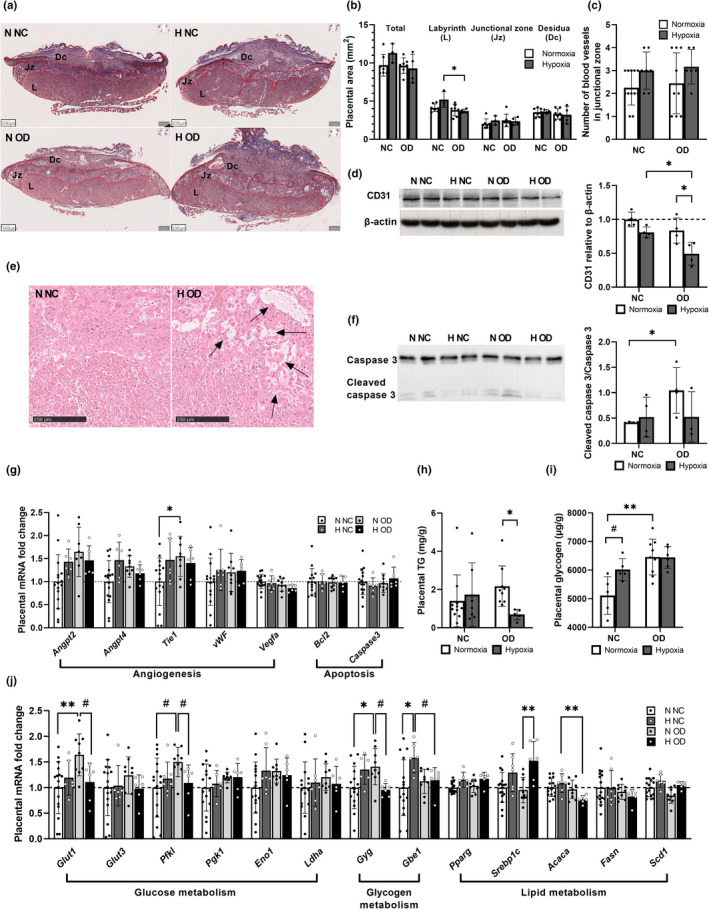
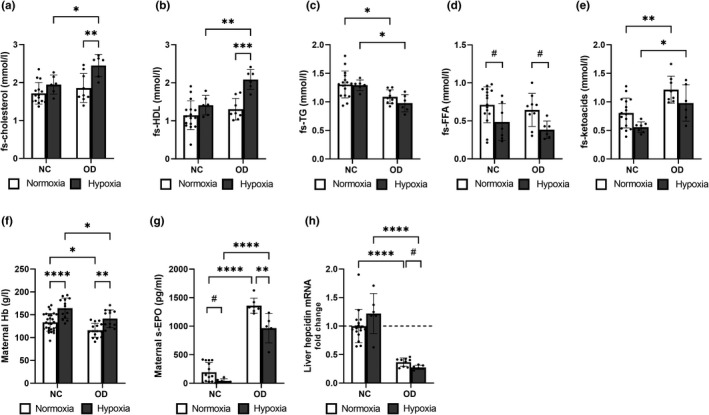
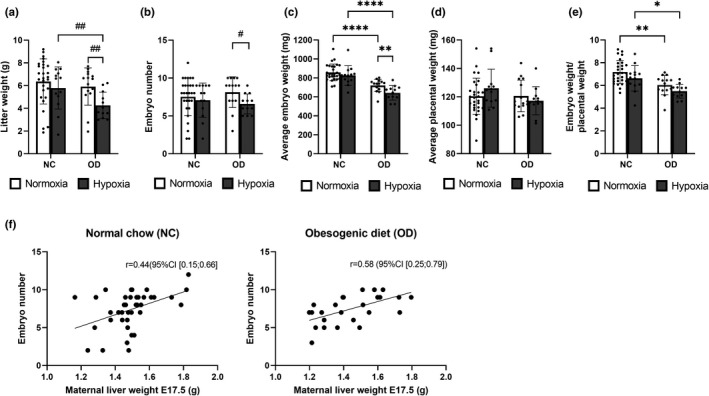
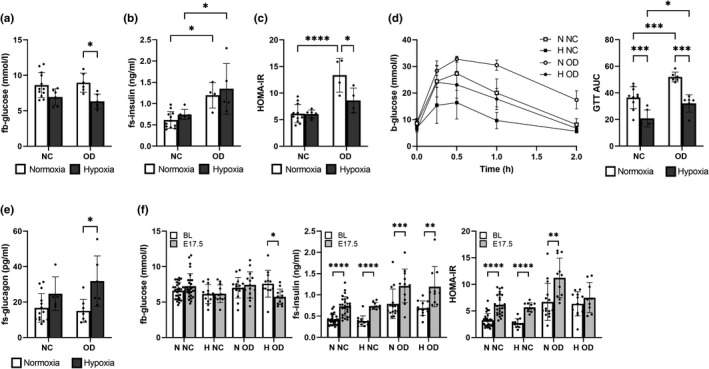
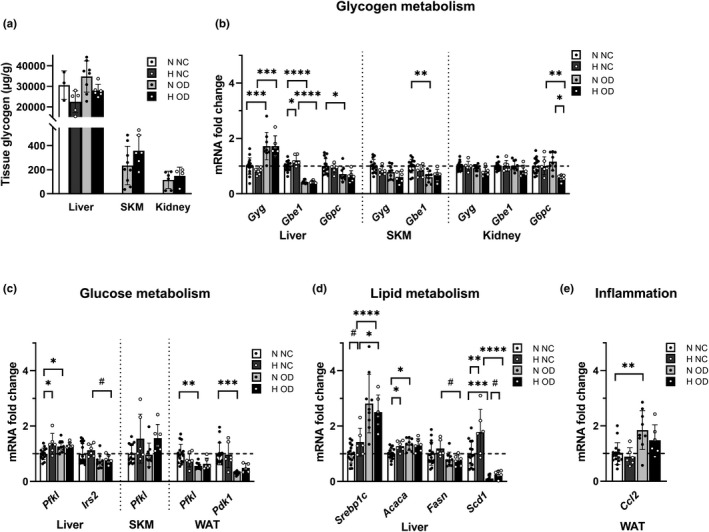
Maternal overweight/obesity contributes significantly to the development of gestational diabetes, which causes risks to both mother and fetus and is increasing sharply in prevalence worldwide. Since hypoxia reprograms energy metabolism and can alleviate weight gain, adiposity, insulin resistance (IR), and dyslipidemia, we set out to study the potential of sustained reduced ambient oxygen tension (15% O ) during pregnancy for alleviating the detrimental effects of diet-induced IR in C57Bl/6N mice, taking normal chow-fed and normoxia (21% O ) groups as controls. Our data show that hypoxic intervention reduced maternal weight gain, adiposity, and adipose tissue inflammation, and ameliorated maternal glucose metabolism and IR during gestation in diet-induced IR relative to normoxia. Where diet-induced IR reduced maternal hemoglobin and increased serum erythropoietin levels, hypoxic intervention compensated for these changes. Diet-induced IR reduced fetal growth in normoxia, and even more in hypoxia. Hypoxic intervention reduced liver weight gain during pregnancy in the dams with diet-induced IR, maternal liver weight being positively associated with embryo number. In case of diet-induced IR, the hypoxic intervention compromised placental energy metabolism and vascularization and increased end-pregnancy placental necrosis. Altogether, these data show that although hypoxic intervention mediates several beneficial effects on maternal metabolism, the combination of it with diet-induced IR is even more detrimental to the placental and fetal outcome than diet-induced IR alone.
母体超重/肥胖显著导致妊娠糖尿病的发展,这对母婴都有风险,且在全球范围内患病率急剧上升。由于缺氧可重新编程能量代谢,并能减轻体重增加、肥胖、胰岛素抵抗(IR)和血脂异常,我们着手研究在妊娠期间持续降低环境氧张力(15% O )对缓解 C57Bl/6N 小鼠饮食诱导的 IR 有害影响的潜力,以正常进食和常氧(21% O )组作为对照。我们的数据表明,与常氧相比,缺氧干预减少了母体体重增加、肥胖和脂肪组织炎症,并改善了饮食诱导的 IR 期间的母体葡萄糖代谢和 IR。饮食诱导的 IR 降低了母体血红蛋白并增加了血清促红细胞生成素水平,而缺氧干预则弥补了这些变化。饮食诱导的 IR 降低了常氧下的胎儿生长,而在缺氧下则更为明显。缺氧干预减少了饮食诱导的 IR 母鼠的妊娠期肝重增加,母体肝重与胚胎数量呈正相关。在饮食诱导的 IR 情况下,缺氧干预损害了胎盘的能量代谢和血管化,并增加了妊娠末期的胎盘坏死。总之,这些数据表明,尽管缺氧干预对母体代谢有多种有益影响,但与饮食诱导的 IR 相结合对胎盘和胎儿结局的影响甚至比饮食诱导的 IR 更不利。