Biocenter Oulu, Faculty of Biochemistry and Molecular Medicine, Oulu Center for Cell-Matrix Research, University of Oulu, Aapistie 7C, FIN-90014, Oulu, Finland.
Research Unit of Biomedicine, Biocenter Oulu, Medical Research Center and University Hospital, Oulu, Finland.
J Mol Med (Berl). 2020 May;98(5):719-731. doi: 10.1007/s00109-020-01903-0. Epub 2020 Apr 15.
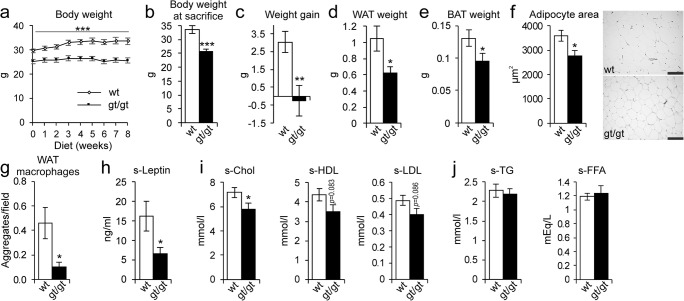
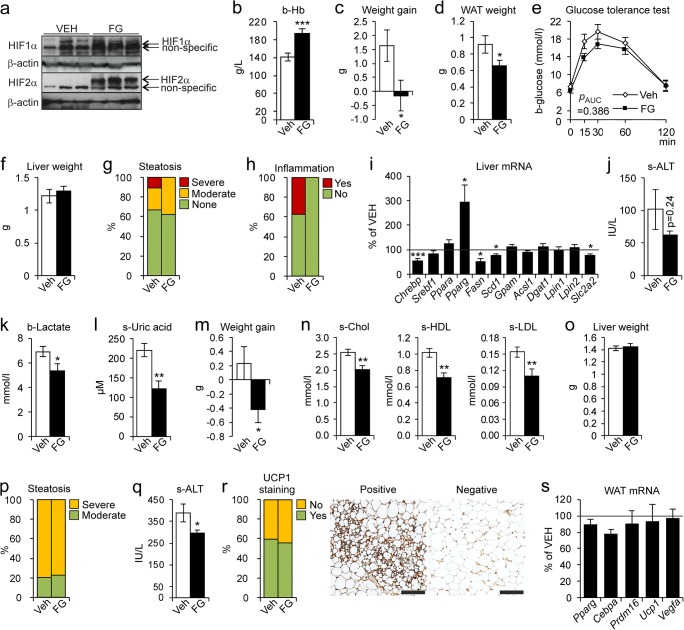
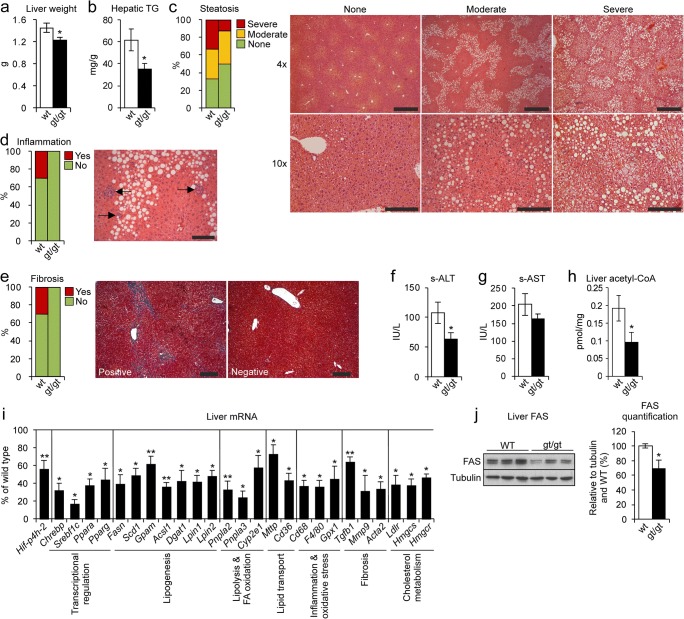
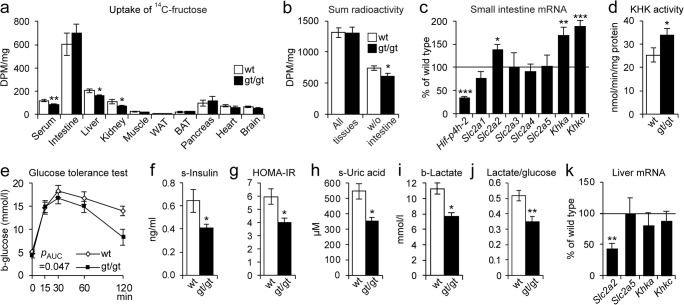
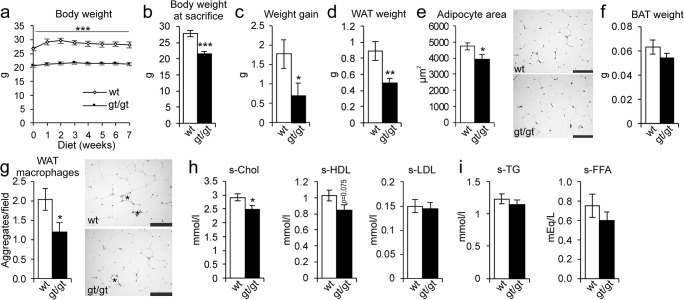
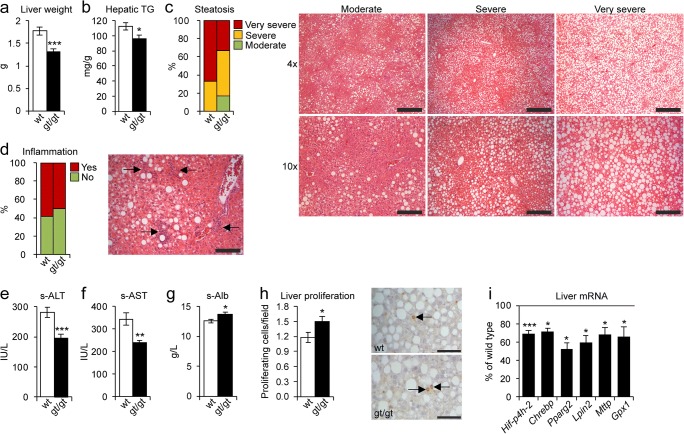
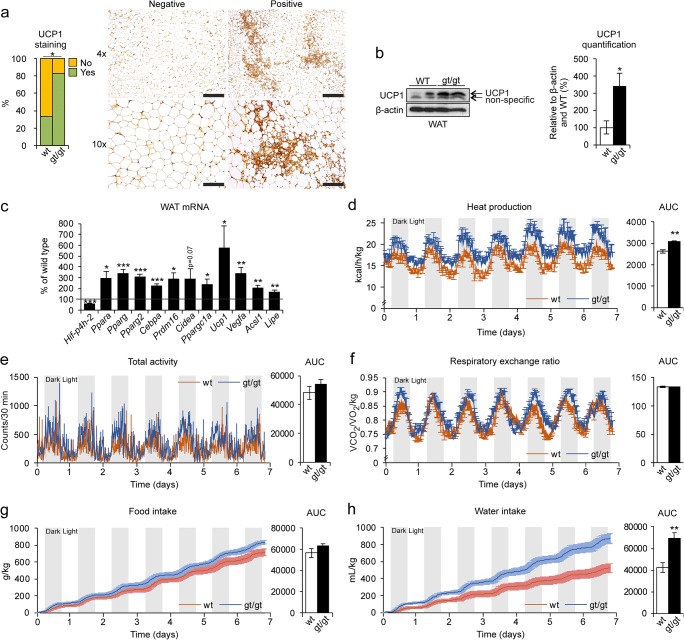
Non-alcoholic fatty liver disease (NAFLD) parallels the global obesity epidemic with unmet therapeutic needs. We investigated whether inhibition of hypoxia-inducible factor prolyl 4-hydroxylase-2 (HIF-P4H-2), a key cellular oxygen sensor whose inhibition stabilizes HIF, would protect from NAFLD by subjecting HIF-P4H-2-deficient (Hif-p4h-2) mice to a high-fat, high-fructose (HFHF) or high-fat, methionine-choline-deficient (HF-MCD) diet. On both diets, the Hif-p4h-2 mice gained less weight and had less white adipose tissue (WAT) and its inflammation, lower serum cholesterol levels, and lighter livers with less steatosis and lower serum ALT levels than the wild type (WT). The intake of fructose in majority of the Hif-p4h-2 tissues, including the liver, was 15-35% less than in the WT. We found upregulation of the key fructose transporter and metabolizing enzyme mRNAs, Slc2a2, Khka, and Khkc, and higher ketohexokinase activity in the Hif-p4h-2 small intestine relative to the WT, suggesting enhanced metabolism of fructose in the former. On the HF-MCD diet, the Hif-p4h-2 mice showed more browning of the WAT and increased thermogenesis. A pharmacological pan-HIF-P4H inhibitor protected WT mice on both diets against obesity, metabolic dysfunction, and liver damage. These data suggest that HIF-P4H-2 inhibition could be studied as a novel, comprehensive treatment strategy for NAFLD. KEY MESSAGES: • HIF-P4H-2 inhibition enhances intestinal fructose metabolism protecting the liver. • HIF-P4H-2 inhibition downregulates hepatic lipogenesis. • Induced browning of WAT and increased thermogenesis can also mediate protection. • HIF-P4H-2 inhibition offers a novel, comprehensive treatment strategy for NAFLD.
非酒精性脂肪性肝病 (NAFLD) 与未满足的治疗需求一起伴随着全球肥胖症的流行。我们研究了抑制缺氧诱导因子脯氨酰 4-羟化酶-2(HIF-P4H-2)是否可以通过使 HIF-P4H-2 缺陷(Hif-p4h-2)小鼠接受高脂肪、高果糖(HFHF)或高脂肪、蛋氨酸-胆碱缺乏(HF-MCD)饮食来预防 NAFLD。在这两种饮食中,Hif-p4h-2 小鼠体重增加较少,白色脂肪组织(WAT)及其炎症较少,血清胆固醇水平较低,肝脏较轻,脂肪变性较少,血清 ALT 水平较低。与野生型(WT)相比,Hif-p4h-2 组织中的果糖摄入量,包括肝脏,减少了 15-35%。我们发现关键果糖转运体和代谢酶 mRNAs(Slc2a2、Khka 和 Khkc)在 Hif-p4h-2 小肠中的表达上调,并且 ketohexokinase 活性更高,这表明前者中果糖的代谢增强。在 HF-MCD 饮食中,Hif-p4h-2 小鼠的 WAT 棕色化程度更高,产热增加。一种药理学泛 HIF-P4H 抑制剂可保护两种饮食中的 WT 小鼠免受肥胖、代谢功能障碍和肝损伤。这些数据表明,HIF-P4H-2 抑制可能被研究为 NAFLD 的一种新的综合治疗策略。 关键信息: • HIF-P4H-2 抑制增强了肠道果糖代谢,从而保护肝脏。 • HIF-P4H-2 抑制下调了肝内脂肪生成。 • 诱导 WAT 棕色化和增加产热也可以介导保护。 • HIF-P4H-2 抑制为 NAFLD 提供了一种新的综合治疗策略。