Melville Laboratory for Polymer Synthesis, Yusuf Hamied Department of Chemistry, University of Cambridge, Cambridge CB2 1EW, U.K.
J Am Chem Soc. 2022 May 18;144(19):8474-8479. doi: 10.1021/jacs.2c02287. Epub 2022 May 10.
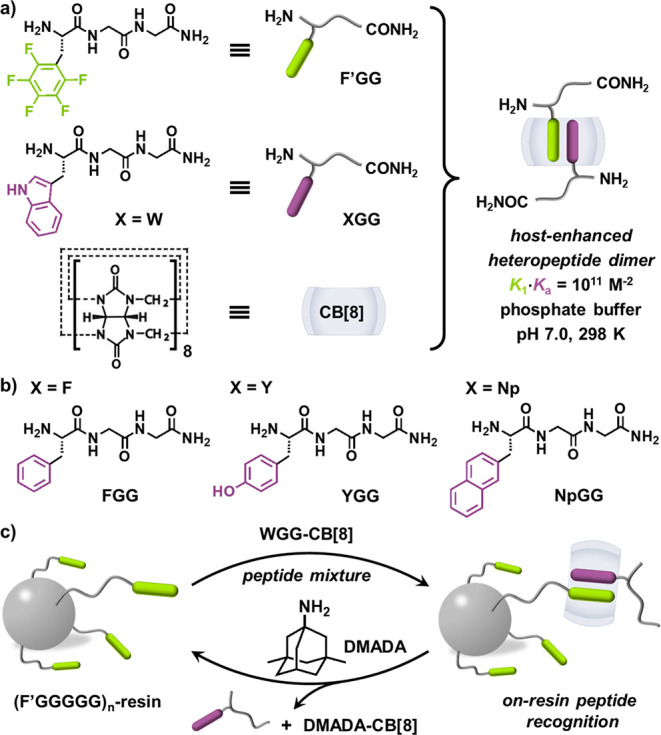
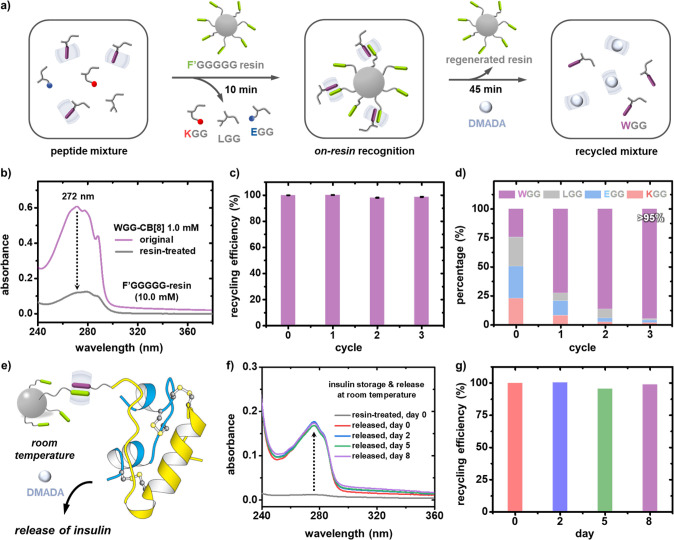
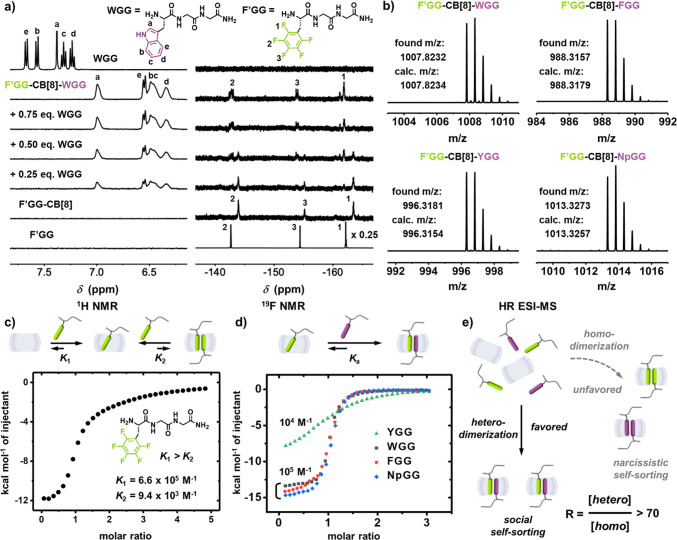
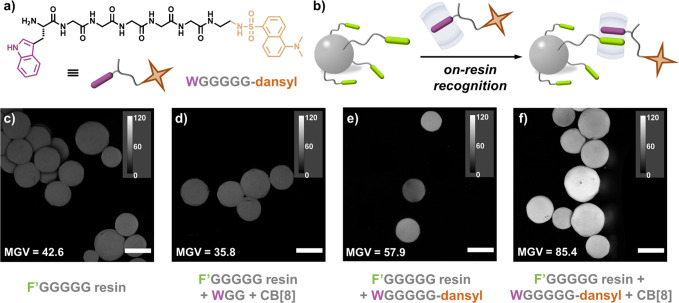
Peptide dimerization is ubiquitous in natural protein conjugates and artificial self-assemblies. A major challenge in artificial systems remains achieving quantitative peptide heterodimerization, critical for next-generation biomolecular purification and formulation of therapeutics. Here, we employ a synthetic host to simultaneously encapsulate an aromatic and a noncanonical l-perfluorophenylalanine-containing peptide through embedded polar-π interactions, constructing an unprecedented series of heteropeptide dimers. To demonstrate the utility, this heteropeptide dimerization strategy was applied toward on-resin recognition of -terminal aromatic residues in peptides as well as insulin, both exhibiting high recycling efficiency (>95%). This research unveils a generic approach to exploit quantitative heteropeptide dimers for the design of supramolecular (bio)systems.
肽二聚化在天然蛋白缀合物和人工自组装中普遍存在。在人工系统中,一个主要的挑战仍然是实现定量的肽杂二聚化,这对于下一代生物分子的纯化和治疗药物的配方至关重要。在这里,我们采用一种合成主体通过嵌入的极性-π 相互作用同时包封一个芳香族和一个非典型的 l-全氟苯丙氨酸肽,构建了一系列前所未有的杂肽二聚体。为了证明其实用性,该杂肽二聚化策略被应用于在树脂上识别肽和胰岛素中的 -端芳香族残基,两者均表现出高的回收效率(>95%)。这项研究揭示了一种通用的方法,可利用定量的杂肽二聚体来设计超分子(生物)系统。