Division of Experimental Pathology, Institute of Pathology, University of Bern, Bern, Switzerland.
Graduate School of Cellular and Biomedical Sciences, University of Bern, Bern, Switzerland.
Cell Death Dis. 2022 May 11;13(5):448. doi: 10.1038/s41419-022-04891-w.
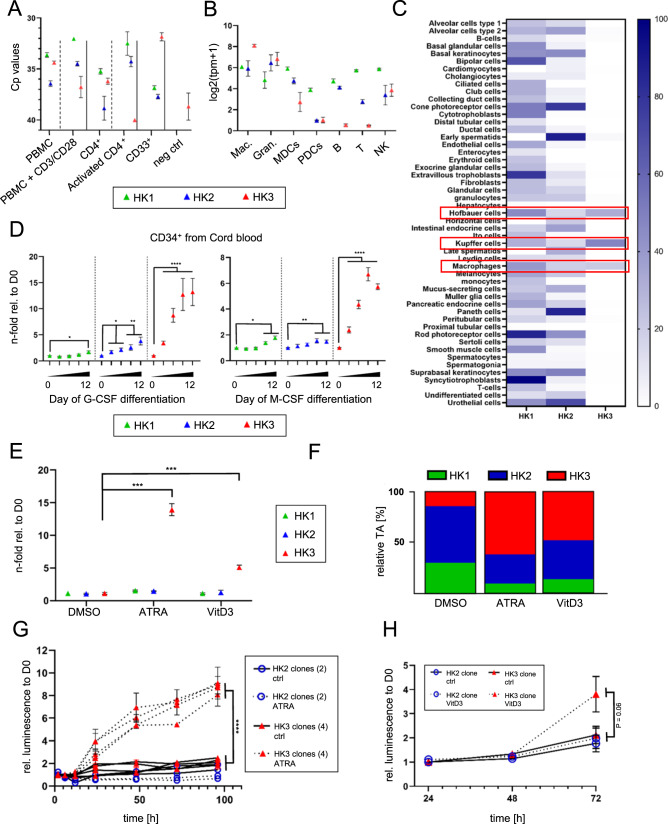
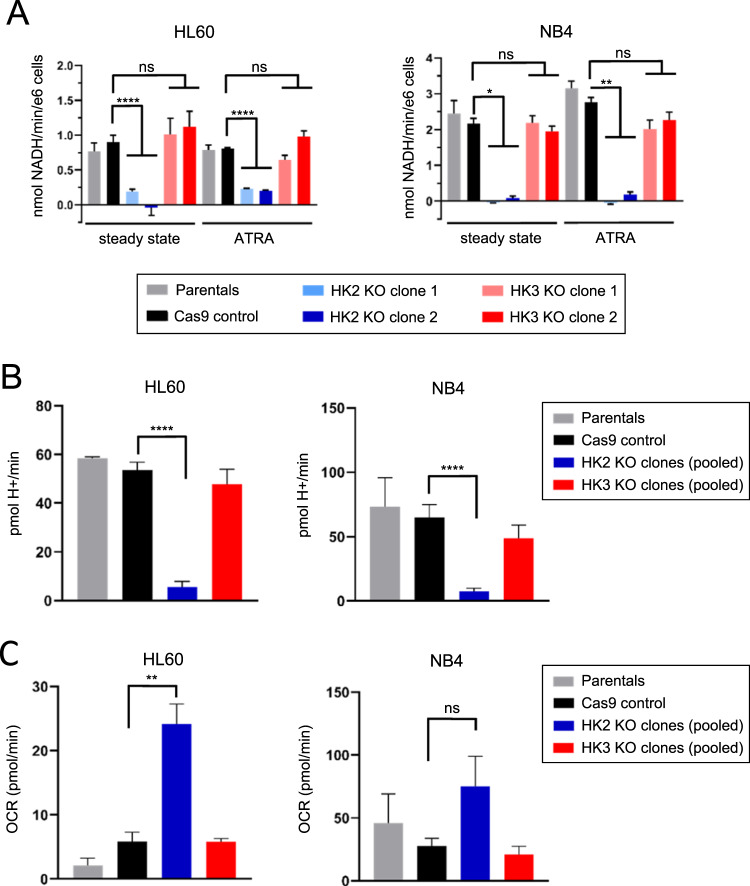
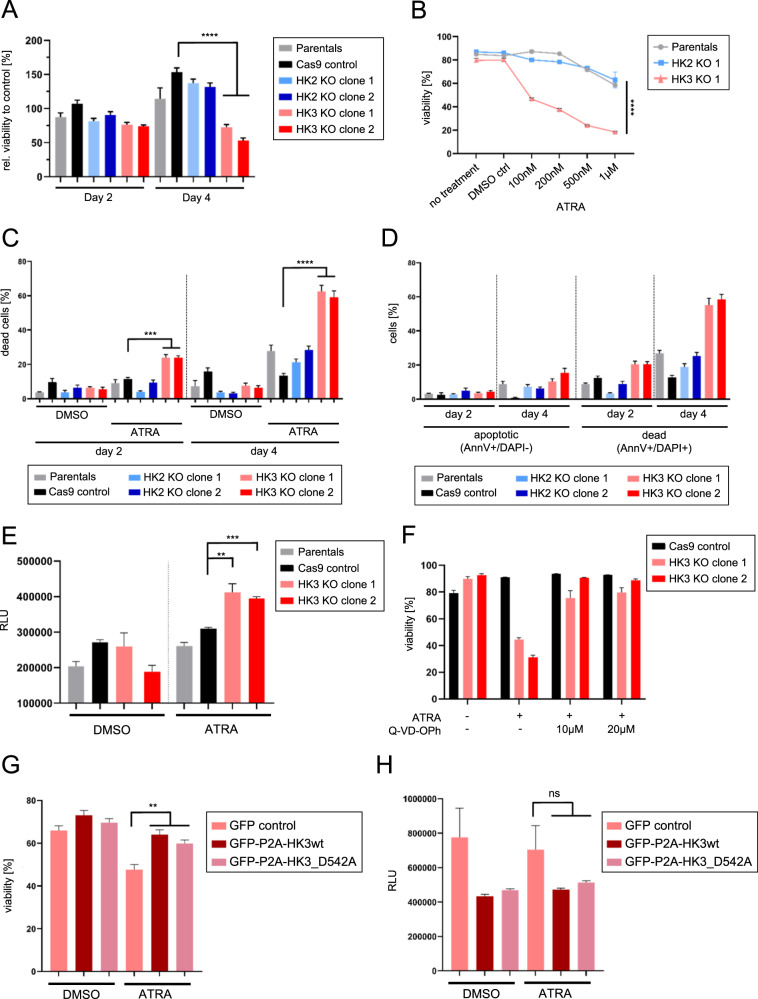
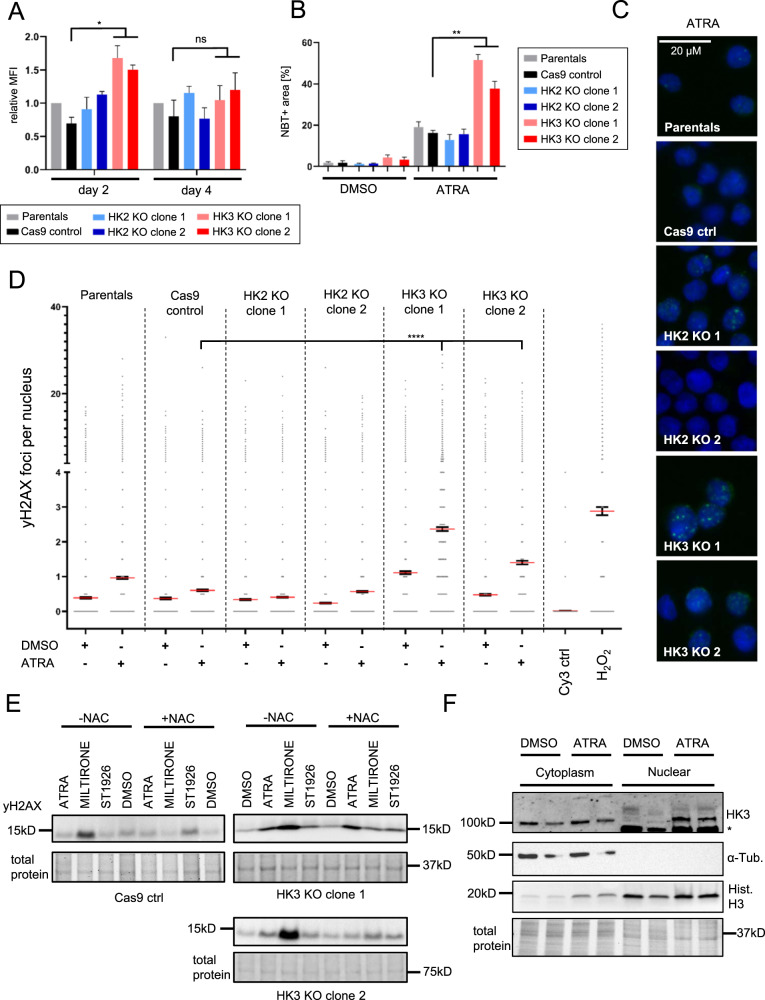
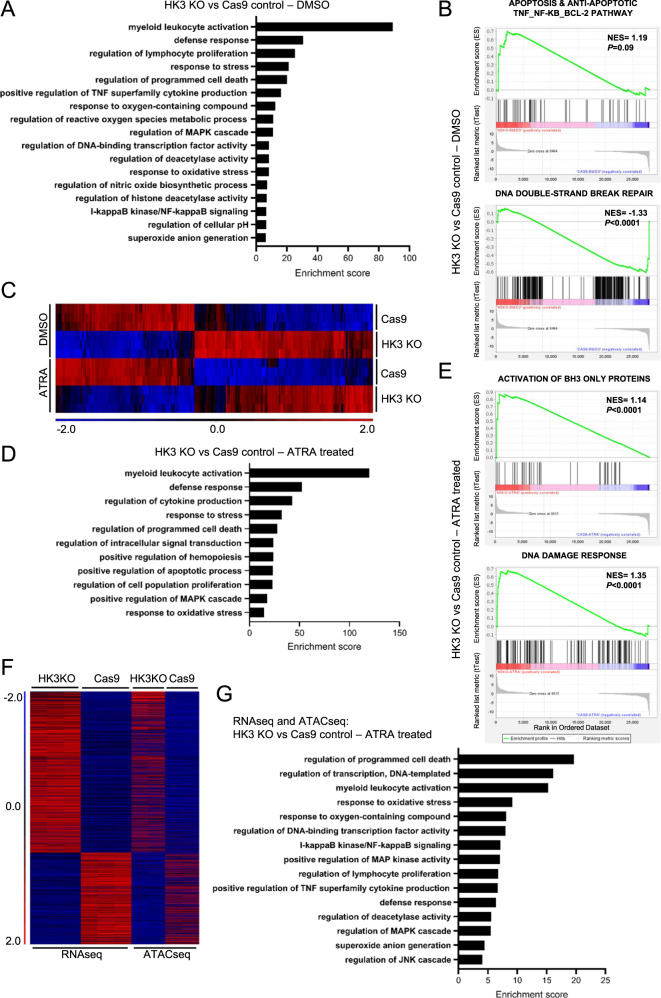
The family of hexokinases (HKs) catalyzes the first step of glycolysis, the ATP-dependent phosphorylation of glucose to glucose-6-phosphate. While HK1 and HK2 are ubiquitously expressed, the less well-studied HK3 is primarily expressed in hematopoietic cells and tissues and is highly upregulated during terminal differentiation of some acute myeloid leukemia (AML) cell line models. Here we show that expression of HK3 is predominantly originating from myeloid cells and that the upregulation of this glycolytic enzyme is not restricted to differentiation of leukemic cells but also occurs during ex vivo myeloid differentiation of healthy CD34 hematopoietic stem and progenitor cells. Within the hematopoietic system, we show that HK3 is predominantly expressed in cells of myeloid origin. CRISPR/Cas9 mediated gene disruption revealed that loss of HK3 has no effect on glycolytic activity in AML cell lines while knocking out HK2 significantly reduced basal glycolysis and glycolytic capacity. Instead, loss of HK3 but not HK2 led to increased sensitivity to ATRA-induced cell death in AML cell lines. We found that HK3 knockout (HK3-null) AML cells showed an accumulation of reactive oxygen species (ROS) as well as DNA damage during ATRA-induced differentiation. RNA sequencing analysis confirmed pathway enrichment for programmed cell death, oxidative stress, and DNA damage response in HK3-null AML cells. These signatures were confirmed in ATAC sequencing, showing that loss of HK3 leads to changes in chromatin configuration and increases the accessibility of genes involved in apoptosis and stress response. Through isoform-specific pulldowns, we furthermore identified a direct interaction between HK3 and the proapoptotic BCL-2 family member BIM, which has previously been shown to shorten myeloid life span. Our findings provide evidence that HK3 is dispensable for glycolytic activity in AML cells while promoting cell survival, possibly through direct interaction with the BH3-only protein BIM during ATRA-induced neutrophil differentiation.
己糖激酶家族(HKs)催化糖酵解的第一步,即 ATP 依赖性葡萄糖磷酸化生成葡萄糖-6-磷酸。虽然 HK1 和 HK2 广泛表达,但研究较少的 HK3 主要在造血细胞和组织中表达,并在一些急性髓系白血病(AML)细胞系模型的终末分化过程中高度上调。在这里,我们表明 HK3 的表达主要来源于髓系细胞,并且这种糖酵解酶的上调不仅限于白血病细胞的分化,也发生在健康 CD34 造血干祖细胞的体外髓系分化过程中。在造血系统中,我们表明 HK3 主要在髓系来源的细胞中表达。CRISPR/Cas9 介导的基因敲除显示,HK3 的缺失对 AML 细胞系的糖酵解活性没有影响,而敲除 HK2 则显著降低了基础糖酵解和糖酵解能力。相反,HK3 的缺失而非 HK2 的缺失导致 AML 细胞系对 ATRA 诱导的细胞死亡更加敏感。我们发现,HK3 敲除(HK3-null)AML 细胞在 ATRA 诱导的分化过程中表现出活性氧(ROS)和 DNA 损伤的积累。RNA 测序分析证实了 HK3-null AML 细胞中程序性细胞死亡、氧化应激和 DNA 损伤反应途径的富集。在 ATAC 测序中也证实了这些特征,表明 HK3 的缺失导致染色质构型的变化,并增加了参与细胞凋亡和应激反应的基因的可及性。通过同工型特异性下拉实验,我们还发现 HK3 与促凋亡 BCL-2 家族成员 BIM 之间存在直接相互作用,先前的研究表明 BIM 可以缩短髓系寿命。我们的研究结果表明,HK3 对于 AML 细胞的糖酵解活性不是必需的,而是通过在 ATRA 诱导的中性粒细胞分化过程中与 BH3 仅蛋白 BIM 直接相互作用来促进细胞存活。