Avdibegović Dženita, Regadío Mercedes, Binnemans Koen
KU Leuven, Department of Chemistry Celestijnenlaan 200F, P. O. Box 2404 B-3001 Leuven Belgium
RSC Adv. 2018 Mar 26;8(22):11886-11893. doi: 10.1039/c7ra13402a.
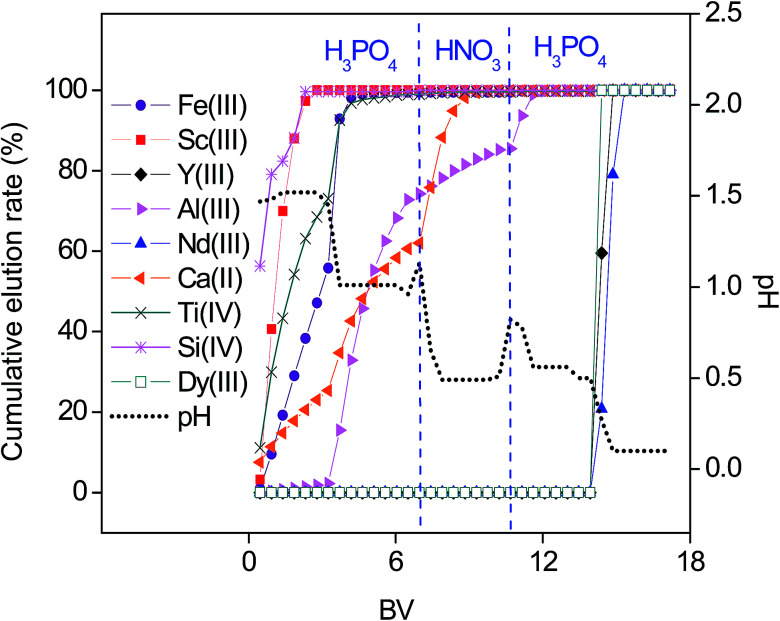
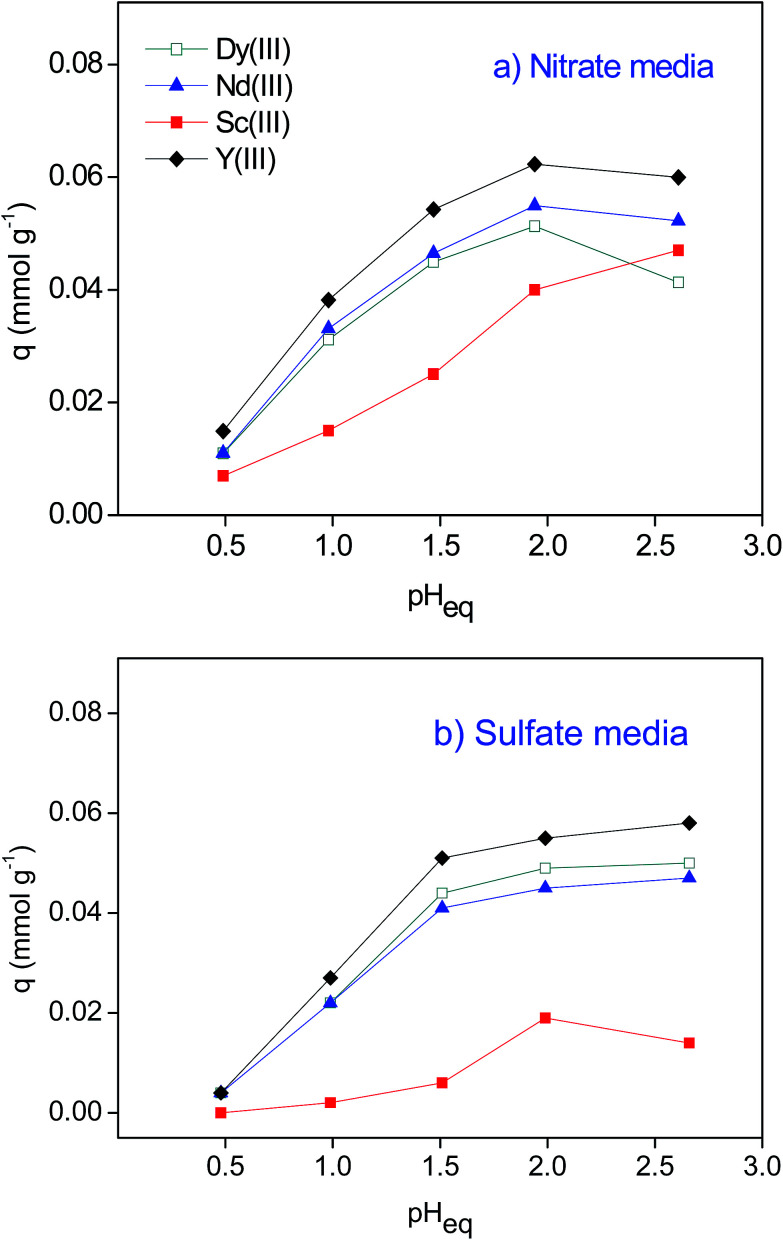
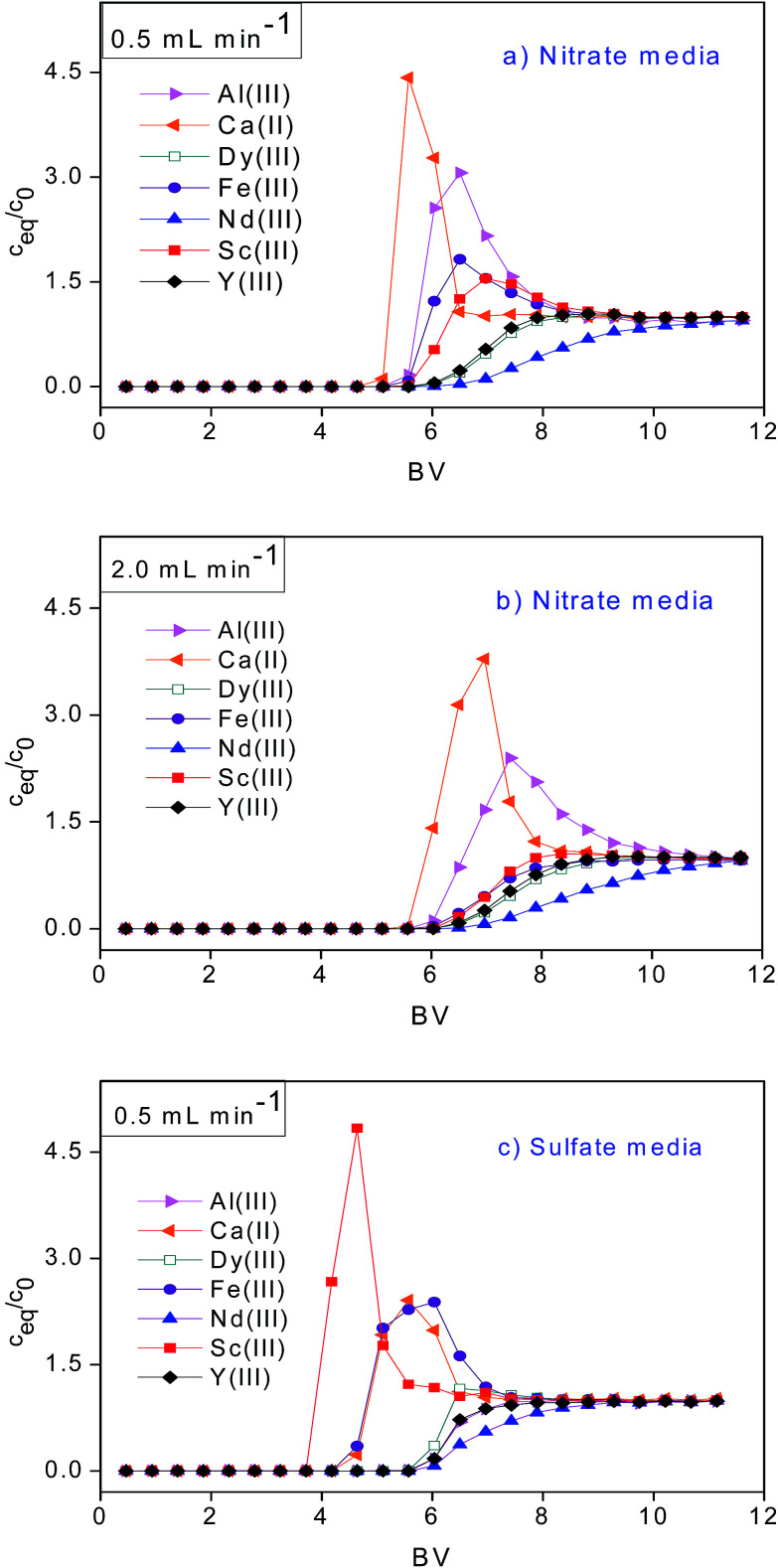
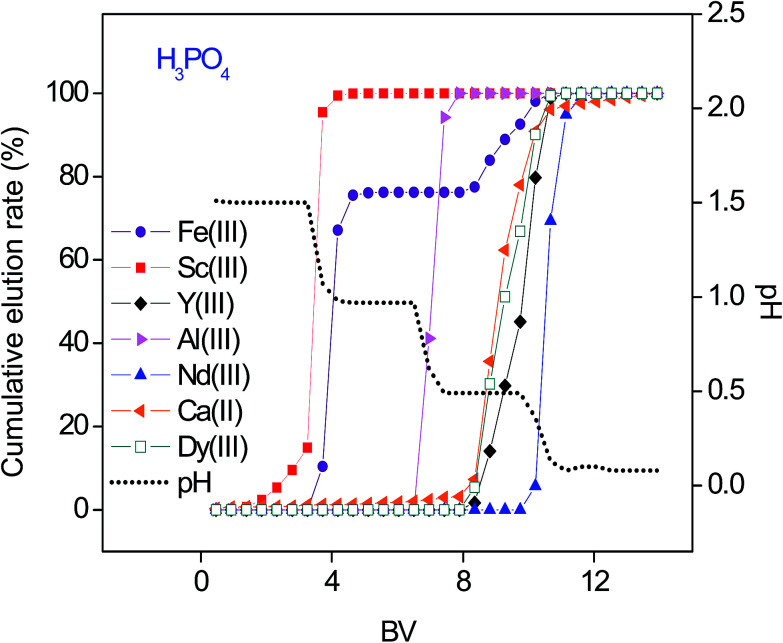
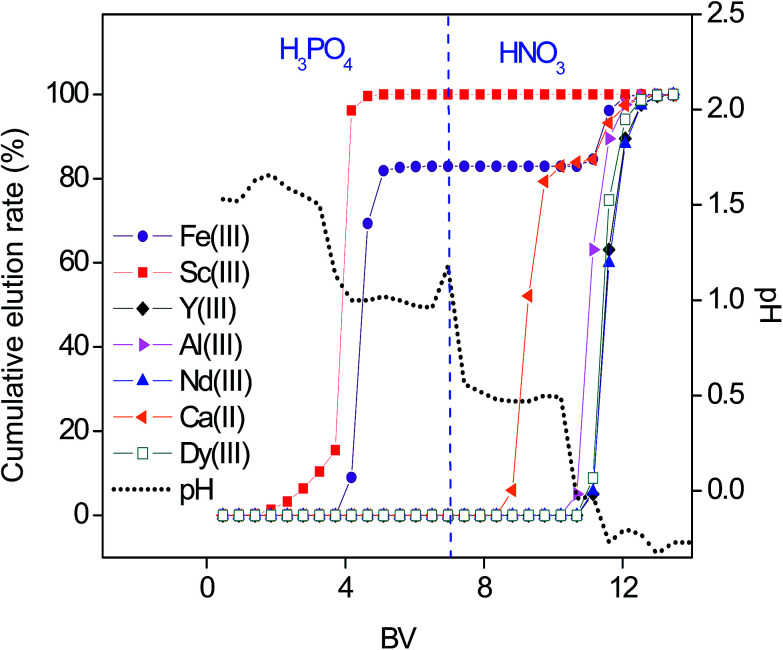
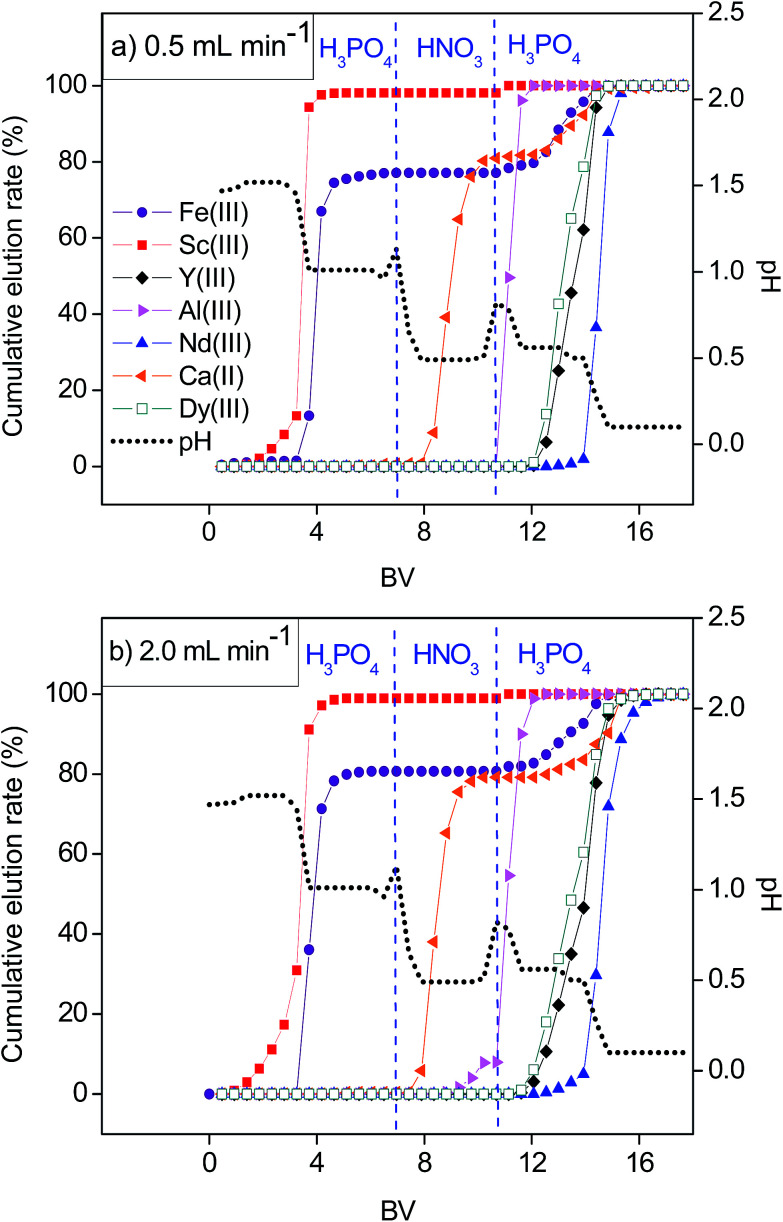
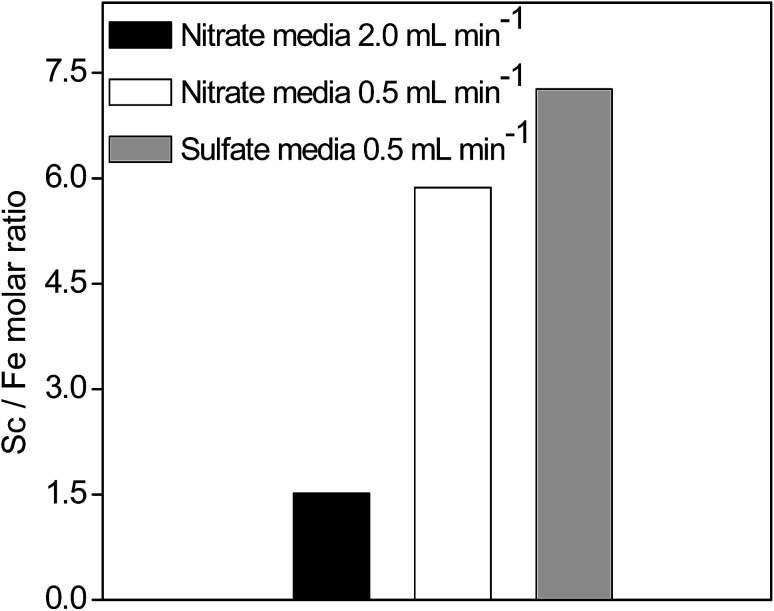
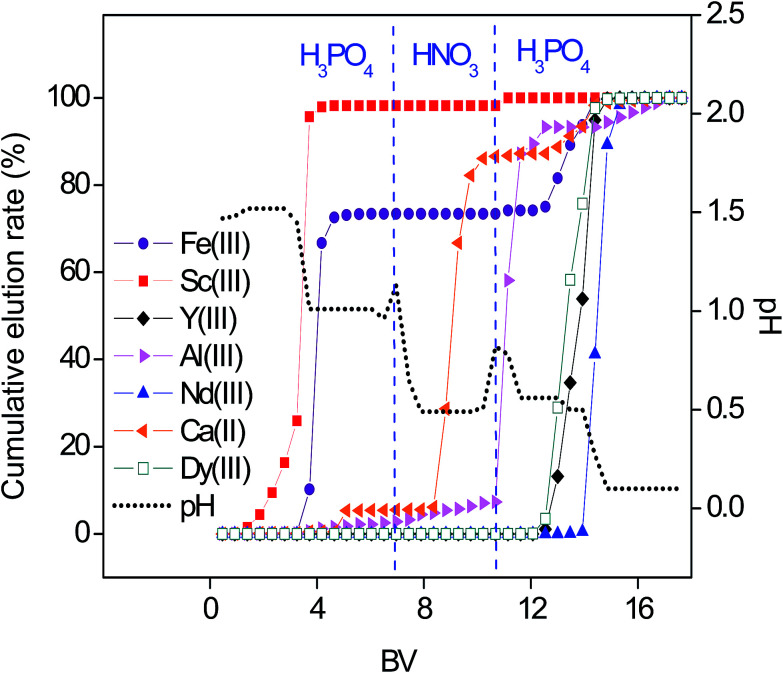
Bauxite residue (BR) contains substantial concentrations of rare-earth elements (REEs), but their recovery is a challenge. Acidic BR leachates typically comprise much higher concentrations of base elements (g L) than those of the REEs (ppm). Thus, adsorbents that are highly selective for the REEs over the base elements are required for the separation. The novel supported ionic liquid phase (SILP) betainium sulfonyl(trifluoromethanesulfonylimide) poly(styrene--divinylbenzene) [Hbet-STFSI-PS-DVB] was evaluated for the uptake of REEs (Sc, Y, Nd, Dy) in the presence of base elements (Ca, Al, Fe) from BR leachates. Breakthrough curves from acidic nitrate and sulfate media were investigated, as both HNO and HSO are commonly used for leaching of BR. The SILP exhibited a superior affinity for REEs in both media, except in the case of Sc(iii) from the sulfate feed. The recovery rates of the trace amounts of REEs from the real nitrate feed were remarkably high (71.7-100%) a simple chromatography separation, without requiring complexing agents or a pretreatment for the removal of interfering elements. The REEs were purified from the base elements and separated into three sub-groups (scandium, light REEs and heavy REEs) by an optimized elution profile with HPO and HNO in a single chromatographic separation step.
铝土矿残渣(BR)含有大量稀土元素(REEs),但其回收是一项挑战。酸性BR浸出液中碱金属元素的浓度(g/L)通常比稀土元素(ppm)高得多。因此,需要对稀土元素具有高度选择性的吸附剂来实现分离。对新型负载离子液体相(SILP)磺酰基(三氟甲磺酰亚胺)甜菜碱聚(苯乙烯-二乙烯基苯)[Hbet-STFSI-PS-DVB]在存在来自BR浸出液中的碱金属元素(Ca、Al、Fe)的情况下对稀土元素(Sc、Y、Nd、Dy)的吸附性能进行了评估。研究了来自酸性硝酸盐和硫酸盐介质的穿透曲线,因为HNO₃和H₂SO₄都常用于BR的浸出。除了来自硫酸盐进料中的Sc(iii)外,该SILP在两种介质中对稀土元素均表现出优异的亲和力。通过简单的色谱分离,无需络合剂或去除干扰元素的预处理,从实际硝酸盐进料中回收痕量稀土元素的回收率非常高(71.7-100%)。通过在单一色谱分离步骤中用H₃PO₄和HNO₃进行优化的洗脱曲线,将稀土元素与碱金属元素分离并分成三个亚组(钪、轻稀土元素和重稀土元素)。