Esteves Gabriel P, Mazzolani Bruna Caruso, Smaira Fabiana Infante, Mendes Elizabeth Silva, de Oliveira Gabriela Guimarães, Roschel Hamilton, Gualano Bruno, Pereira Rosa Maria R, Dolan Eimear
Applied Physiology & Nutrition Research Group; School of Physical Education and Sport; Rheumatology Division; Faculdade de Medicina FMUSP.
Bone Metabolism Laboratory, Rheumatology Division; Faculdade de Medicina FMUSP, Universidade de Sao Paulo, Sao Paulo, Brazil.
Rheumatol Adv Pract. 2022 Apr 21;6(2):rkac029. doi: 10.1093/rap/rkac029. eCollection 2022.
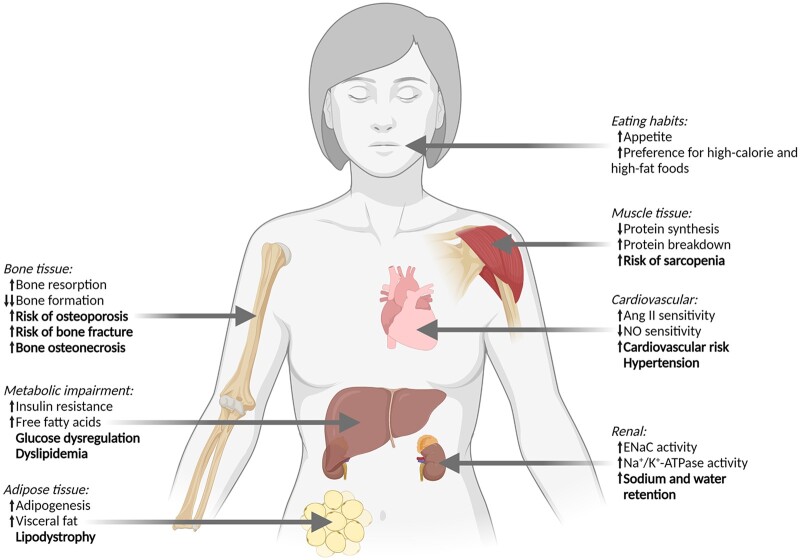
Glucocorticoid (GC) therapy is a common treatment used in rheumatic and autoimmune diseases, owing to its anti-inflammatory and immunosuppressive effects. However, GC therapy can also induce a number of adverse effects, including muscle and bone loss, hypertension, metabolic perturbations and increased visceral adiposity. We review available evidence in this area and provide nutritional recommendations that might ameliorate these adverse effects. Briefly, optimizing calcium, vitamin D, sodium and protein intake and increasing consumption of unprocessed and minimally processed foods, while decreasing the consumption of ultra-processed foods, might counteract some of the specific challenges faced by these patients. Importantly, we identify a dearth of empirical data on how nutritional intervention might impact health-related outcomes in this population. Further research is required to investigate the clinical and therapeutic efficacy of these theory-based recommendations.
糖皮质激素(GC)疗法因其抗炎和免疫抑制作用,是风湿性和自身免疫性疾病常用的治疗方法。然而,GC疗法也会引发多种不良反应,包括肌肉和骨质流失、高血压、代谢紊乱以及内脏脂肪增加。我们回顾了该领域的现有证据,并提供了可能改善这些不良反应的营养建议。简而言之,优化钙、维生素D、钠和蛋白质的摄入量,增加未加工和最低限度加工食品的消费,同时减少超加工食品的消费,可能会抵消这些患者面临的一些特殊挑战。重要的是,我们发现关于营养干预如何影响该人群健康相关结局的实证数据匮乏。需要进一步研究来调查这些基于理论的建议的临床和治疗效果。