Dong Wei, Shi Ji-Lei, Wang Tai-Shan, Yin Ya-Xia, Wang Chun-Ru, Guo Yu-Guo
CAS Key Laboratory of Molecular Nanostructure and Nanotechnology, CAS Research/Education Center for Excellence in Molecular Sciences, Institute of Chemistry, Chinese Academy of Sciences (CAS) Beijing 100190 P. R. China
University of Chinese Academy of Sciences Beijing 100049 P. R. China.
RSC Adv. 2018 May 24;8(34):19157-19163. doi: 10.1039/c8ra03226b. eCollection 2018 May 22.
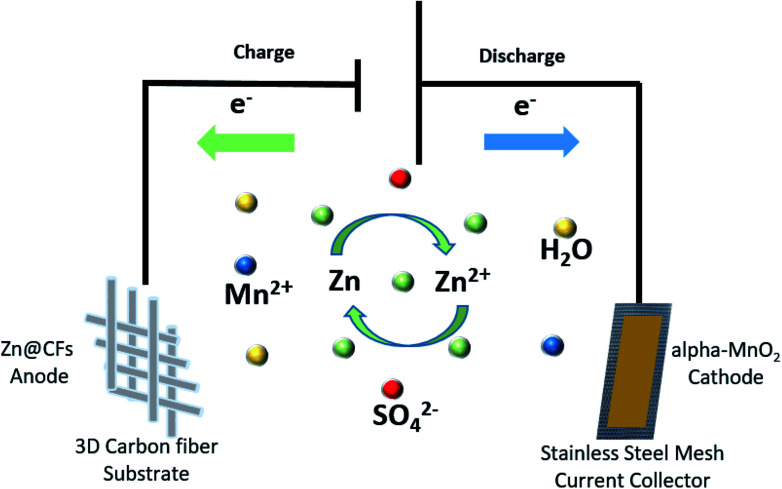
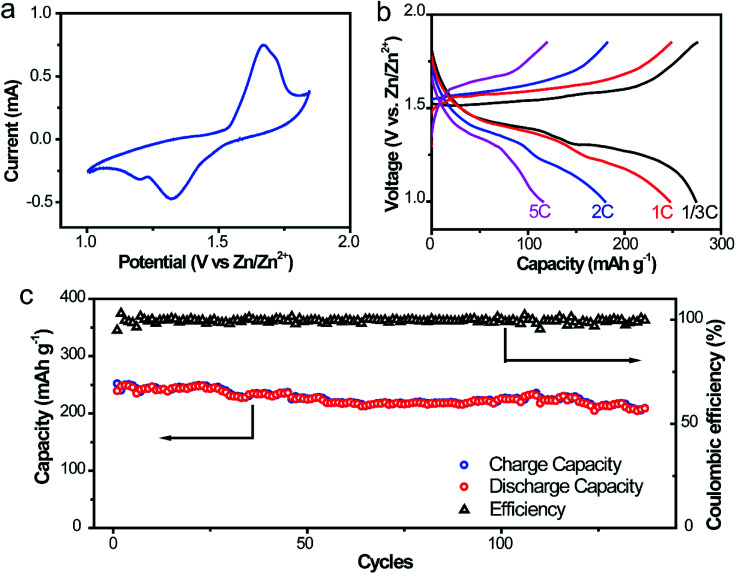
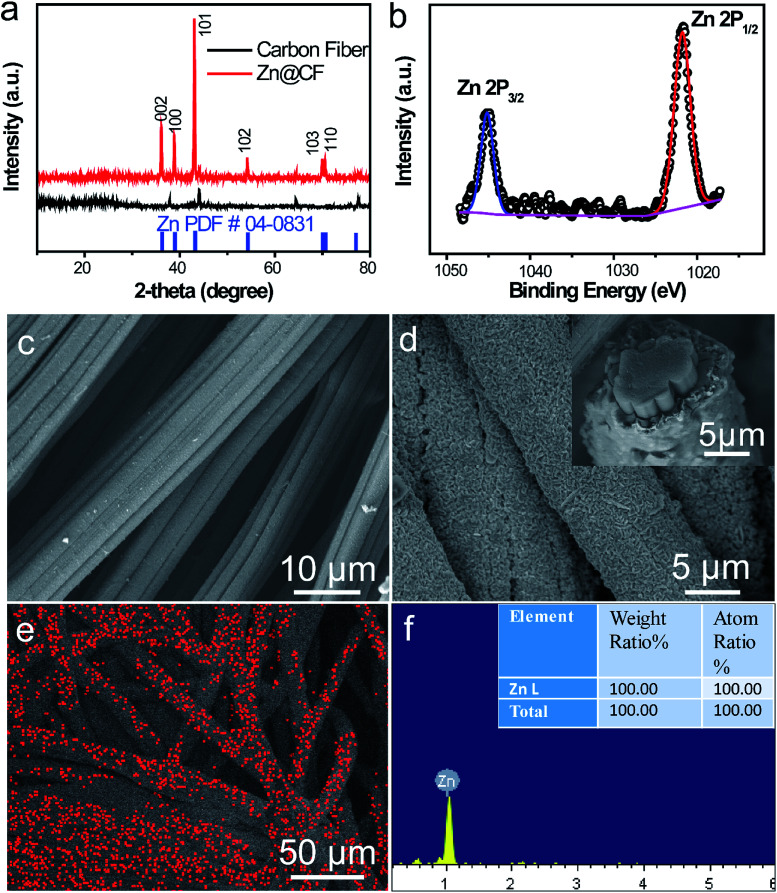
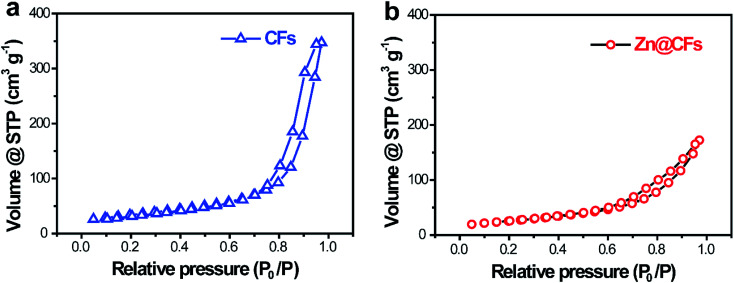
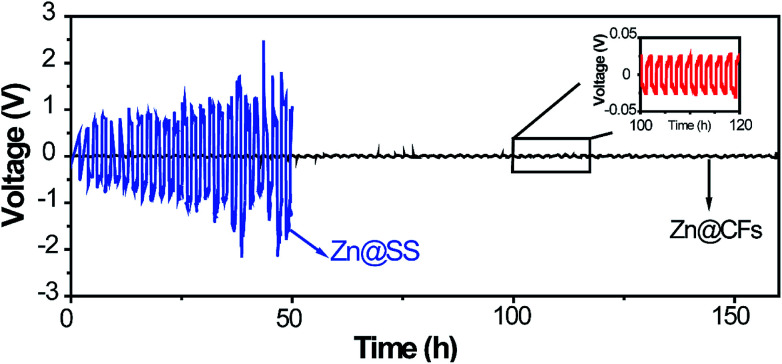
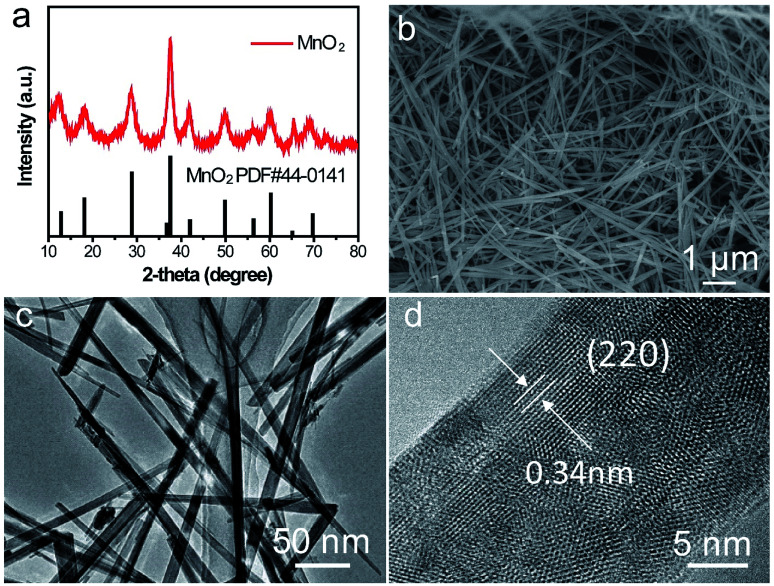
Rechargeable aqueous batteries are one of the most promising large-scale energy storage devices because of their environment-friendly properties and high safety advantages without using flammable and poisonous organic liquid electrolyte. In addition, rechargeable Zn-MnO batteries have great potential due to their low-cost resources as well as high energy density. However, dendritic growth of the zinc anode hinders the exertion of cycling stability and rate capacity in an aqueous Zn-MnO battery system. Here we use an electrochemical deposition method to form a three-dimensional (3D) zinc anode on carbon fibers (CFs). This 3D Zn@CFs framework has lower charge transfer resistance with larger electroactive areas. Batteries based on the 3D zinc framework anode and α-MnO nanowire cathode present enhanced rate capacity and long cycling stability, which is promising for utilization in other zinc anode based aqueous batteries as an effective way to solve dendrite formation.
可充电水系电池因其环保特性和高安全优势(不使用易燃有毒的有机液体电解质)而成为最具前景的大规模储能装置之一。此外,可充电锌锰电池因其低成本资源以及高能量密度而具有巨大潜力。然而,锌负极的枝晶生长阻碍了水系锌锰电池系统中循环稳定性和倍率性能的发挥。在此,我们采用电化学沉积方法在碳纤维(CFs)上形成三维(3D)锌负极。这种3D Zn@CFs框架具有较低的电荷转移电阻和较大的电活性面积。基于3D锌框架负极和α-MnO纳米线正极的电池展现出增强的倍率性能和长循环稳定性,这对于作为解决枝晶形成的有效方法应用于其他基于锌负极的水系电池具有前景。