N Palaniappan, Cole I S, Kuznetsov A E, Justin Thomas K R
School of Chemical Sciences, Central University of Gujarat India
Advance Manufacturing and Fabrication Research and Innovation, RMIT University Melbourne Victoria 3100 Australia
RSC Adv. 2019 Nov 26;9(66):38677-38686. doi: 10.1039/c9ra08123b. eCollection 2019 Nov 25.
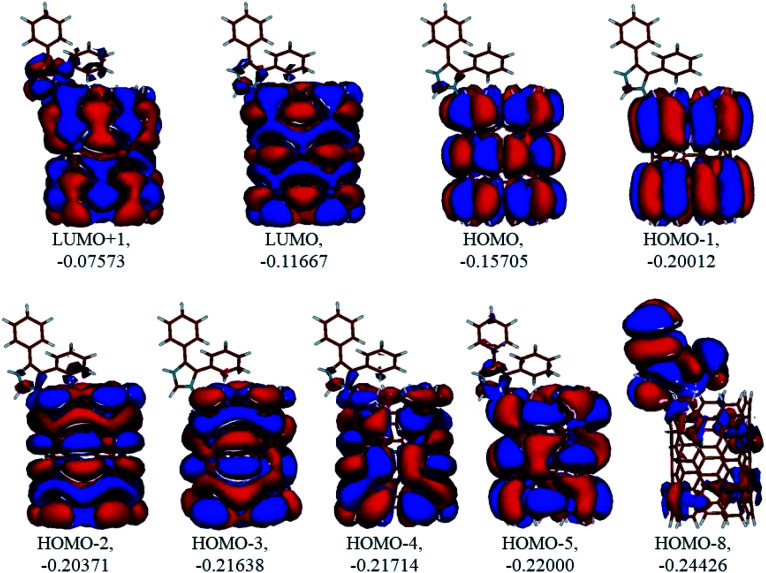
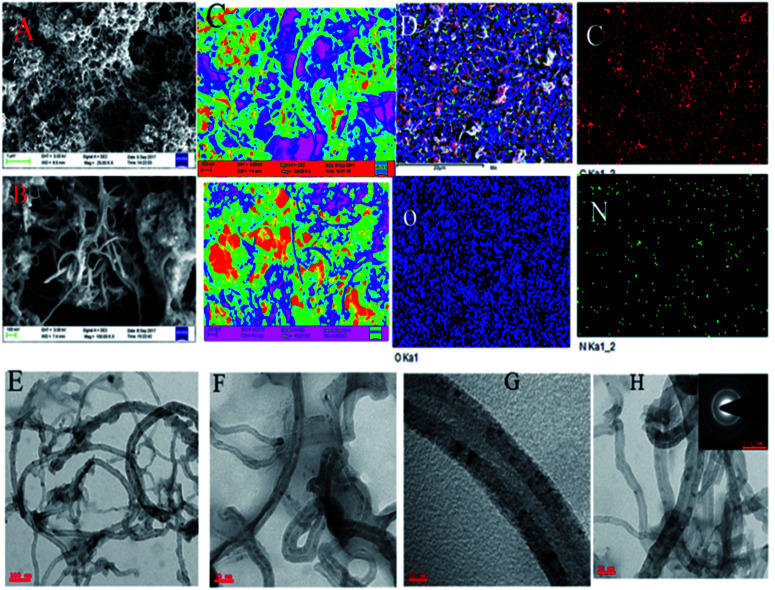
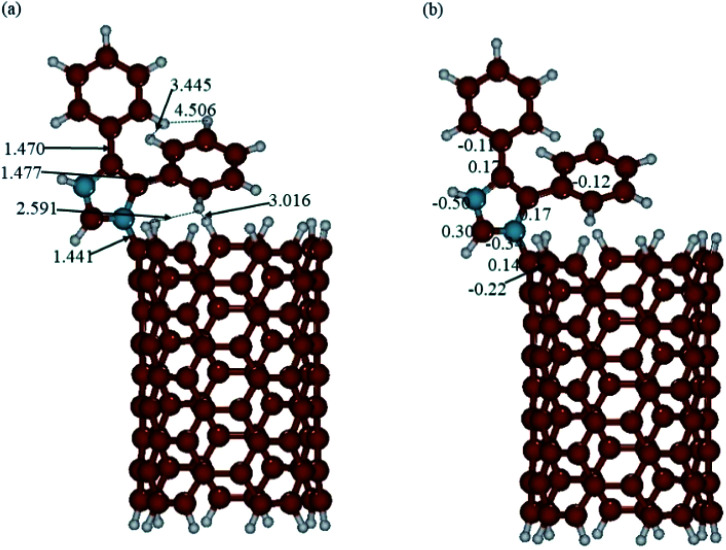
Nickel-based alloys are used for various applications such as in automobiles, superalloys and ship making. Their stability in acidic environments, however, is often not sufficient due to their native oxide films not withstanding harsh conditions. Carbon-based materials, in contrast, have shown high stability in acidic environments. In the present work, 4,5-diphenyl-imidazole-functionalized carbon nanotubes were investigated as a corrosion-inhibiting barrier layer on nickel alloy surfaces. We studied the corrosion inhibition efficiency of the imidazole-functionalized carbon nanotubes coated on nickel alloys. The materials were characterized using microscopy and spectroscopy methods. DFT studies were performed as well. The corrosion inhibition was evaluated using electrochemical methods. The imidazole-functionalized CNTs were shown to be crystalline and to have tubular structures. They displayed excellent corrosion inhibition on the nickel alloy surface.
镍基合金用于各种应用,如汽车、高温合金和船舶制造。然而,由于其原生氧化膜无法承受苛刻条件,它们在酸性环境中的稳定性往往不足。相比之下,碳基材料在酸性环境中表现出高稳定性。在本工作中,研究了4,5-二苯基咪唑功能化的碳纳米管作为镍合金表面的缓蚀阻挡层。我们研究了涂覆在镍合金上的咪唑功能化碳纳米管的缓蚀效率。使用显微镜和光谱方法对材料进行了表征。还进行了密度泛函理论(DFT)研究。使用电化学方法评估了缓蚀性能。结果表明,咪唑功能化的碳纳米管是结晶的且具有管状结构。它们在镍合金表面表现出优异的缓蚀性能。