Xi Jun, Wei Meili, Tang Bikui
College of Life Science, Bengbu Medical College Bengbu 233030 P. R. China
RSC Adv. 2018 Apr 17;8(26):14201-14211. doi: 10.1039/c8ra01268g.
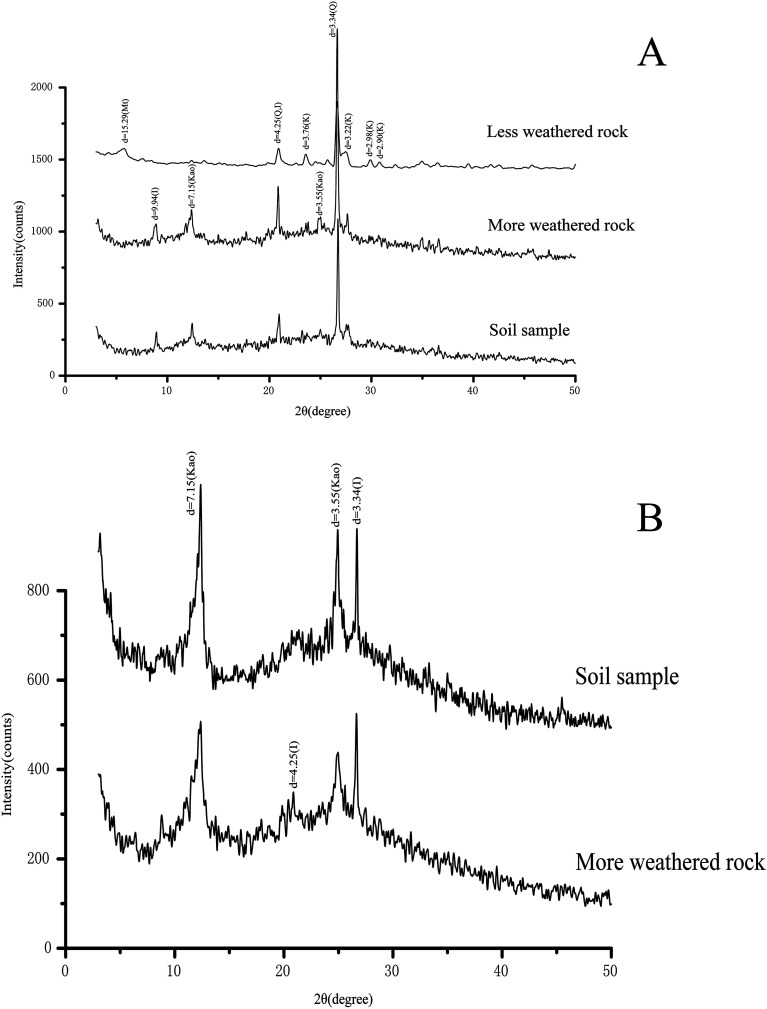
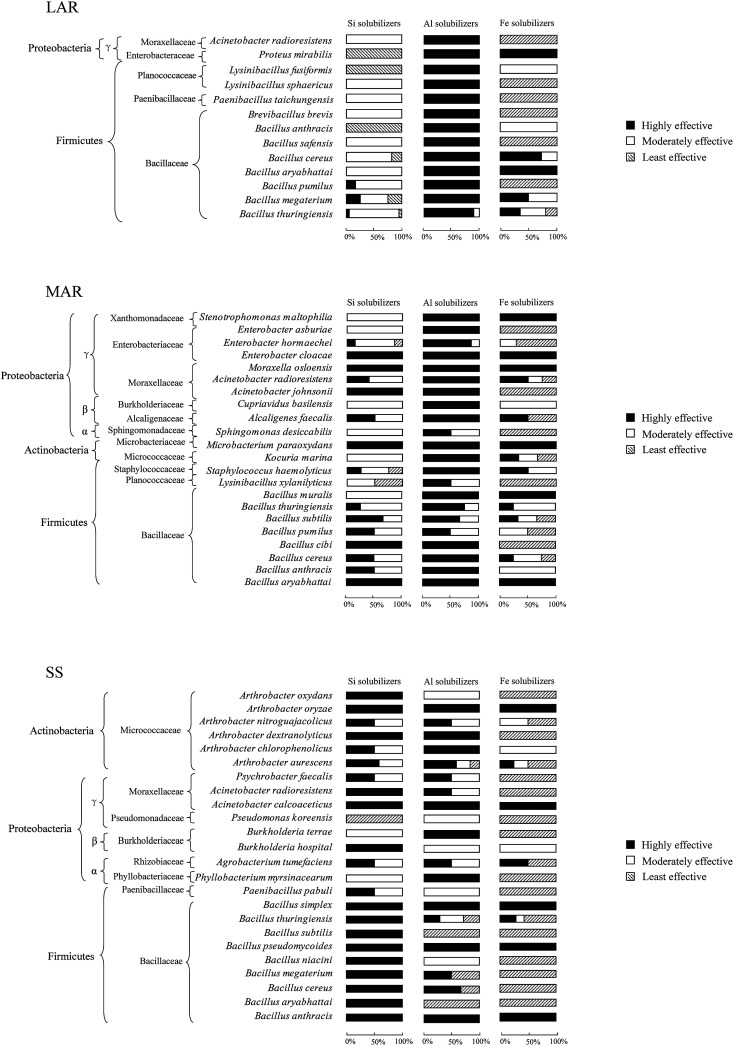
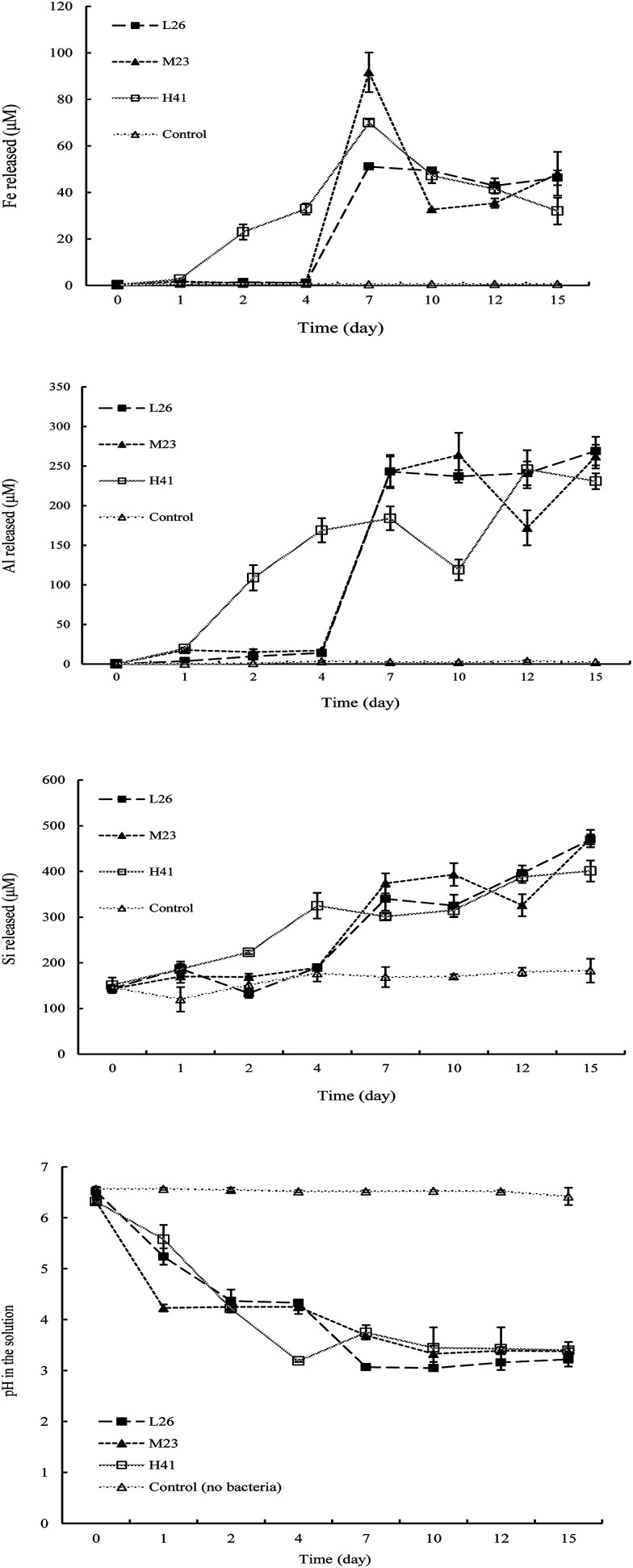
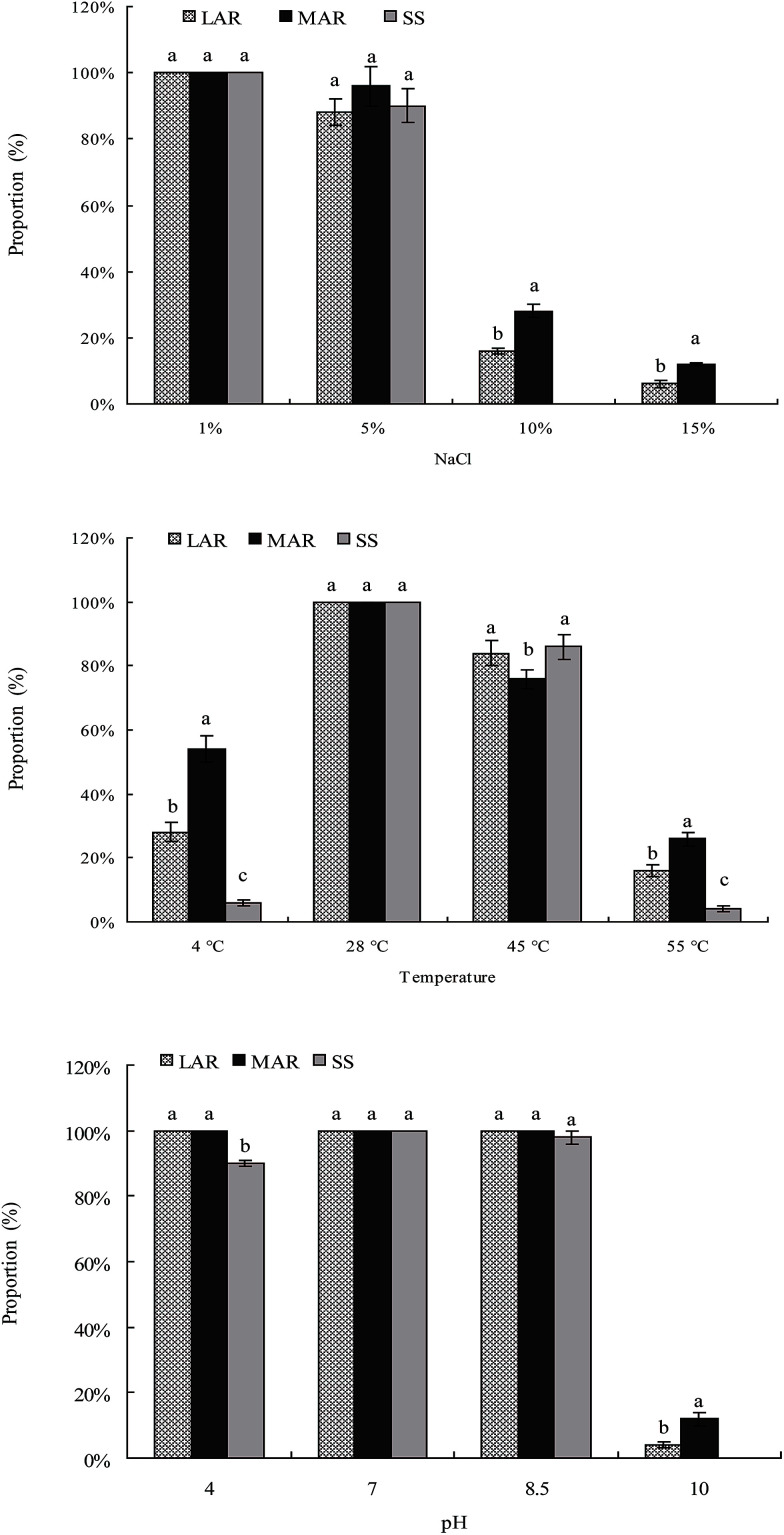
In this study, we isolated and characterized rock-weathering bacteria from the surfaces of less and more altered tuffs, along with the adjacent soils, with respect to their rock weathering pattern, stress resistance, community structure, and the changes in these rocks and soils. Using a moderate-nutrition medium, we obtained 150 isolates from the rocks and soils. The rock-weathering patterns of the isolates were characterized using batch cultures that measure the quantity of Si, Al, and Fe released from tuff under aerobic conditions. Based on the potential of the bacterial influence on the element releases, the isolates could be grouped into highly, moderately, and least effective element solubilizers, respectively. Significantly more highly effective Al and Fe solubilizers were observed in the altered rocks, while the soils had more highly effective Si solubilizers. Furthermore, more isolates from the altered rocks significantly acidified the culture medium in the rock weathering process. Dynamic changes in the element release showed the distinct element releasing patterns of three selected isolates. More isolates from the altered rocks could grow at 4 °C or at 55 °C or at pH 4. Some isolates from the altered rocks could grow at pH 10 and with 10-15% (w/v) NaCl. The altered rocks and the soils existed in diverse and different highly weathering-specific culturable rock-weathering community structures. The changes in the culturable weathering communities between the altered rocks and the soils were attributable not only to major bacterial groups but also to a change in the minor population structure.
在本研究中,我们从蚀变程度较低和较高的凝灰岩表面以及相邻土壤中分离并鉴定了岩石风化细菌,研究了它们的岩石风化模式、抗逆性、群落结构以及这些岩石和土壤中的变化。使用适度营养培养基,我们从岩石和土壤中获得了150个分离株。利用分批培养法测定需氧条件下凝灰岩中硅、铝和铁的释放量,对分离株的岩石风化模式进行了表征。根据细菌对元素释放的影响潜力,分离株可分别分为高效、中度和低效元素溶解菌。在蚀变岩石中观察到显著更多的高效铝和铁溶解菌,而土壤中有更多的高效硅溶解菌。此外,蚀变岩石中更多的分离株在岩石风化过程中显著酸化了培养基。元素释放的动态变化显示了三种选定分离株独特的元素释放模式。蚀变岩石中更多的分离株能在4℃或55℃或pH值为4的条件下生长。蚀变岩石中的一些分离株能在pH值为10和含有10 - 15%(w/v)氯化钠的条件下生长。蚀变岩石和土壤中存在多样且不同的高度风化特异性可培养岩石风化群落结构。蚀变岩石和土壤之间可培养风化群落的变化不仅归因于主要细菌类群,也归因于次要种群结构的变化。