Kostevšek N, Hudoklin S, Kreft M E, Serša I, Sepe A, Jagličić Z, Vidmar J, Ščančar J, Šturm S, Kobe S, Žužek Rožman K
Department for Nanostructured Materials, Jožef Stefan Institute Jamova 39 Ljubljana Slovenia
Institute of Cell Biology, Faculty of Medicine, University of Ljubljana Vrazov trg 2 Ljubljana Slovenia.
RSC Adv. 2018 Apr 19;8(26):14694-14704. doi: 10.1039/c8ra00047f. eCollection 2018 Apr 17.
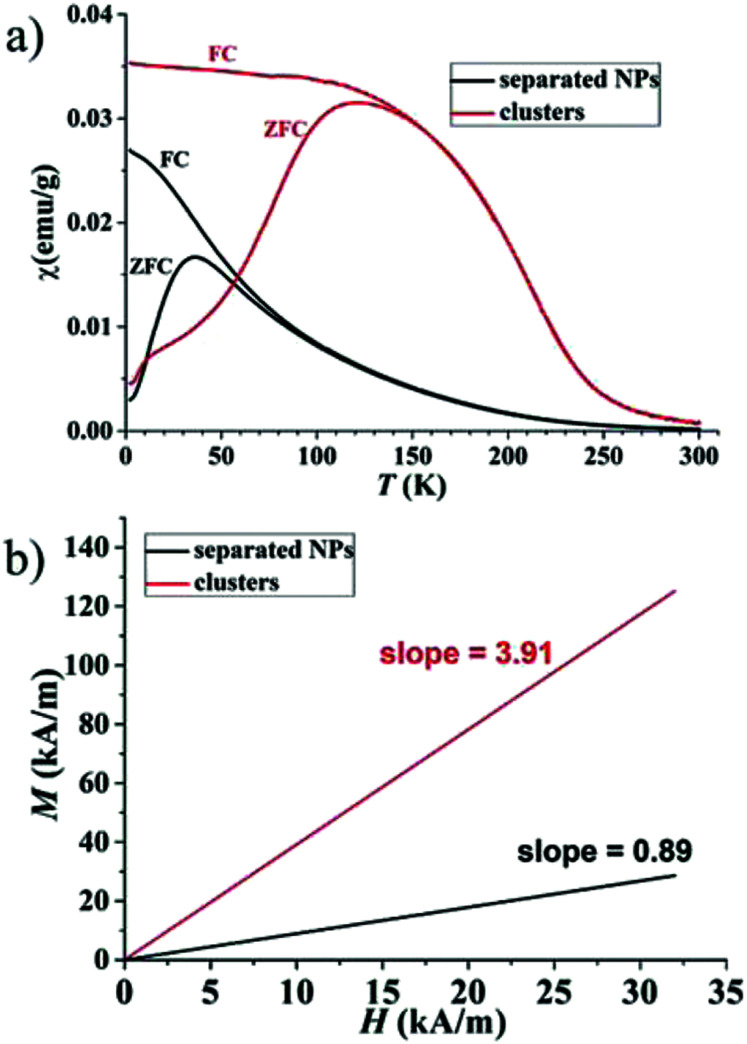
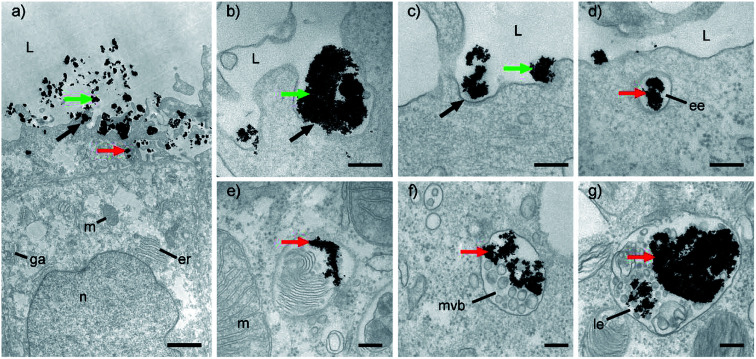
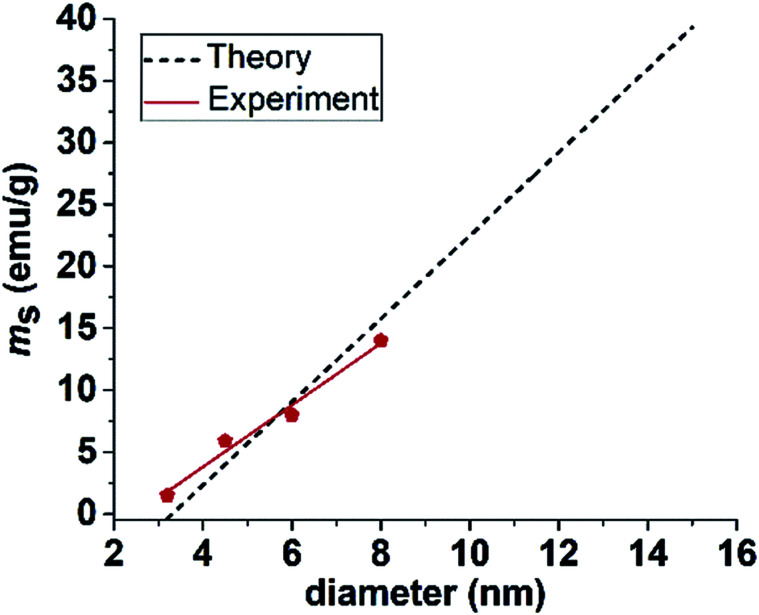
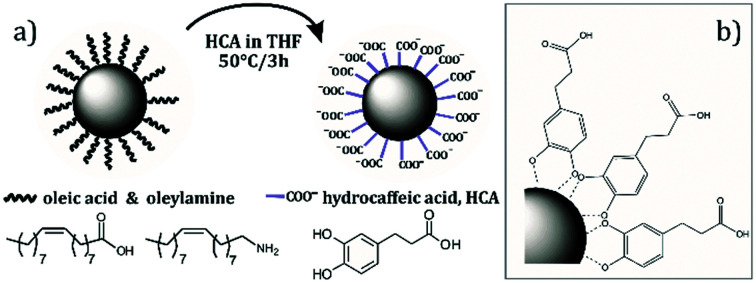
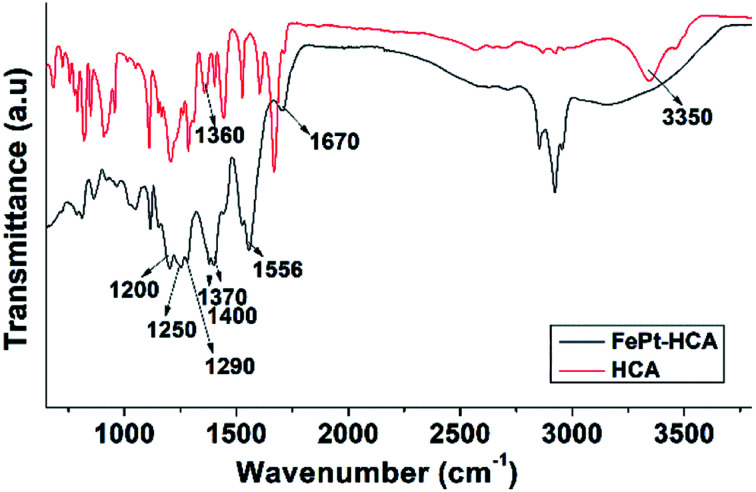
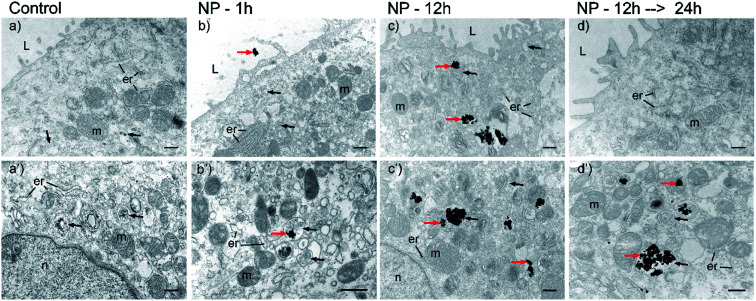
A detailed magnetic study of separated Fe-Pt NPs and Fe-Pt clusters was performed to predict their optimal size and morphology for the maximum saturation magnetization, a factor that is known to influence the performance of a magnetic-resonance-imaging (MRI) contrast agent. Excellent stability and biocompatibility of the nanoparticle suspension was achieved using a novel coating based on hydrocaffeic acid (HCA), which was confirmed with a detailed Fourier-transform infrared spectroscopy (FTIR) study. An study on a human-bladder papillary urothelial neoplasm RT4 cell line confirmed that HCA-Fe-Pt nanoparticles showed no cytotoxicity, even at a very high concentration (550 μg Fe-Pt per mL), with no delayed cytotoxic effect being detected. This indicates that the HCA coating provides excellent biocompatibility of the nanoparticles, which is a prerequisite for the material to be used as a safe contrast agent for MRI. The cellular uptake and internalization mechanism were studied using ICP-MS and TEM analyses. Furthermore, it was shown that even a very low concentration of Fe-Pt nanoparticles (<10 μg mL) in the cells is enough to decrease the relaxation times by 70%. In terms of the MRI imaging, this means a large improvement in the contrast, even at a low nanoparticle concentration and an easier visualization of the tissues containing nanoparticles, proving that HCA-coated Fe-Pt nanoparticles have the potential to be used as an efficient and safe MRI contrast agent.
对分离出的Fe-Pt纳米颗粒和Fe-Pt团簇进行了详细的磁性研究,以预测它们的最佳尺寸和形态,从而实现最大饱和磁化强度,这是一个已知会影响磁共振成像(MRI)造影剂性能的因素。使用基于氢咖啡酸(HCA)的新型涂层实现了纳米颗粒悬浮液的出色稳定性和生物相容性,这通过详细的傅里叶变换红外光谱(FTIR)研究得到了证实。对人膀胱乳头状尿路上皮肿瘤RT4细胞系的研究证实,即使在非常高的浓度(每毫升550μg Fe-Pt)下,HCA-Fe-Pt纳米颗粒也没有显示出细胞毒性,未检测到延迟的细胞毒性作用。这表明HCA涂层为纳米颗粒提供了出色的生物相容性,这是该材料用作安全的MRI造影剂的先决条件。使用电感耦合等离子体质谱(ICP-MS)和透射电子显微镜(TEM)分析研究了细胞摄取和内化机制。此外,研究表明,即使细胞中Fe-Pt纳米颗粒的浓度非常低(<10μg/mL),也足以使弛豫时间降低70%。就MRI成像而言,这意味着即使在低纳米颗粒浓度下对比度也有很大提高,并且更容易观察到含有纳米颗粒的组织,证明HCA包覆的Fe-Pt纳米颗粒有潜力用作高效、安全的MRI造影剂。