Feng Li, Zheng Huaili, Tang Xiaomin, Zheng Xinyu, Liu Shuang, Sun Qiang, Wang Moxi
State Key Laboratory of Coal Mine Disaster Dynamics and Control, Chongqing University Chongqing 400044 China
Key Laboratory of the Three Gorges Reservoir Region's Eco-Environment, Ministry of Education, Chongqing University Chongqing 400045 China.
RSC Adv. 2018 Apr 20;8(27):15119-15133. doi: 10.1039/c8ra02006j. eCollection 2018 Apr 18.
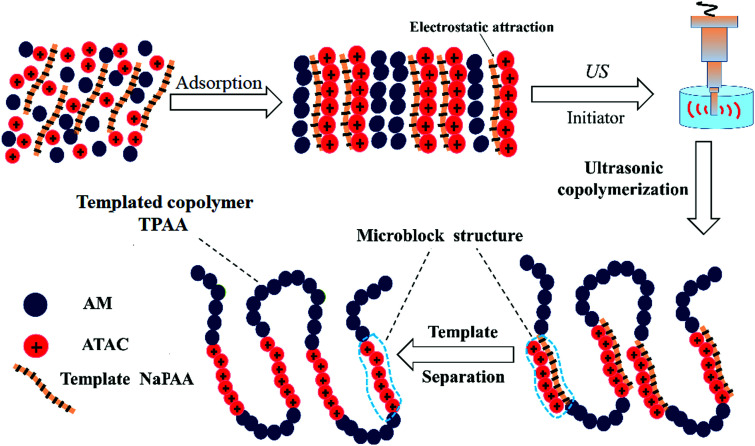
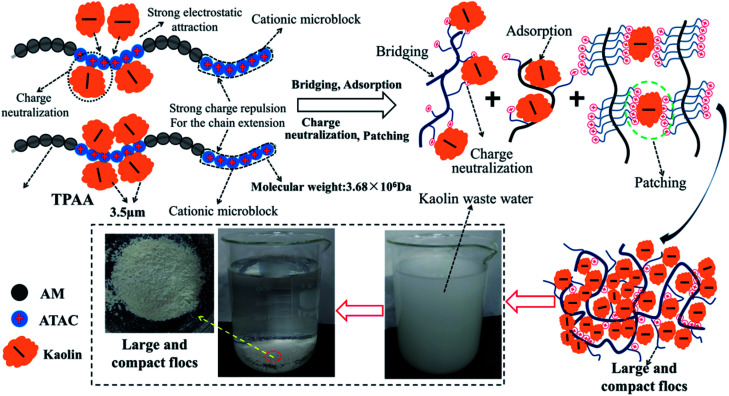
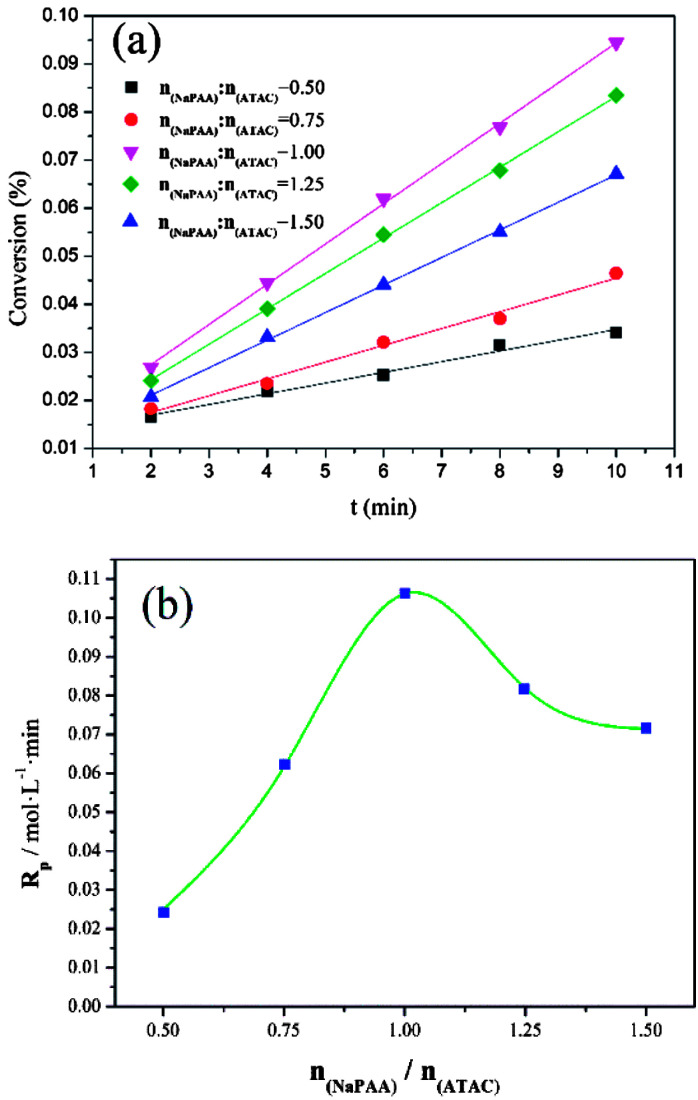
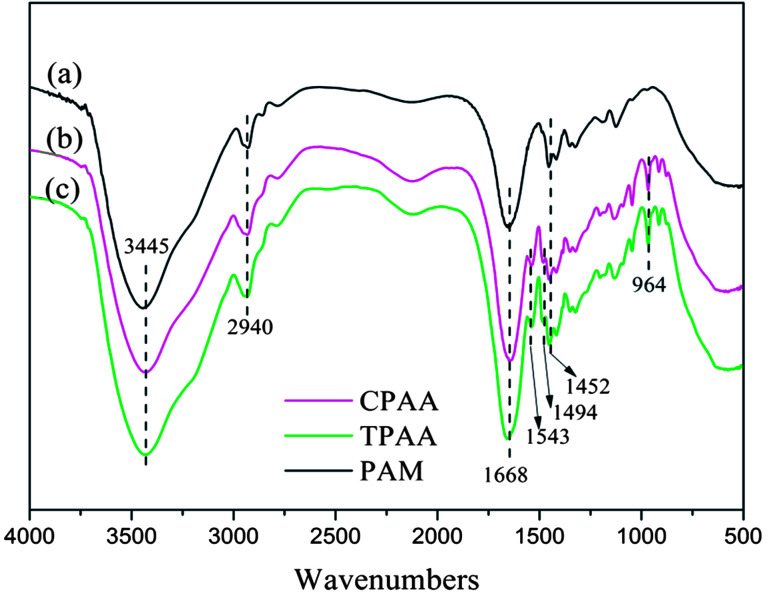
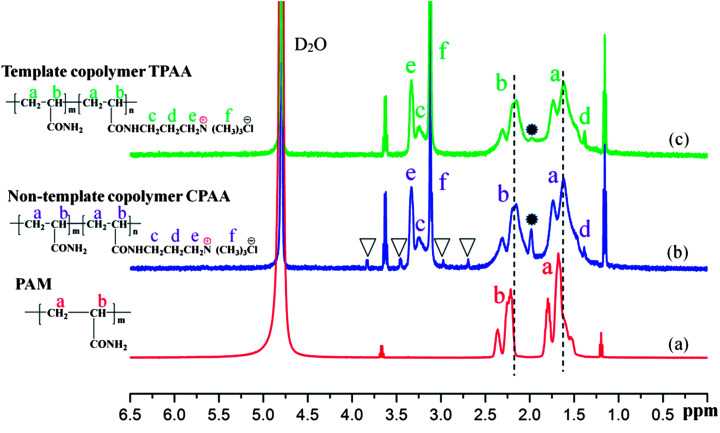
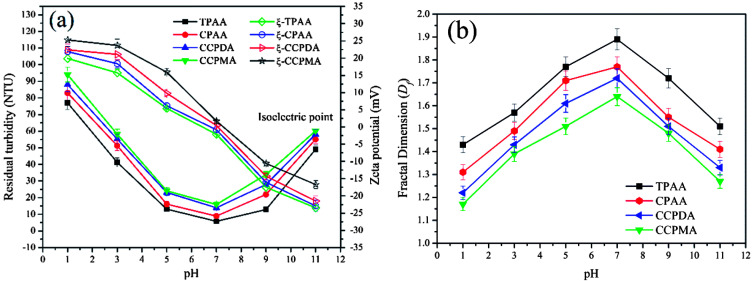
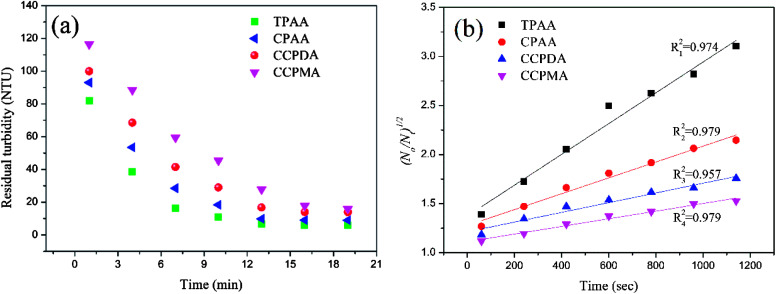
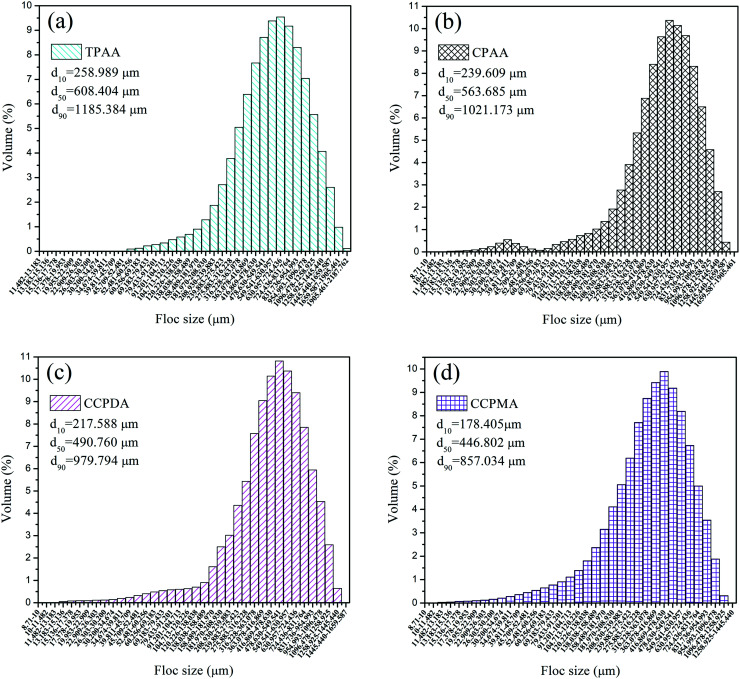
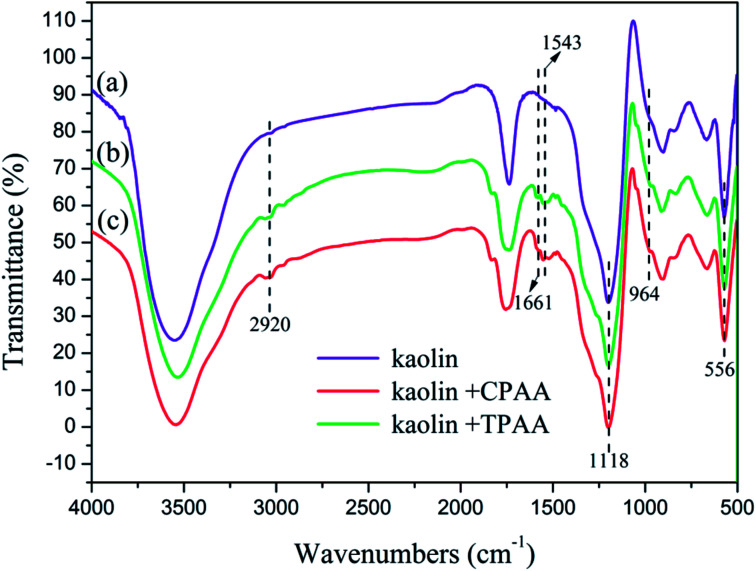
The fabrication of a cationic polyacrylamide (CPAM) with high efficiency and economy has been highly desired in the field of high-turbidity water treatment. This study introduced an ultrasound (US)-initiated template polymerization (UTP) method to develop a novel cationic templated polyacrylamide (TPAA) with a microblock structure. TPAA was prepared using acrylamide (AM) and sodium (3-acrylamidopropyl)trimethylammonium chloride (ATAC) as the monomers and sodium polyacrylate (NaPAA) as the template. Factors that affected polymerization such as the ultrasound power, ultrasound time, initiator concentration, pH, and : and : values were investigated. The properties of the polymers were characterized by Fourier transform infrared spectroscopy (FTIR), H nuclear magnetic resonance spectroscopy (H NMR), thermogravimetric analysis (TGA) and scanning electron microscopy (SEM). The results indicated the successful formation of a cationic microblock structure in TPAA. In addition, TPAA displayed favorable thermal decomposition properties and a rough and coarse surface morphology, as shown by analyses using TGA and SEM, respectively. Moreover, a zip (type I) template polymerization mechanism was identified analyses of the association constant ( ), conversion ( ) and polymerization rate ( ). The flocculation performance of the templated copolymer TPAA was evaluated by treating high-turbidity water. According to the results for the zeta potentials and FTIR spectra of the generated flocs, it was indicated that the cationic microblocks in the templated copolymer could greatly enhance its charge neutralization, patching and bridging ability, and therefore excellent flocculation performance (residual turbidity: 5.8 NTU, : 1.89, floc size : 608.404 μm and floc kinetic: 15.86 × 10 s) for treating high-turbidity water was achieved.
在高浊度水处理领域,高效且经济的阳离子聚丙烯酰胺(CPAM)的制备一直备受期待。本研究引入了一种超声(US)引发的模板聚合(UTP)方法,以开发一种具有微嵌段结构的新型阳离子模板聚丙烯酰胺(TPAA)。TPAA是以丙烯酰胺(AM)和(3 - 丙烯酰胺基丙基)三甲基氯化铵(ATAC)为单体,聚丙烯酸钠(NaPAA)为模板制备而成。研究了影响聚合反应的因素,如超声功率、超声时间、引发剂浓度、pH值以及[AM]∶[ATAC]和[AM]∶[NaPAA]的值。通过傅里叶变换红外光谱(FTIR)、氢核磁共振光谱(¹H NMR)、热重分析(TGA)和扫描电子显微镜(SEM)对聚合物的性能进行了表征。结果表明TPAA中成功形成了阳离子微嵌段结构。此外,分别通过TGA和SEM分析表明,TPAA具有良好的热分解性能和粗糙的表面形态。而且,通过对缔合常数(K)、转化率(α)和聚合速率(Rp)的分析,确定了拉链(I型)模板聚合机理。通过处理高浊度水评估了模板共聚物TPAA的絮凝性能。根据生成絮体的ζ电位和FTIR光谱结果表明,模板共聚物中的阳离子微嵌段可极大地增强其电荷中和、补丁和架桥能力,因此实现了优异的絮凝性能(剩余浊度:5.8 NTU,ζ电位:1.89,絮体尺寸(d50):608.404 μm,絮体动力学:15.86×10⁻³ s⁻¹)用于处理高浊度水。