
含氮聚合物稳定的纳米银胶体的抗菌活性:聚合物封端的关键影响
Antimicrobial activity of nano-sized silver colloids stabilized by nitrogen-containing polymers: the key influence of the polymer capping.
作者信息
Batista Carin C S, Albuquerque Lindomar J C, de Araujo Iris, Albuquerque Brunno L, da Silva Fernanda D, Giacomelli Fernando C
机构信息
Centro de Ciências Naturais e Humanas, Universidade Federal do ABC Santo André Brazil
Departamento de Química, Universidade Federal de Santa Catarina Florianópolis 88040-900 Brazil.
出版信息
RSC Adv. 2018 Mar 19;8(20):10873-10882. doi: 10.1039/c7ra13597a. eCollection 2018 Mar 16.
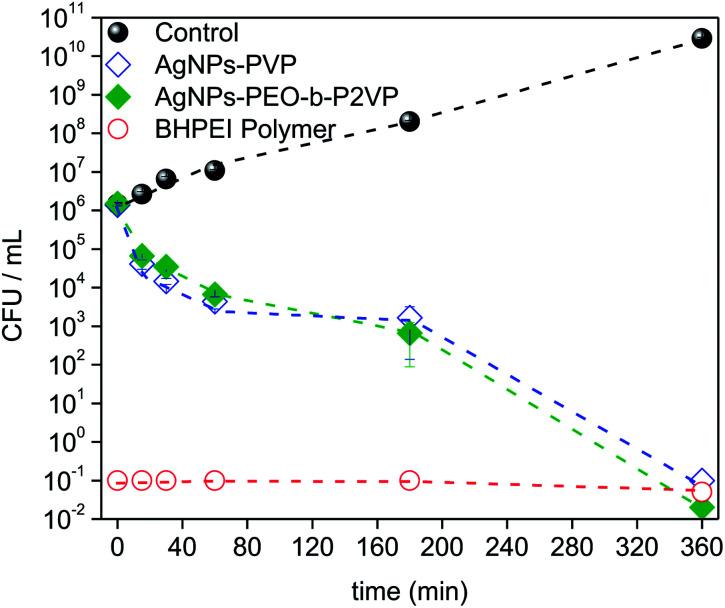
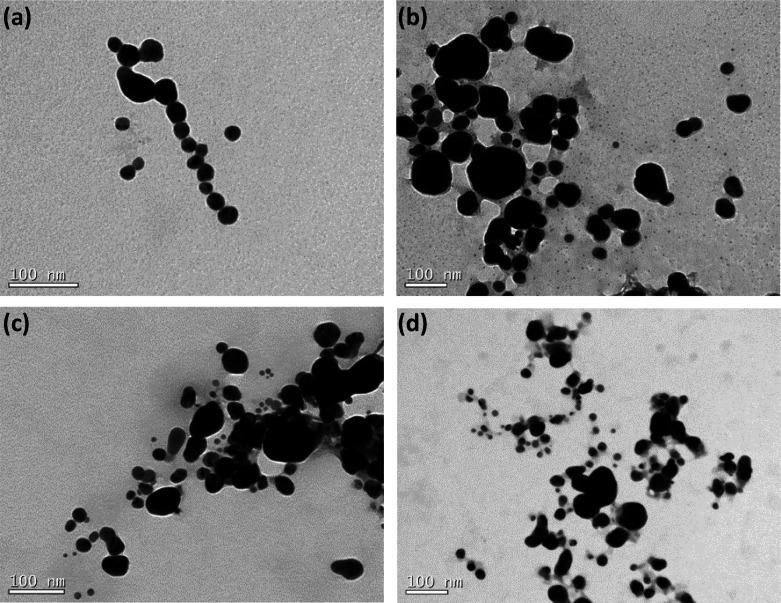
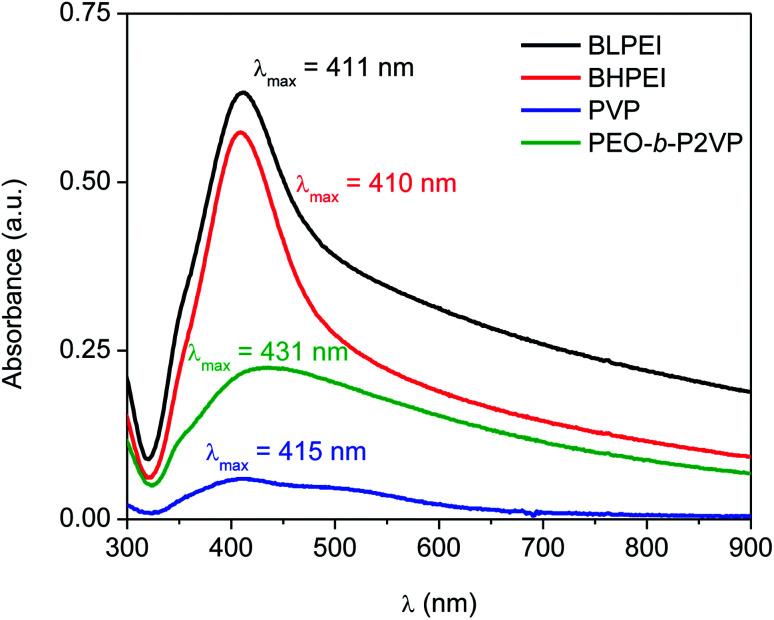
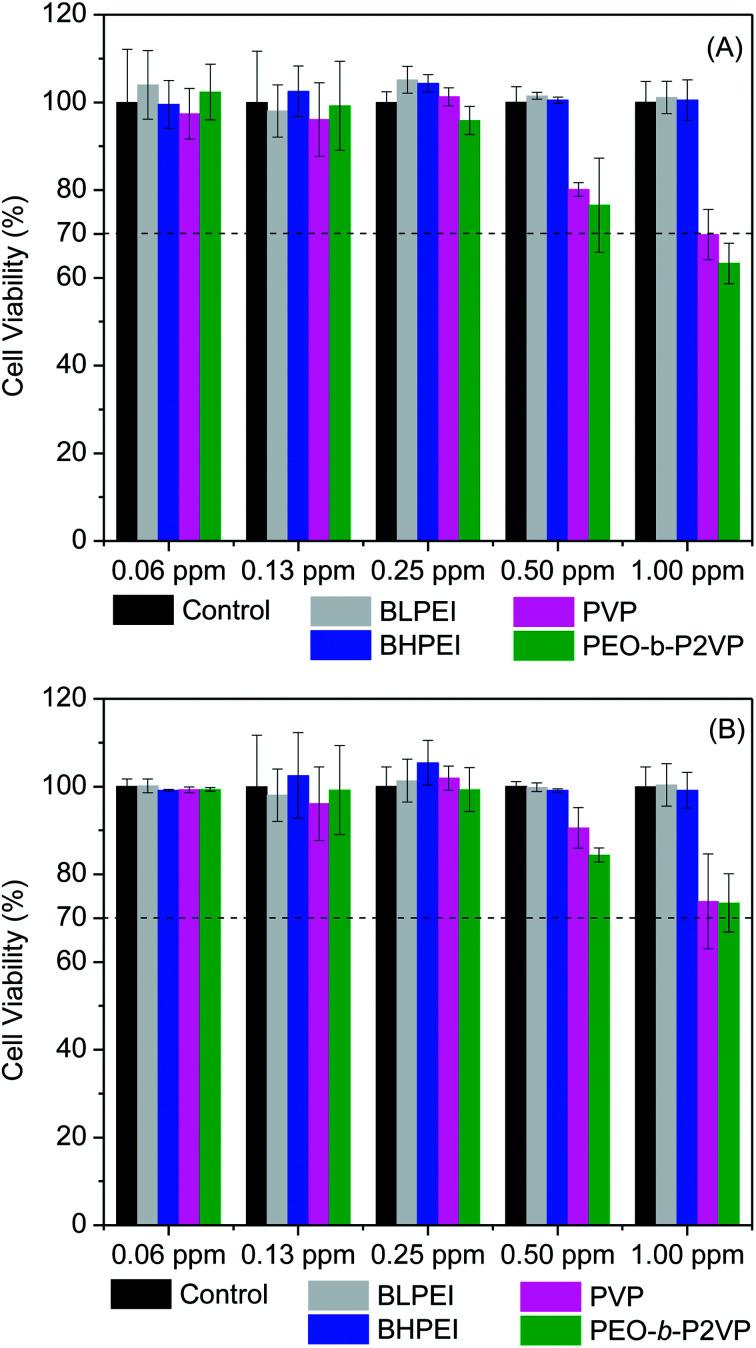
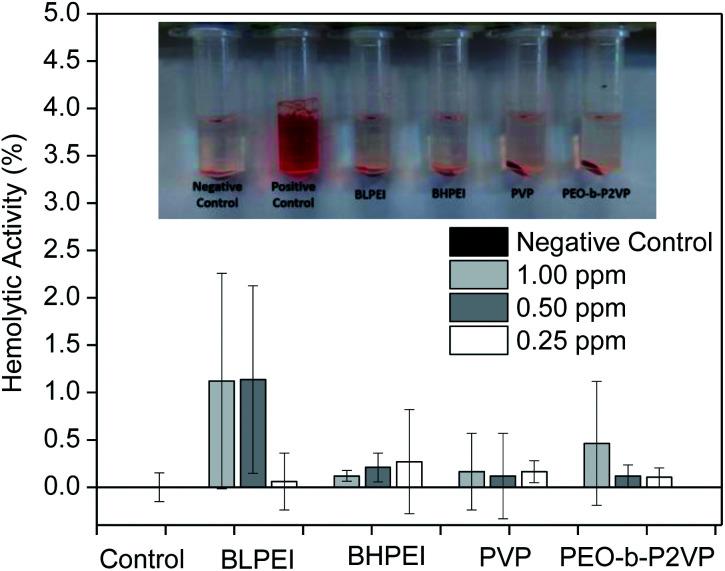
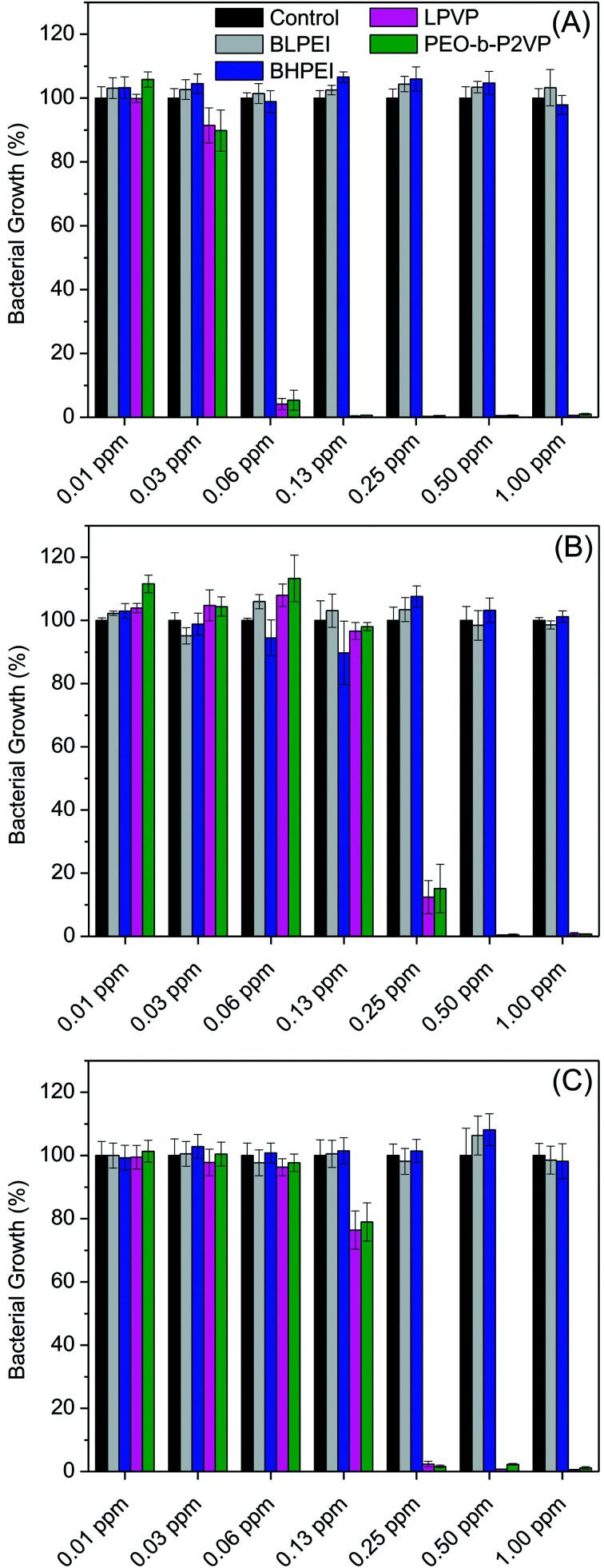
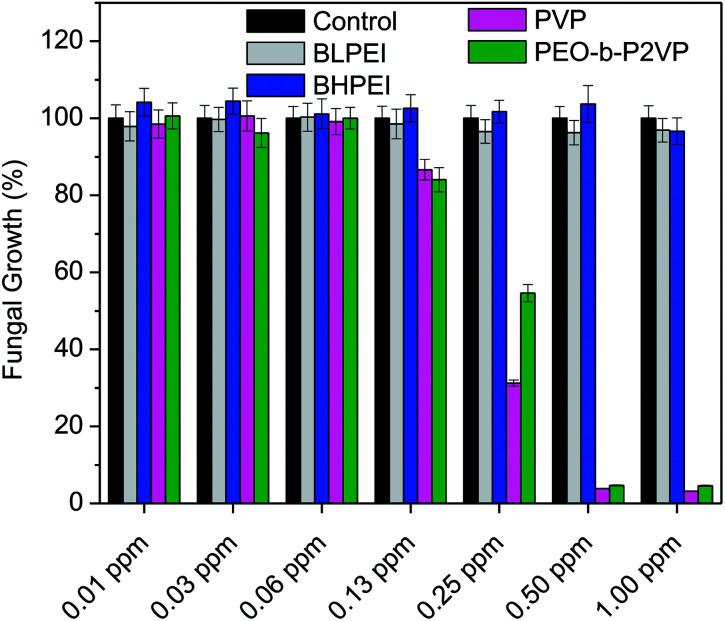
Synthesis of stable silver colloids was achieved using nitrogen-containing polymers acting simultaneously as a reducing and stabilizer agent. The polymers polyethyleneimine (PEI), polyvinylpyrrolidone (PVP) and poly(2-vinyl pyridine)--poly(ethylene oxide) (PEO--P2VP) were used in the procedures. The influence of the surface chemistry and chemical nature of the stabilizer on the cytotoxicity and antimicrobial properties have been evaluated. The produced nanomaterials were found to be non-toxic up to the highest evaluated concentration (1.00 ppm). Nevertheless, at this very low concentration, the AgNPs stabilized by PVP and PEO--P2VP were found to be remarkable biocides against bacteria and fungus. On the other hand, we have surprisingly evidenced negligible antimicrobial activity of AgNPs stabilized by positively charged PEI although both (AgNPs and PEI) materials separately are known for their antimicrobial activity as also evidenced in the current investigation. The evidence is claimed to be related to the blocking of Ag kinetic release. Accordingly, the antimicrobial effect of nano-sized silver colloids largely depends on the chemical nature of the polymer coating. Possibly, the outstanding colloid stabilization provided by polyethyleneimine slows down Ag release thereby hampering its biological activity whereas the poorer stabilization and good ionic transport property of PVP and PEO--P2VP allows much faster ion release and cell damage.
使用同时作为还原剂和稳定剂的含氮聚合物实现了稳定银胶体的合成。在实验过程中使用了聚乙烯亚胺(PEI)、聚乙烯吡咯烷酮(PVP)和聚(2-乙烯基吡啶)-聚(环氧乙烷)(PEO-P2VP)等聚合物。评估了稳定剂的表面化学和化学性质对细胞毒性和抗菌性能的影响。发现所制备的纳米材料在最高评估浓度(1.00 ppm)下均无毒。然而,在这个极低的浓度下,由PVP和PEO-P2VP稳定的AgNPs被发现对细菌和真菌具有显著的杀菌作用。另一方面,我们令人惊讶地发现,由带正电荷的PEI稳定的AgNPs的抗菌活性可忽略不计,尽管在本研究中也已证明这两种材料(AgNPs和PEI)单独都具有抗菌活性。据声称,这一现象与Ag的动力学释放受阻有关。因此,纳米级银胶体的抗菌效果在很大程度上取决于聚合物涂层的化学性质。可能是聚乙烯亚胺提供的出色胶体稳定性减缓了Ag的释放,从而阻碍了其生物活性,而PVP和PEO-P2VP较差的稳定性和良好的离子传输性能则允许更快的离子释放和细胞损伤。

 Zotero 插件