Department of Radiotherapy and Oncology, Affiliated Kunshan Hospital of Jiangsu University, Kunshan, China.
Department of Interventional Radiology, Dushu Lake Hospital Affiliated to Soochow University, Medical Center of Soochow University, Suzhou Dushu Lake Hospital, Suzhou, China.
Int J Biol Sci. 2022 Apr 18;18(7):2994-3005. doi: 10.7150/ijbs.71381. eCollection 2022.
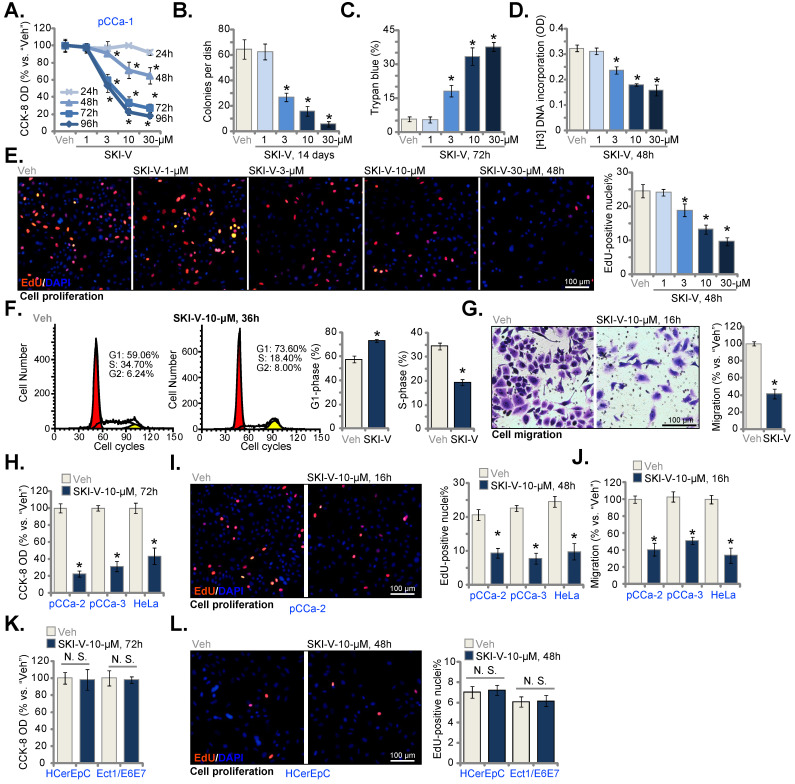
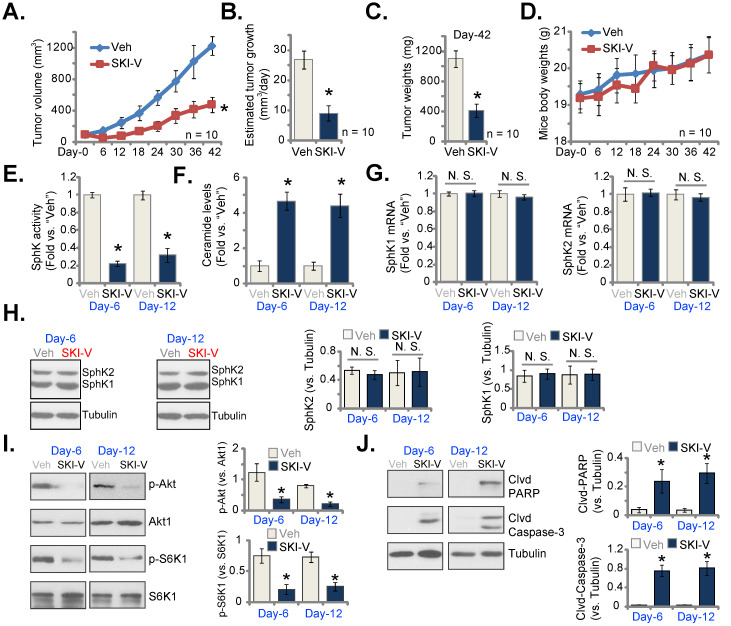
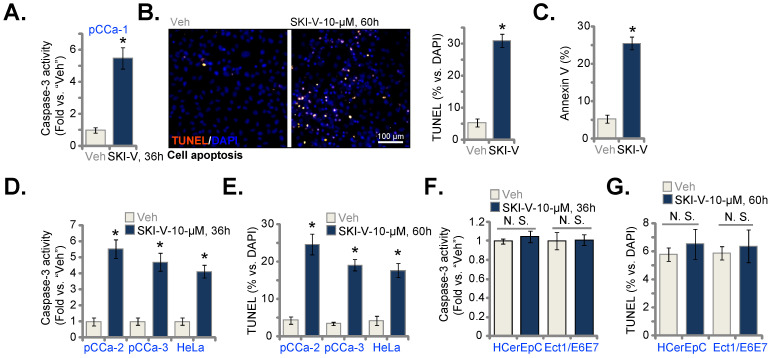
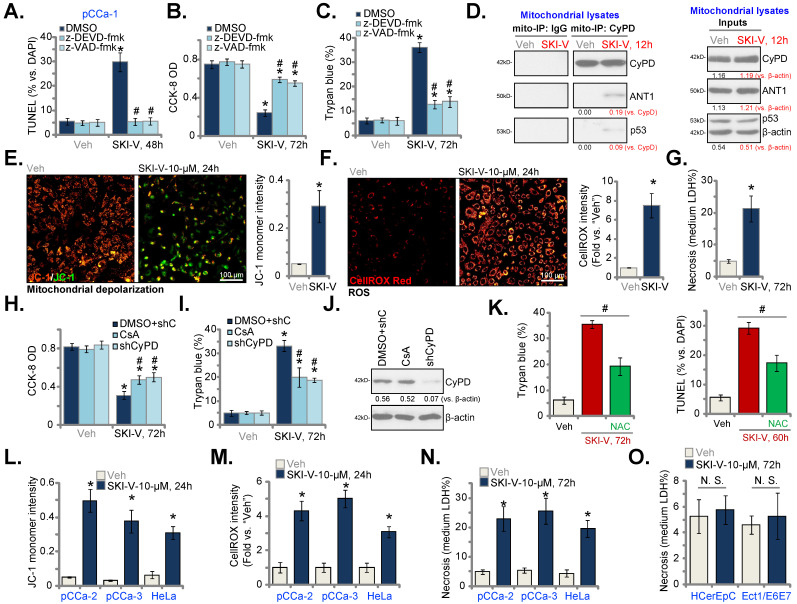
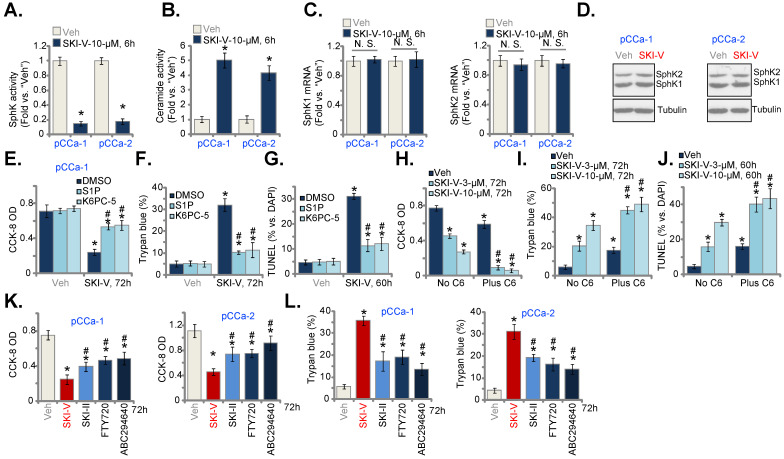
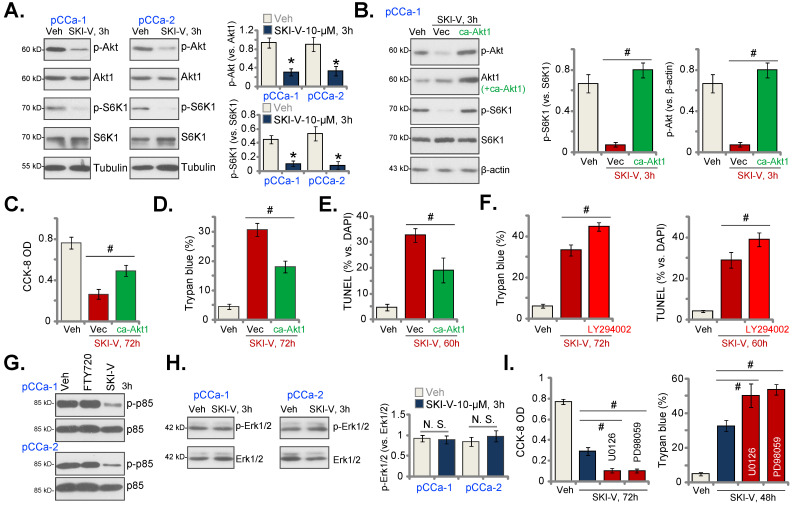
Overexpression and/or overactivation of sphingosine kinase 1/2 (SphK1/2) is important for tumorigenesis and progression of cervical cancer. The current study examined the potential activity and signaling mechanisms of SKI-V, a non-lipid small molecule SphK inhibitor, against cervical cancer cells. In different primary and immortalized cervical cancer cells, SKI-V exerted significant anti-cancer activity by inhibiting cell viability, colony formation, proliferation, cell cycle progression and cell migration. Significant apoptosis activation was detected in SKI-V-treated cervical cancer cells. Significantly, SKI-V also provoked programmed necrosis cascade in cervical cancer cells, as it induced mitochondrial p53-cyclophilin-D-adenine nucleotide translocator-1 (ANT1) complexation, mitochondrial membrane potential collapse, reactive oxygen species production and the release of lactate dehydrogenase into the medium. Further, SKI-V blocked SphK activation and induced ceramide accumulation in primary cervical cancer cells, without affecting SphK1/2 expression. SKI-V-induced cytotoxicity in cervical cancer cells was largely inhibited by sphingosine-1-phosphate or the SphK1 activator K6PC-5, but was sensitized by adding the short-chain ceramide C6. Moreover, SKI-V inhibited Akt-mTOR (mammalian target of rapamycin) activation in primary cervical cancer cells, and its cytotoxicity was mitigated by a constitutively-active Akt. , daily intraperitoneal injection of SKI-V significantly inhibited subcutaneous primary cervical cancer xenograft growth in nude mice. Together, the SphK inhibitor SKI-V suppresses cervical cancer growth and .
丝氨酸棕榈酰转移酶激酶 1/2(SphK1/2)的过表达和/或过度激活对宫颈癌的发生和进展很重要。本研究探讨了 SKI-V(一种非脂小分子 SphK 抑制剂)对宫颈癌细胞的潜在活性和信号机制。在不同的原代和永生化宫颈癌细胞中,SKI-V 通过抑制细胞活力、集落形成、增殖、细胞周期进程和细胞迁移来发挥显著的抗癌活性。在 SKI-V 处理的宫颈癌细胞中检测到明显的细胞凋亡激活。重要的是,SKI-V 还在宫颈癌细胞中引发程序性坏死级联反应,因为它诱导线粒体 p53-细胞色素 P450-D-腺嘌呤核苷酸转运蛋白 1(ANT1)复合物形成、线粒体膜电位崩溃、活性氧物质产生和乳酸脱氢酶释放到培养基中。此外,SKI-V 阻断 SphK 激活并在原代宫颈癌细胞中诱导神经酰胺积累,而不影响 SphK1/2 的表达。SKI-V 诱导的宫颈癌细胞毒性在很大程度上被鞘氨醇 1-磷酸或 SphK1 激活剂 K6PC-5 抑制,但通过添加短链神经酰胺 C6 可使其敏感。此外,SKI-V 抑制原代宫颈癌细胞中的 Akt-mTOR(雷帕霉素的哺乳动物靶标)激活,其细胞毒性被组成型活性 Akt 减轻。, 每天腹腔注射 SKI-V 可显著抑制裸鼠皮下原代宫颈癌异种移植物的生长。总之,SphK 抑制剂 SKI-V 抑制宫颈癌的生长和转移。