Kashyap Jyoti, Riaz Ufana
Materials Research Laboratory, Department of Chemistry, Jamia Millia Islamia New Delhi-110025 India
RSC Adv. 2018 Apr 10;8(24):13218-13225. doi: 10.1039/c8ra00754c. eCollection 2018 Apr 9.
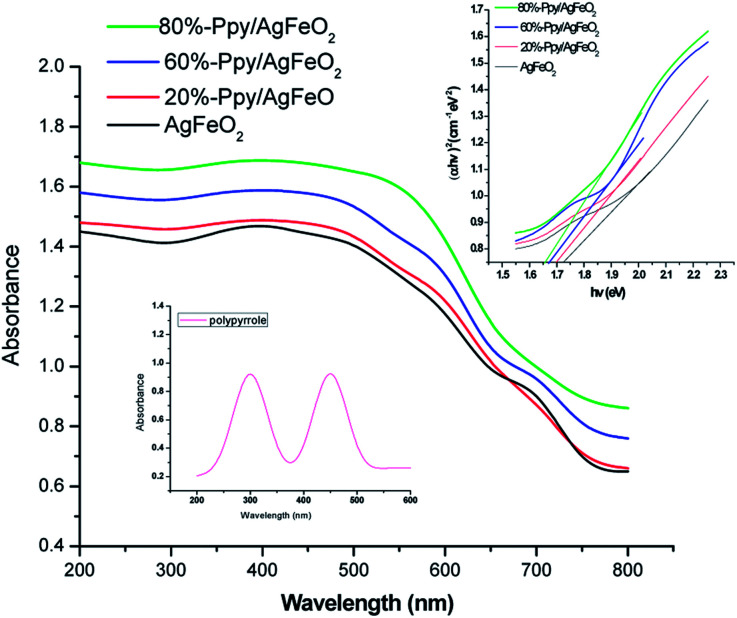
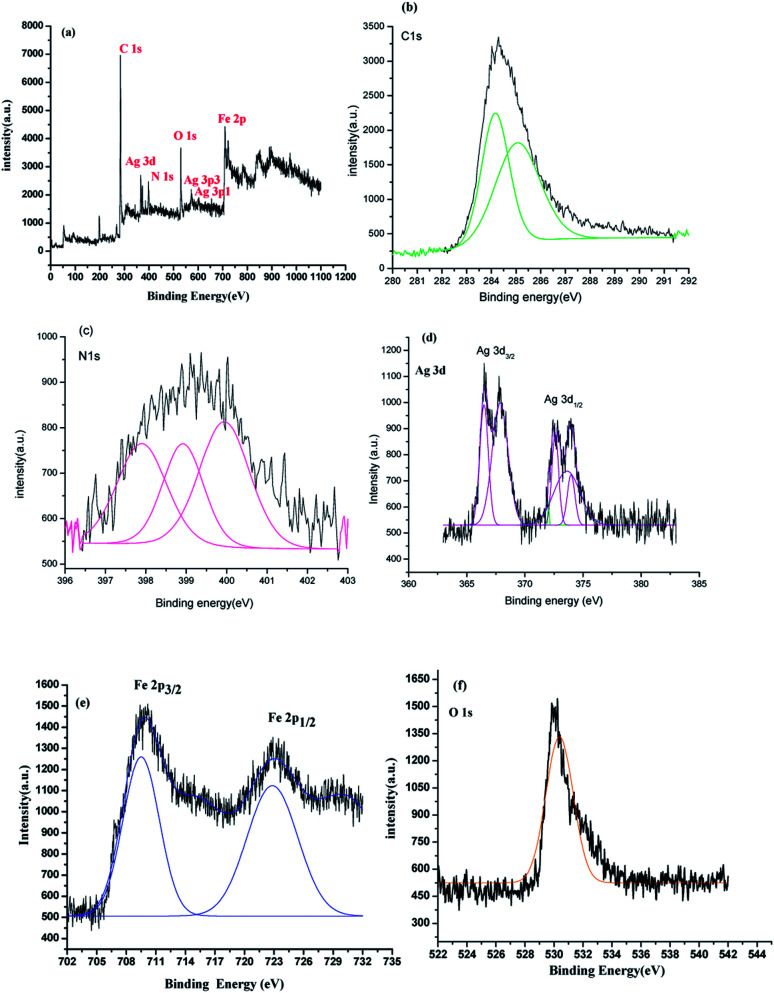
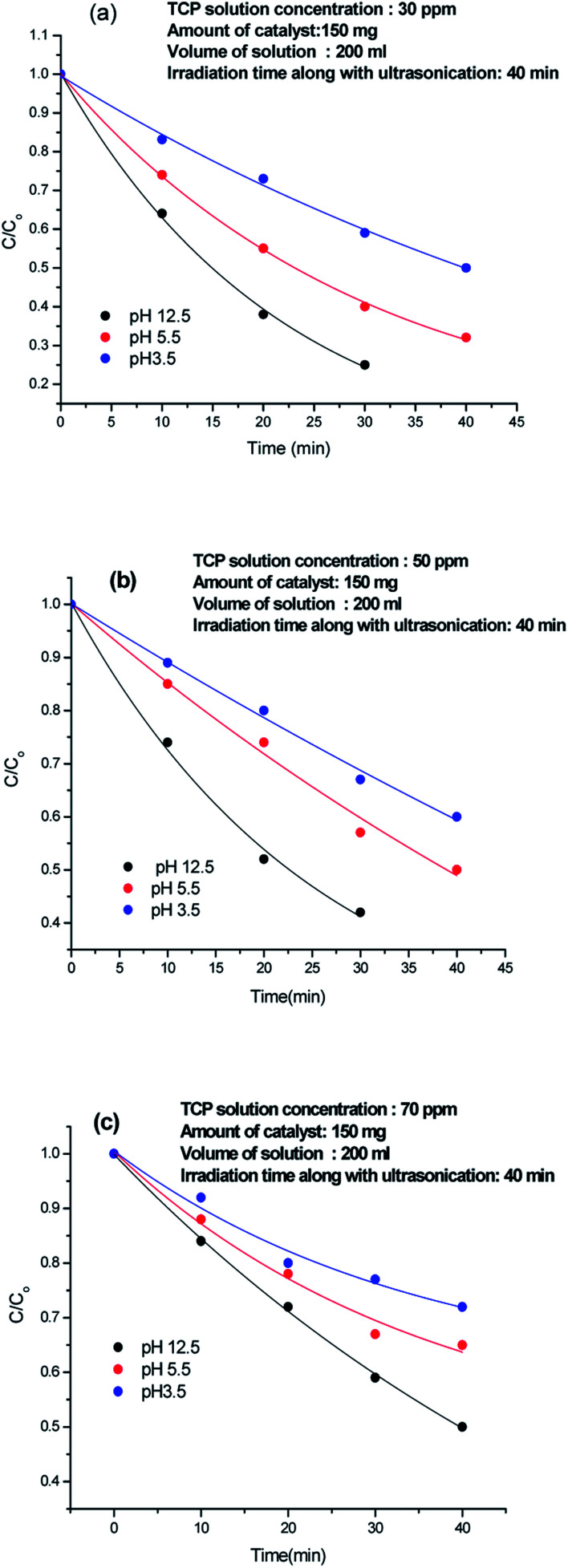
With the aim to develop a visible light driven eco-friendly photocatalyst, the present work reports for the first time the synthesis of polypyrrole/AgFeO nanohybrids synthesized polymerization of pyrrole (by varying the mol ratios) in AgFeO dispersions. The nanohybrids were characterized using Fourier transform infrared (FT-IR) spectroscopy, ultra-violet visible near infrared (UV/VIS/NIR) spectroscopy, X-ray diffraction (XRD), thermogravimetric analysis (TGA) and transmission electron microscopy (TEM) measurements. The TGA measurements confirmed 20%, 60%, and 80% loading of pyrrole in AgFeO and hence the nanohybrids were designated as 20%-Ppy/AgFeO, 60%-Ppy/AgFeO, 80%-Ppy/AgFeO respectively. IR and X-ray photoelectron spectroscopy (XPS) studies confirmed polymerization of pyrrole and formation of the nanohybrids while XRD reflected high crystallinity of the nanohybrids. The photocatalytic activity of Ppy/AgFeO nanohybrids was investigated against 2,4,6-trichlorophenol (2,4,6-TCP) under sonophotocatalytic conditions using visible light irradiation. The nanohybrids were observed to completely degrade the organic pollutant within a short span of 40 min. The degradation kinetics fitted the pseudo-first order model. The fragments were analyzed using LCMS studies which revealed the formation of diols as degraded products. The nanohybrids revealed immense potential for rapid as well as eco-friendly destruction of organic pollutants in wastewater.
为了开发一种可见光驱动的环保型光催化剂,本研究首次报道了在AgFeO分散体中通过吡咯聚合(改变摩尔比)合成聚吡咯/AgFeO纳米杂化物。使用傅里叶变换红外(FT-IR)光谱、紫外可见近红外(UV/VIS/NIR)光谱、X射线衍射(XRD)、热重分析(TGA)和透射电子显微镜(TEM)测量对纳米杂化物进行了表征。TGA测量证实了AgFeO中吡咯的负载量分别为20%、60%和80%,因此纳米杂化物分别被命名为20%-Ppy/AgFeO、60%-Ppy/AgFeO、80%-Ppy/AgFeO。红外和X射线光电子能谱(XPS)研究证实了吡咯的聚合以及纳米杂化物的形成,而XRD反映了纳米杂化物的高结晶度。在可见光照射的声光催化条件下,研究了Ppy/AgFeO纳米杂化物对2,4,6-三氯苯酚(2,4,6-TCP)的光催化活性。观察到纳米杂化物在短短40分钟内完全降解了有机污染物。降解动力学符合准一级模型。使用LCMS研究对碎片进行了分析,结果表明形成了二醇作为降解产物。纳米杂化物显示出在废水中快速且环保地破坏有机污染物的巨大潜力。