Department of Global Health and Infection, Brighton and Sussex Medical School, University of Sussex, Falmer, UK.
Department of Microbiology and Infection, Royal Sussex County Hospital, Brighton, UK.
Lancet Microbe. 2022 May;3(5):e382-e391. doi: 10.1016/S2666-5247(21)00326-8. Epub 2022 Apr 1.
Mycobacterium chimaera is a slowly growing non-tuberculous mycobacterium associated with outbreaks of fatal infections in patients after cardiac surgery, and it is increasingly being detected in patients with chronic lung conditions. M chimaera can cause disseminated disease, osteomyelitis, and chronic skin or soft-tissue infections. We aimed to find new inhibitory compounds and drug repurposing opportunities for M chimaera, as current therapeutic options often result in poor outcomes.
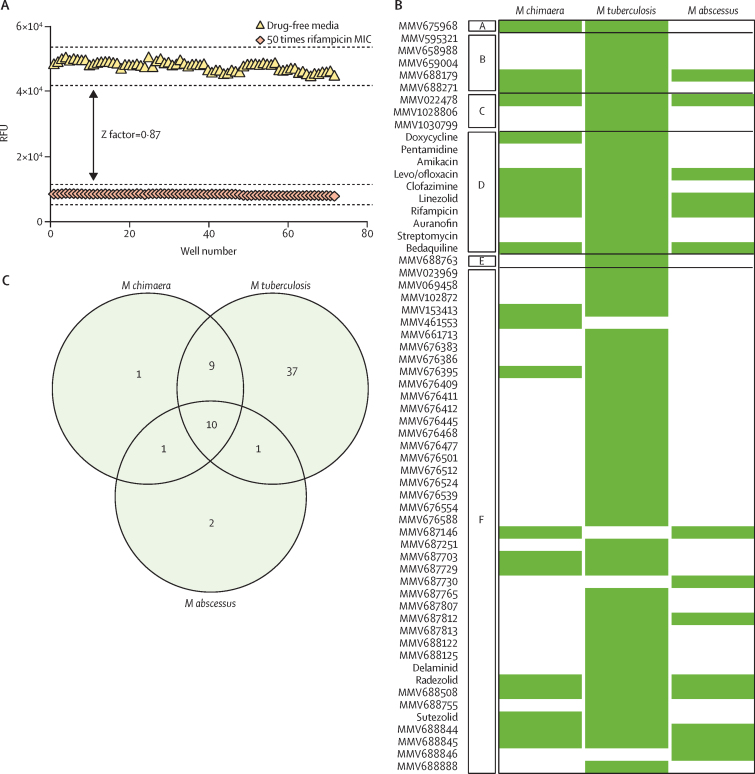
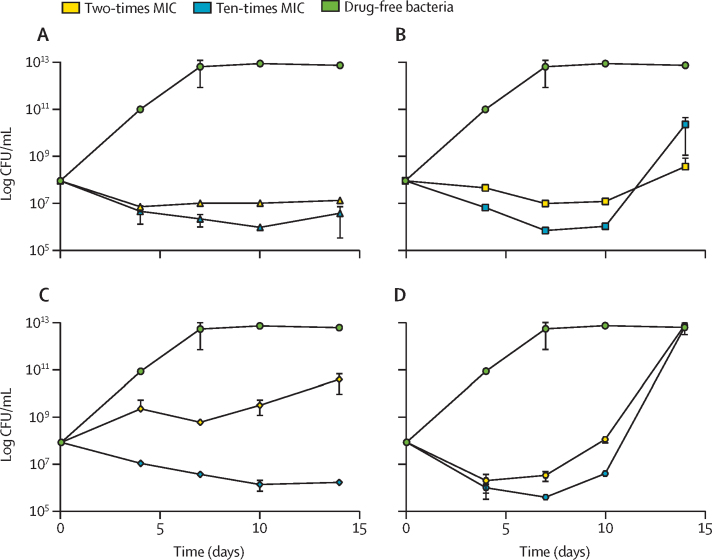
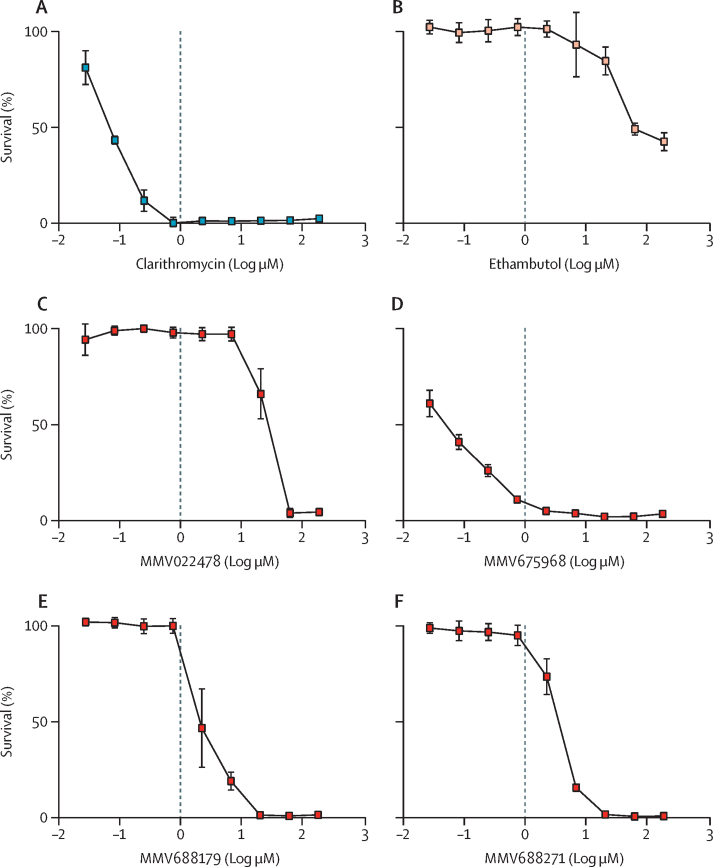
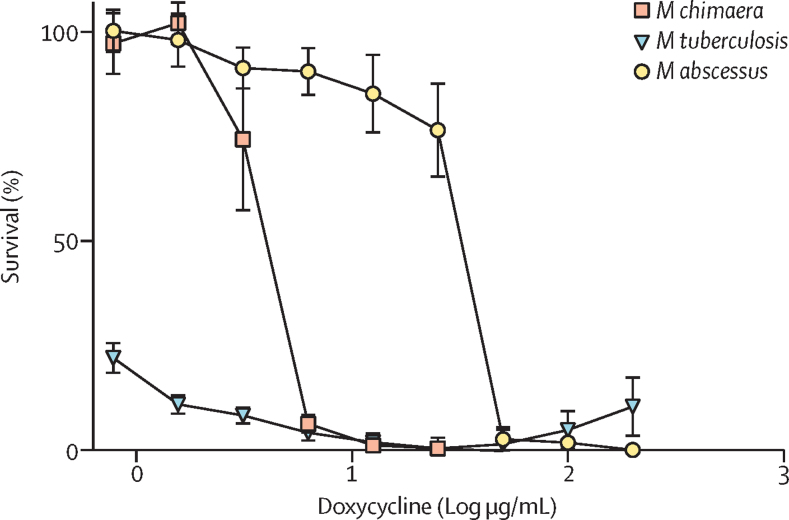
In an open drug discovery approach, we screened the Medicines for Malaria Venture (MMV) Pathogen Box to assess the in-vitro antimicrobial drug susceptibility of M chimaera compared with the antimicrobial drug susceptibility of the slowly growing, major human pathogen Mycobacterium tuberculosis, and the rapidly growing Mycobacterium abscessus reference strains. Compounds identified from an initial resazurin microtitre cell viability assay screen were further characterised by determining the minimum inhibitory concentration (MIC) of MMV Pathogen Box compounds against M chimaera; and the MICs of a panel of 20 drugs commonly used to treat mycobacterial infections against M tuberculosis, M abscessus, and M chimaera. We also assessed the time-kill kinetics of doxycycline, clarithromycin, ethambutol, and rifabutin against M chimaera.
M chimaera was inhibited by 21 (5%) of 400 compounds in the Pathogen Box. Ten compounds were active against all three mycobacteria. MMV675968, with activity against slowly growing mycobacteria that probably targets folate metabolism, had a mean MIC of 2·22 μM (0·80 μg/mL) against M chimaera. Antimicrobial susceptibility testing showed that oxazolidinones such as linezolid (mean MIC 3·13 μg/mL) were active against M chimaera and that bedaquiline was the most potent compound (mean MIC 0·02 μg/mL). Doxycycline, a broad-spectrum antimicrobial drug with excellent tissue penetration properties, also inhibited M chimaera with a mean MIC of 6·25 μg/mL.
Molecular diagnostics present an opportunity for more effective, targeted drug therapies-treating bacterial infections at the species level. Using an open drug discovery platform, we identified compounds that inhibit the newly recognised pathogen M chimaera. The existing evidence base is poor and the option for expensive drug discovery is improbable; therefore, we have also found options for drug repurposing. Future in-vivo efficacy studies will reveal whether these findings result in new, targeted treatment regimens for M chimaera.
Wellcome Trust, National Centre for the Replacement, Refinement and Reduction of Animals in Research (NC3Rs), and the University of Sussex Junior Research Associate scheme.
拟分枝杆菌是一种生长缓慢的非结核分枝杆菌,与心脏手术后致命感染的患者中爆发的感染有关,并且在患有慢性肺部疾病的患者中越来越多地被检测到。拟分枝杆菌可引起播散性疾病、骨髓炎和慢性皮肤或软组织感染。我们旨在寻找新的抑制化合物和药物再利用机会,因为目前的治疗选择往往导致不良结果。
在开放式药物发现方法中,我们筛选了抗疟疾药物公司(MMV)病原体盒,以评估拟分枝杆菌与生长缓慢的主要人类病原体结核分枝杆菌和生长迅速的脓肿分枝杆菌参考株的体外抗微生物药物敏感性。从初始 Resazurin 微量细胞活力测定筛选中鉴定出的化合物进一步通过确定 MMV 病原体盒化合物对拟分枝杆菌的最小抑菌浓度(MIC)来表征;并确定了一组 20 种常用于治疗分枝杆菌感染的药物对结核分枝杆菌、脓肿分枝杆菌和拟分枝杆菌的 MIC。我们还评估了强力霉素、克拉霉素、乙胺丁醇和利福布汀对拟分枝杆菌的杀菌动力学。
病原体盒中的 400 种化合物中有 21 种(5%)抑制了拟分枝杆菌。有 10 种化合物对所有三种分枝杆菌均有活性。MMV675968 对缓慢生长的分枝杆菌具有活性,可能靶向叶酸代谢,对拟分枝杆菌的平均 MIC 为 2.22 μM(0.80 μg/mL)。药敏试验表明,恶唑烷酮类药物如利奈唑胺(平均 MIC 3.13 μg/mL)对拟分枝杆菌有效,而贝达喹啉是最有效的化合物(平均 MIC 0.02 μg/mL)。强力霉素是一种广谱抗菌药物,具有出色的组织穿透特性,对拟分枝杆菌的平均 MIC 为 6.25 μg/mL。
分子诊断为更有效、靶向的药物治疗提供了机会——针对物种水平的细菌感染进行治疗。我们使用开放式药物发现平台,鉴定出了抑制新发现的病原体拟分枝杆菌的化合物。现有的证据基础很差,昂贵的药物发现选择也不太可能;因此,我们也找到了药物再利用的选择。未来的体内疗效研究将揭示这些发现是否为拟分枝杆菌带来新的、靶向的治疗方案。
惠康信托基金会、国家替代、改进和减少动物在研究中的使用中心(NC3Rs)和苏塞克斯大学初级研究助理计划。