Laboratory of Entomology, Wageningen University & Research, Wageningen, The Netherlands.
College of Sciences and Technology, University of Rwanda, Kigali, Rwanda.
PLoS One. 2022 May 11;17(5):e0266714. doi: 10.1371/journal.pone.0266714. eCollection 2022.
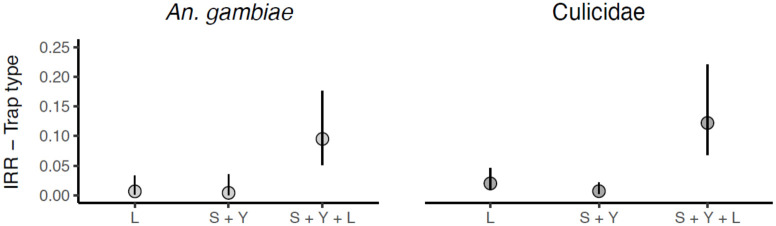
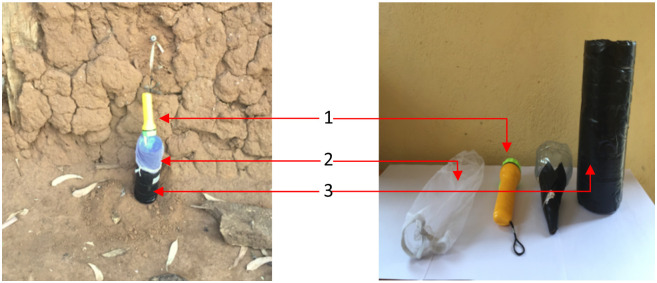
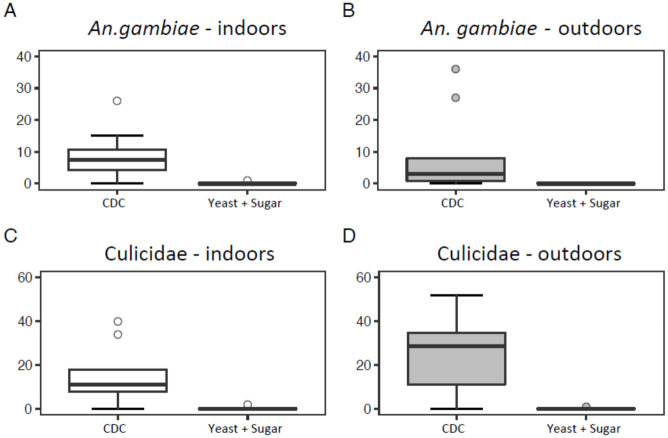
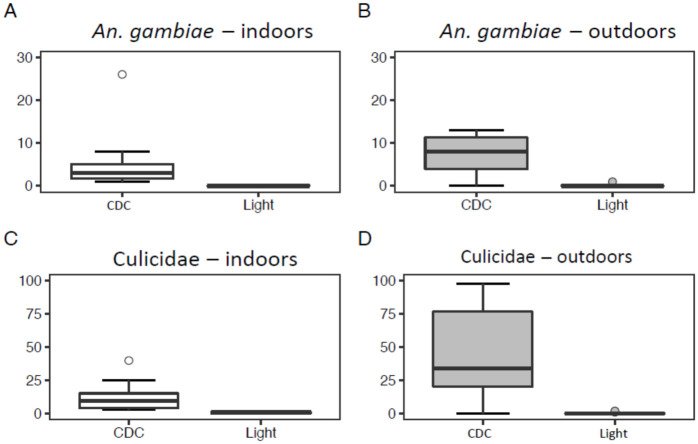
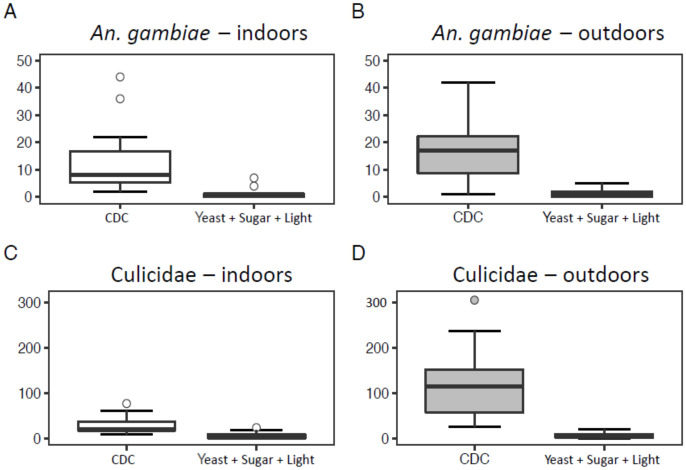
For effective sampling of mosquitoes in malaria surveillance programmes, it is essential to include attractive cues in traps. With the aim of implementing a citizen science project on malaria vectors in rural Rwanda, a handmade plastic bottle trap was designed and tested in the field to determine its effectiveness in capturing adult Anopheles gambiae sensu lato, the main malaria vector, and other mosquito species. Carbon dioxide (CO2) and light were used as attractive cues. CO2 was produced by inoculating sugar with yeast and water. Light was emitted from a torch by light-emitting diodes (LEDs). Under field conditions in rural Rwanda, three handmade trap designs were compared to Centers for Disease Control and Prevention miniature light traps (CDC-LT) in houses. The trap baited with yeast produced CO2 and light caught the highest number of mosquitoes compared to the traps baited with light alone or CO2 alone. The number of An. gambiae s.l. in the handmade trap with light and CO2 was approximately 9-10% of the number caught with a CDC light trap. This suggests that about 10 volunteers with a handmade trap could capture a similar-sized sample of An. gambiae as one CDC-LT would collect. Based on these findings, the handmade plastic bottle trap baited with sugar fermenting yeast and light represents an option for inclusion in mosquito surveillance activities in a citizen science context.
为了在疟疾监测计划中有效地采集蚊子样本,在诱捕器中加入有吸引力的线索是至关重要的。为了在卢旺达农村实施疟疾传播媒介的公民科学项目,设计并在现场测试了一种手工制作的塑料瓶诱捕器,以确定其捕捉主要疟疾传播媒介冈比亚按蚊复合体和其他蚊子种类的效果。二氧化碳(CO2)和光被用作有吸引力的线索。CO2 是通过在糖中接种酵母和水产生的。光通过发光二极管(LED)从手电筒中发出。在卢旺达农村的实地条件下,将三种手工制作的诱捕器设计与疾病控制与预防中心的微型诱捕器(CDC-LT)在房屋中进行了比较。与单独用光或单独用 CO2 诱饵的诱捕器相比,用酵母产生 CO2 和光的诱捕器捕获的蚊子数量最多。用光和 CO2 诱饵的手工诱捕器中冈比亚按蚊的数量约占用 CDC 光诱捕器捕获的数量的 9-10%。这表明,大约 10 名携带手工诱捕器的志愿者可以捕获与一个 CDC-LT 收集的大小相似的冈比亚按蚊样本。基于这些发现,用发酵糖的酵母和光诱饵的手工制作的塑料瓶诱捕器代表了在公民科学背景下纳入蚊子监测活动的一种选择。