Guangzhou Center for Disease Control and Prevention, Guangzhou, China.
Guangzhou Medical University, Guangzhou Eighth People's Hospital, Guangzhou, China.
Rev Inst Med Trop Sao Paulo. 2022 May 6;64:e31. doi: 10.1590/S1678-9946202264031. eCollection 2022.
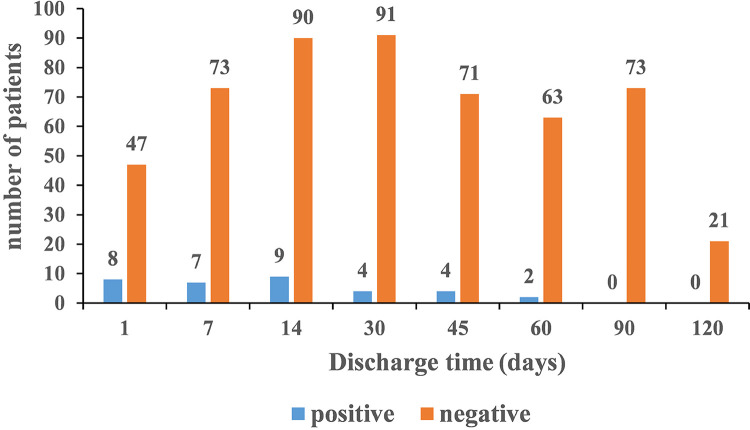
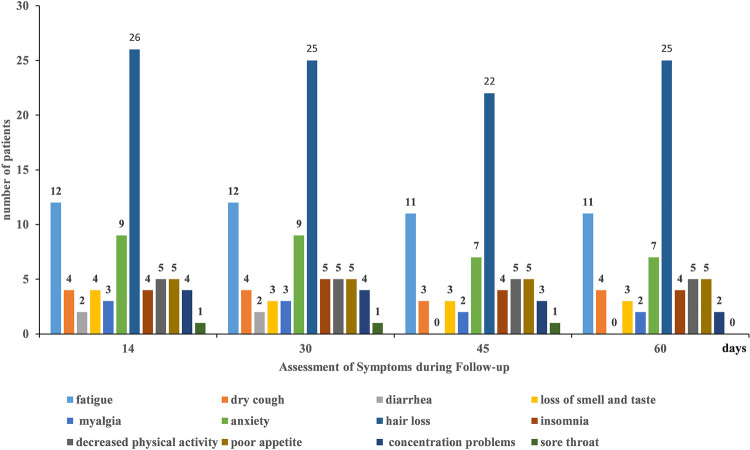
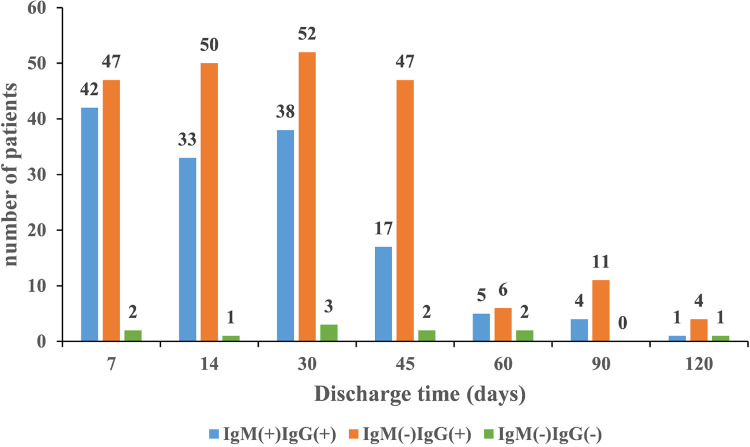
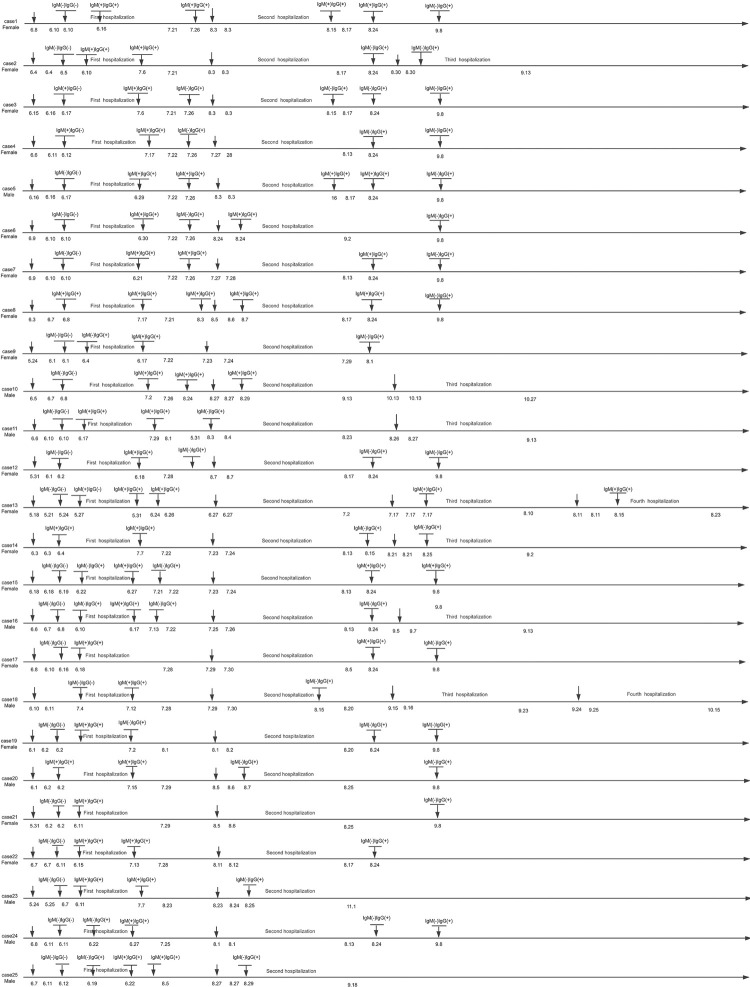
The B.1.617.2 (Delta) variant of the severe acute respiratory syndrome coronavirus 2 (SARS-CoV-2) has contributed to a new increment in cases across the globe. We conducted a prospective follow-up of COVID-19 cases to explore the recurrence and potential propagation risk of the Delta variant and discuss potential explanations for the infection recurrence. A prospective, non-interventional follow-up of discharged patients who had SARS-CoV-2 infections by the Delta variant in Guangdong, China, from May 2021 to June 2021 was conducted. The subjects were asked to complete a physical health examination and undergo nucleic acid testing and antibody detection for the laboratory diagnosis of COVID-19. In total, 20.33% (25/123) of patients exhibited recurrent positive results after discharge. All patients with infection recurrence were asymptomatic and showed no abnormalities in the pulmonary computed tomography. The time from discharge to the recurrent positive testing was usually between 1-33 days, with a mean time of 9.36 days. The cycle threshold from the real-time polymerase chain reaction assay that detected the recurrence of positivity ranged from 27.48 to 39.00, with an average of 35.30. The proportion of vaccination in the non-recurrent group was higher than that in the recurrently positive group (26% vs. 4%; χ2 = 7.902; P < 0.05). Two months after discharge, the most common symptom was hair loss and 59.6% of patients had no long-term symptoms at all. It is possible for the Delta variant SARS-CoV-2 patients after discharge to show recurrent positive results of nucleic acid detection; however, there is a low risk of continuous community transmission. Both, the physical and mental quality of life of discharged patients were significantly affected. Our results suggest that it makes sense to implement mass vaccination against the Delta variant of SARS-CoV-2.
德尔塔(Delta)变异株是严重急性呼吸综合征冠状病毒 2(SARS-CoV-2)的一种,它导致了全球范围内病例的新增长。我们对 COVID-19 病例进行了前瞻性随访,以探讨德尔塔变异株的复发和潜在传播风险,并讨论感染复发的潜在原因。我们在中国广东对 2021 年 5 月至 6 月期间感染德尔塔变异株的 COVID-19 出院患者进行了前瞻性、非干预性随访。要求研究对象完成体格检查,并进行核酸检测和抗体检测,以进行 COVID-19 的实验室诊断。出院后,共有 20.33%(25/123)的患者出现复阳结果。所有感染复发的患者均无症状,肺部计算机断层扫描无异常。从出院到再次阳性检测的时间通常为 1-33 天,平均为 9.36 天。实时聚合酶链反应检测复阳时的循环阈值范围为 27.48-39.00,平均为 35.30。未复发组的疫苗接种比例高于复发阳性组(26%比 4%;χ2=7.902;P<0.05)。出院后 2 个月,最常见的症状是脱发,59.6%的患者根本没有长期症状。出院后德尔塔变异株 SARS-CoV-2 患者可能出现核酸检测复阳结果,但持续社区传播的风险较低。出院患者的身心健康均受到显著影响。我们的研究结果表明,对 SARS-CoV-2 德尔塔变异株实施大规模疫苗接种是有意义的。