Department of Radiation Oncology, National Cancer Center/National Clinical Research Center for Cancer/Cancer Hospital and Shenzhen Hospital, Chinese Academy of Medical Sciences and Peking Union Medical College, Shenzhen, China.
Department of Respiration, Zhongshan Hospital, FuDan University, Shanghai, China.
Ann Am Thorac Soc. 2020 Oct;17(10):1231-1237. doi: 10.1513/AnnalsATS.202004-324OC.
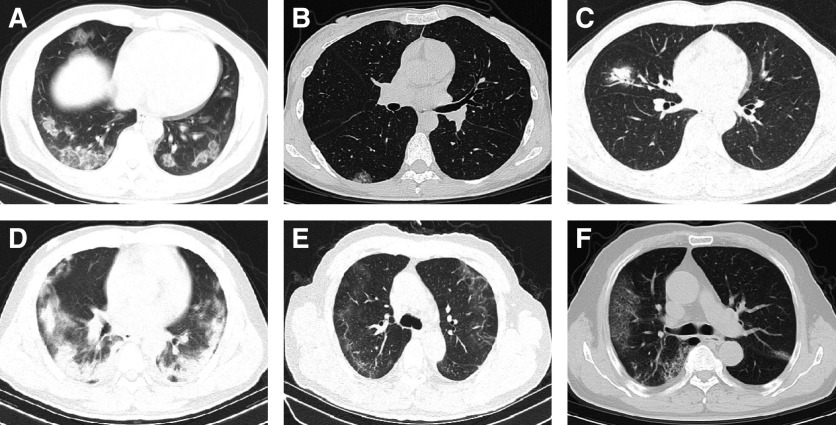
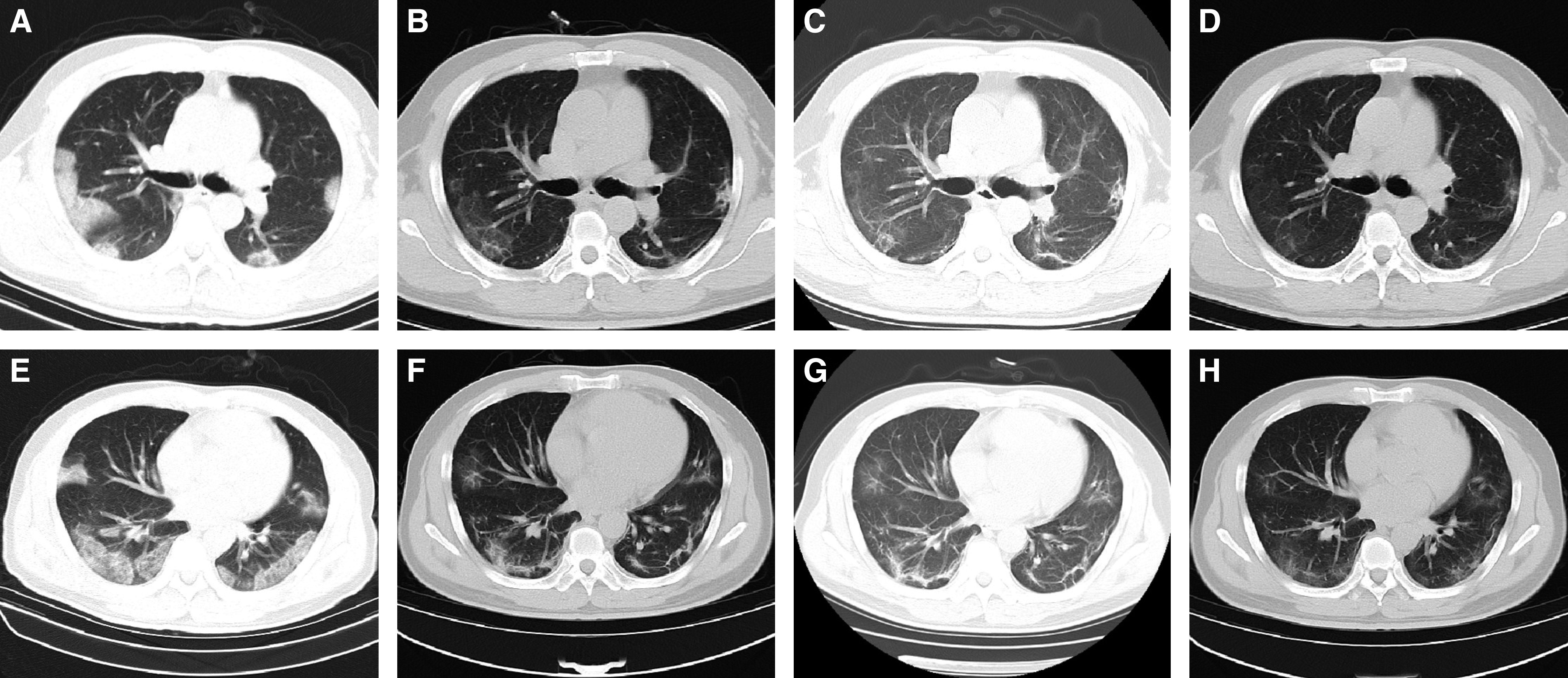
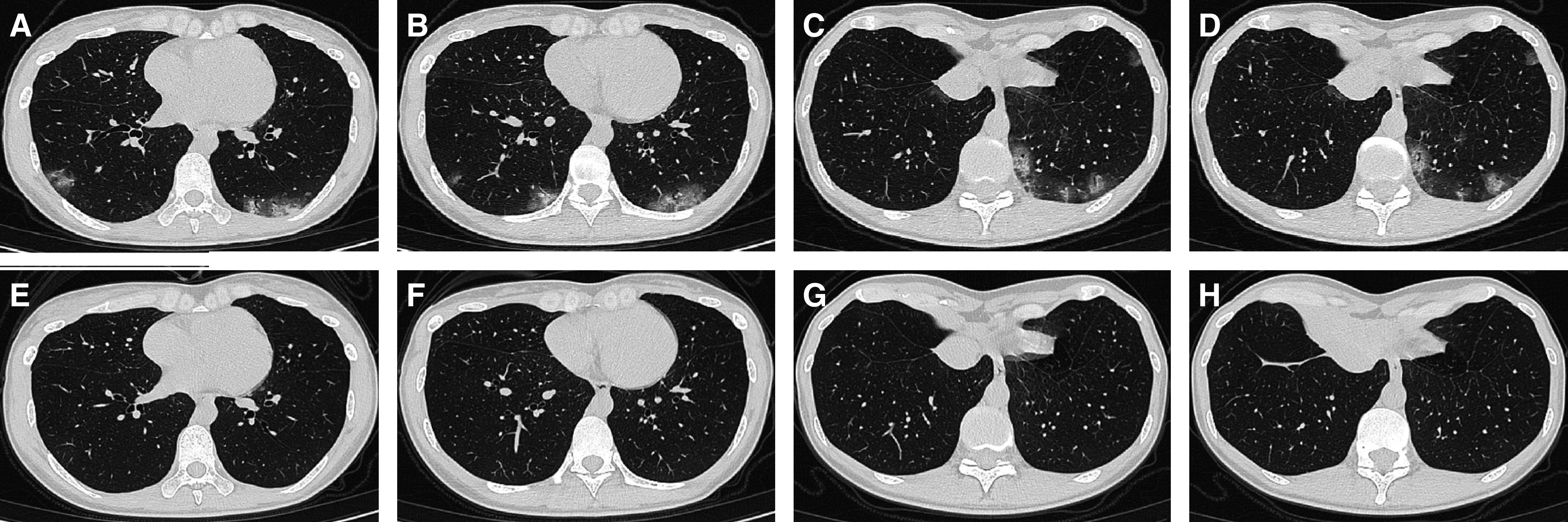
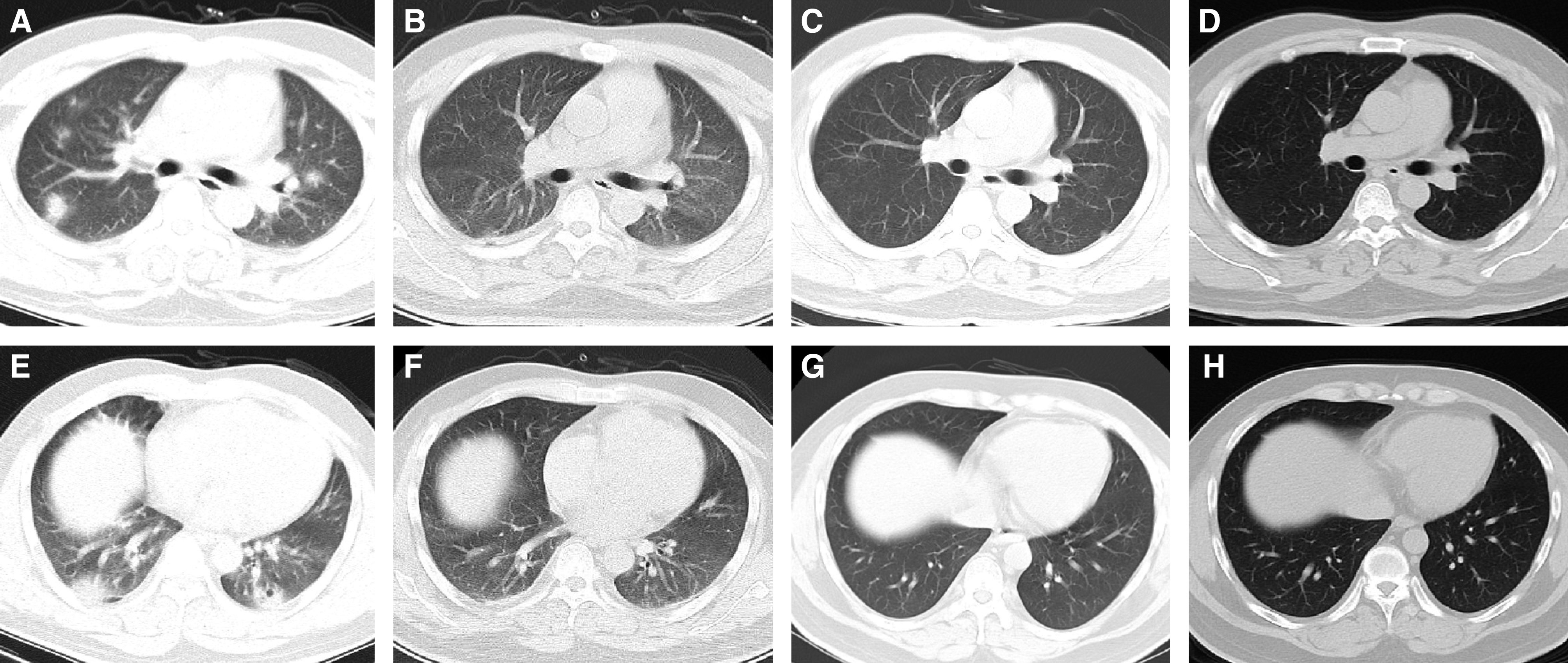
Many clinical studies have focused on the epidemiological and clinical characteristics of inpatients with coronavirus disease (COVID-19). However, there are few reports about the clinical follow-up of discharged patients. To describe the follow-up of patients with COVID-19 in Wenzhou City, Zhejiang, China. We retrospectively reviewed 4-week follow-ups in patients with COVID-19, including computed tomographic (CT) chest scanning, blood testing, and oropharyngeal-swab testing for severe acute respiratory syndrome coronavirus 2 (SARS-CoV-2) ribonucleic acid. The chest CT scans and blood tests were performed on the last day before discharge and 2 weeks and 4 weeks after discharge. The oropharyngeal-swab tests were performed at both 1 week and 2 weeks after discharge. Fifty-one patients with common COVID-19 were enrolled in the study. All the CT and clinical data were collected between January 23 and March 28, 2020. Compared with the abnormalities found on the the last CT scans before discharge, the abnormalities in the lungs at the first and second follow-ups after discharge had been gradually absorbed. The cases with focal ground-glass opacity were reduced from 17.7% to 9.8% of cases. The cases with multiple ground-glass opacities decreased from 80.4% to 23.5%. The cases with consolidation were reduced from 49.0% to 2.0%. The cases with interlobular septal thickening were reduced from 80.4% to 35.3%. The cases with subpleural lines were reduced from 29.4% to 7.8%. The cases with irregular lines were reduced from 41.2% to 15.7%. The lung lesions of 25.5% patients were shown to be fully absorbed on the first CT scans after discharge, and the rate of lung recovery increased to 64.7% after the second follow-up. Nucleic-acid test results became recurrently positive in 17.6% of discharged patients, of whom only 33.3% complained of clinical symptoms. There were no differences in the characteristics of the last CT scans before discharge between the patients with recurrently positive test results and the patients with negative test results. The lung damage was fully absorbed in 55.6% of discharged patients with recurrence of positive test results for SARS-CoV-2 ribonucleic acid. The lung damage due to COVID-19 could be reversible for patients with common COVID-19. A few cases showed recurring positive results of nucleic-acid tests after discharge.
许多临床研究都集中在冠状病毒病(COVID-19)住院患者的流行病学和临床特征上。然而,关于出院患者的临床随访报告很少。本研究旨在描述中国浙江省温州市 COVID-19 患者的随访情况。我们回顾性分析了 4 周的 COVID-19 出院患者随访,包括胸部计算机断层扫描(CT)、血液检测和咽拭子检测严重急性呼吸综合征冠状病毒 2(SARS-CoV-2)的核糖核酸。胸部 CT 扫描和血液检查分别在出院前最后一天、出院后 2 周和 4 周进行。咽拭子检查分别在出院后第 1 周和第 2 周进行。本研究纳入了 51 例普通 COVID-19 患者。所有 CT 和临床数据均于 2020 年 1 月 23 日至 3 月 28 日收集。与出院前最后一次 CT 扫描的异常相比,出院后第一次和第二次随访时肺部的异常逐渐吸收。局灶性磨玻璃影的病例从 17.7%减少到 9.8%。多发性磨玻璃影的病例从 80.4%减少到 23.5%。实变的病例从 49.0%减少到 2.0%。间隔增厚的病例从 80.4%减少到 35.3%。胸膜下线的病例从 29.4%减少到 7.8%。不规则线的病例从 41.2%减少到 15.7%。25.5%的患者出院后首次 CT 扫描显示肺部病变完全吸收,第二次随访后肺部恢复率增加至 64.7%。出院患者中有 17.6%的核酸检测结果呈复阳,其中仅 33.3%有临床症状。复阳患者与阴性患者出院前最后一次 CT 扫描的特征无差异。55.6%的复阳患者 SARS-CoV-2 核糖核酸检测结果完全吸收。普通 COVID-19 患者的肺部损伤可能是可逆的。少数患者出院后 SARS-CoV-2 核糖核酸检测结果出现反复阳性。