Huh Hyuk, Kim Ejin, Yoon Una Amelia, Choi Mun Jeong, Lee Hyewon, Kwon Soie, Kim Clara Tammy, Kim Dong Ki, Kim Yon Su, Lim Chun Soo, Lee Jung Pyo, Kim Ho, Kim Yong Chul
Department of Internal Medicine, Seoul National University Hospital, Seoul, Republic of Korea.
Institute of Health and Environment, Graduate School of Public Health Seoul National University, Seoul, Republic of Korea.
Kidney Res Clin Pract. 2022 Sep;41(5):601-610. doi: 10.23876/j.krcp.21.228. Epub 2022 May 4.
Growing evidence suggests that environmental air pollution adversely affects kidney health. To date, the association between carbon monoxide (CO) and mortality in patients with end-stage renal disease (ESRD) has not been examined.
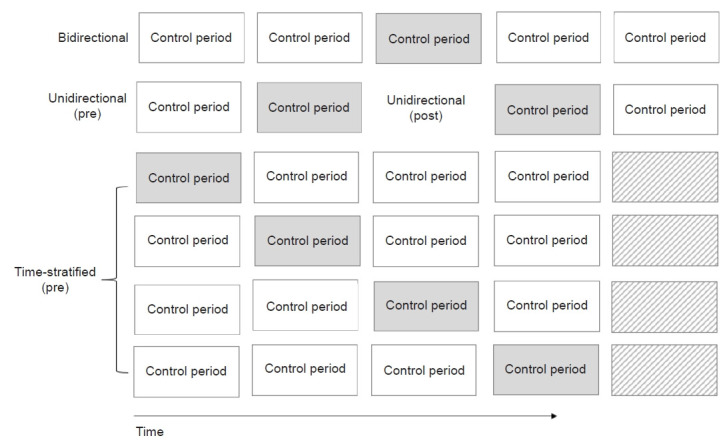
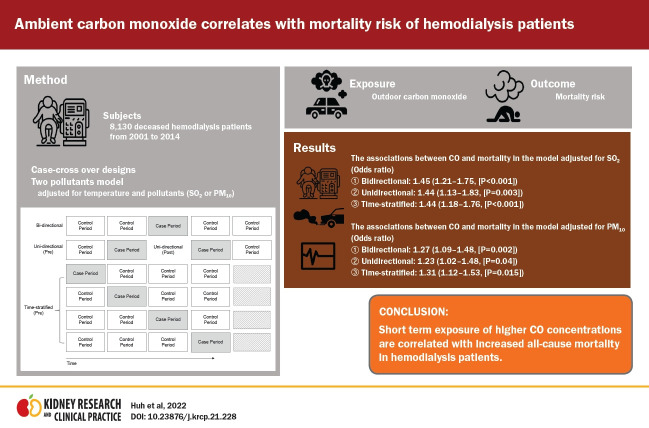
Among 134,478 dialysis patients in the Korean ESRD cohort between 2001 and 2014, 8,130 deceased hemodialysis patients were enrolled, and data were analyzed using bidirectional, unidirectional, and time-stratified case-crossover design. We examined the association between short-term CO concentration and mortality in patients with ESRD. We used a two-pollutant model, adjusted for temperature as a climate factor and for nitrogen dioxide (NO2), sulfur dioxide (SO2), ozone (O3), and particulate matter less than 10 μm in diameter as air pollution variables other than CO.
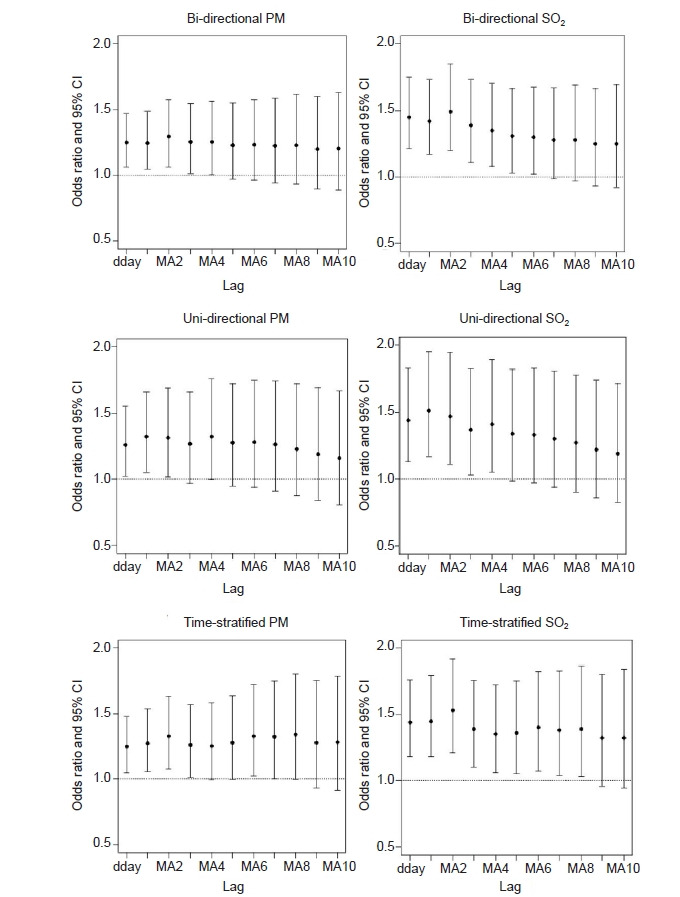
Characteristics of the study population included age (66.2 ± 12.1 years), sex (male, 59.1%; female, 40.9%), and comorbidities (diabetes, 55.6%; hypertension, 14.4%). Concentration of CO was significantly associated with all-cause mortality in the three case-crossover designs using the two-pollutant model adjusted for SO2. Patients with diabetes or age older than 75 years had a higher risk of mortality than patients without diabetes or those younger than 75 years.
Findings presented here suggest that higher CO concentration is correlated with increased all-cause mortality in hemodialysis patients, especially in older high-risk patients.
越来越多的证据表明,环境空气污染会对肾脏健康产生不利影响。迄今为止,尚未研究一氧化碳(CO)与终末期肾病(ESRD)患者死亡率之间的关联。
在2001年至2014年韩国ESRD队列中的134478名透析患者中,纳入8130名已故血液透析患者,并使用双向、单向和时间分层病例交叉设计对数据进行分析。我们研究了ESRD患者短期CO浓度与死亡率之间的关联。我们使用双污染物模型,将温度作为气候因素进行调整,并将二氧化氮(NO2)、二氧化硫(SO2)、臭氧(O3)和直径小于10μm的颗粒物作为除CO之外的空气污染变量进行调整。
研究人群的特征包括年龄(66.2±12.1岁)、性别(男性,59.1%;女性,40.9%)和合并症(糖尿病,55.6%;高血压,14.4%)。在使用针对SO2进行调整的双污染物模型的三种病例交叉设计中,CO浓度与全因死亡率显著相关。患有糖尿病或年龄超过75岁的患者比没有糖尿病或年龄小于75岁的患者有更高的死亡风险。
此处呈现的研究结果表明,较高的CO浓度与血液透析患者全因死亡率增加相关,尤其是在老年高危患者中。