Department of Biomedical Engineering, Asan Medical Institute of Convergence Science and Technology, Asan Medical Center, University of Ulsan College of Medicine, Seoul, 05505, South Korea.
Division of Cardiology, Department of Internal Medicine, Seoul National University, Bundang Hospital 82, Gumi-ro 173beon-gil, Bundang-gu, Gyeonggi-do, Seongnam-si, 13620, South Korea.
Sci Rep. 2022 May 11;12(1):7746. doi: 10.1038/s41598-022-11967-2.
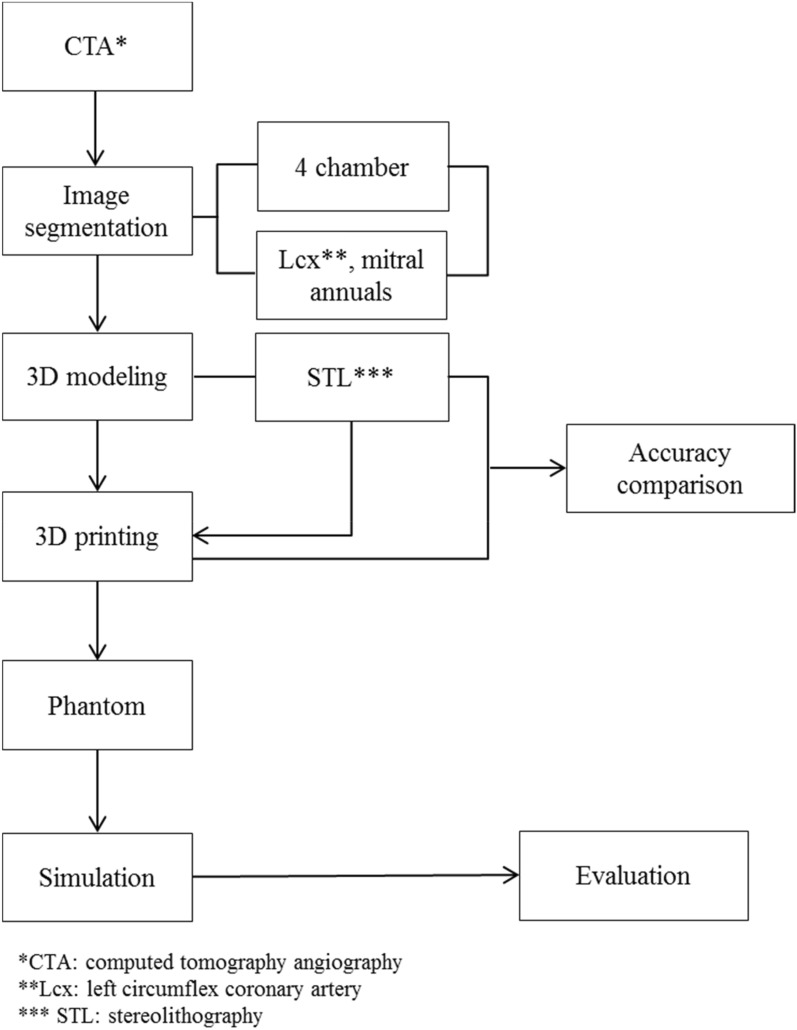
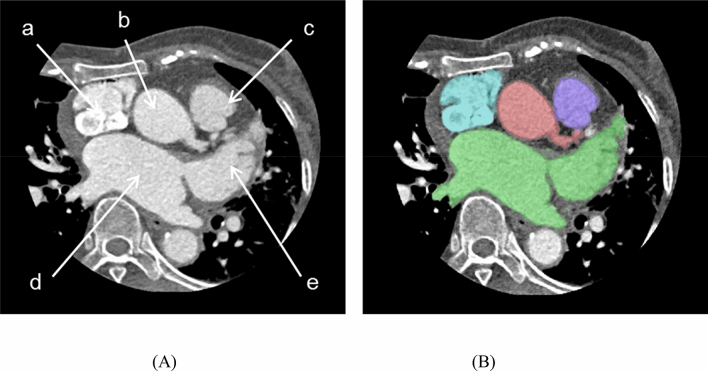
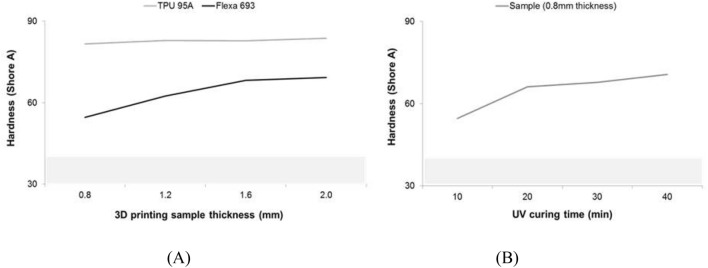
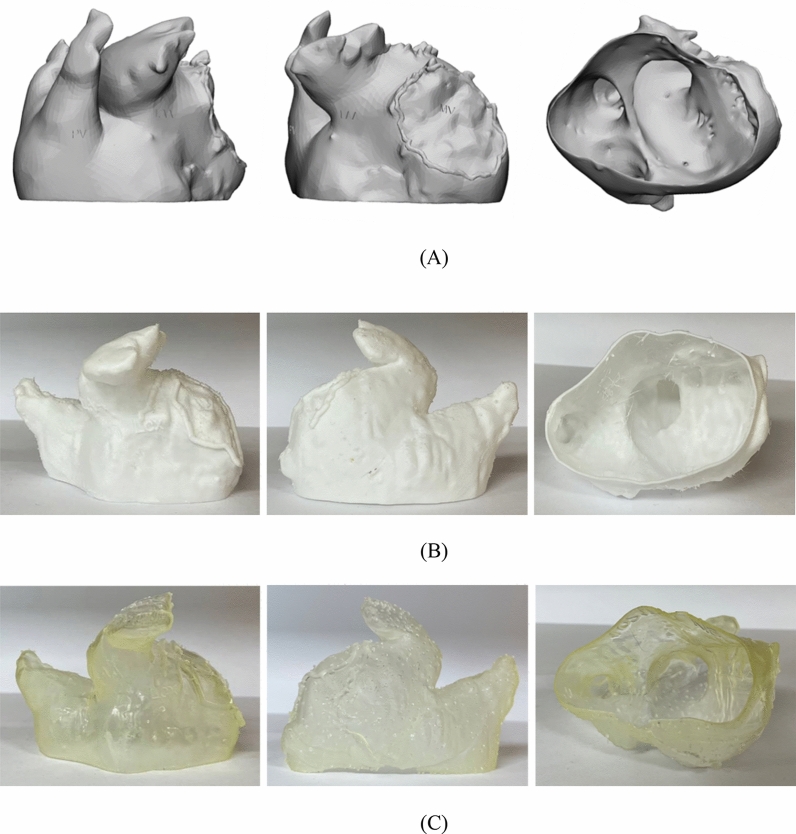
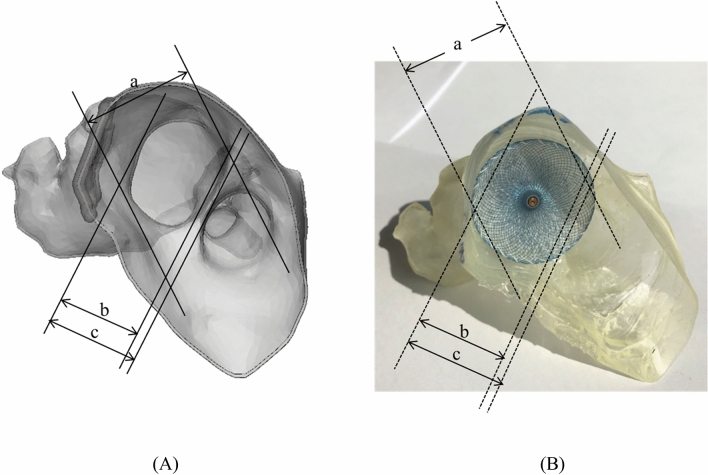
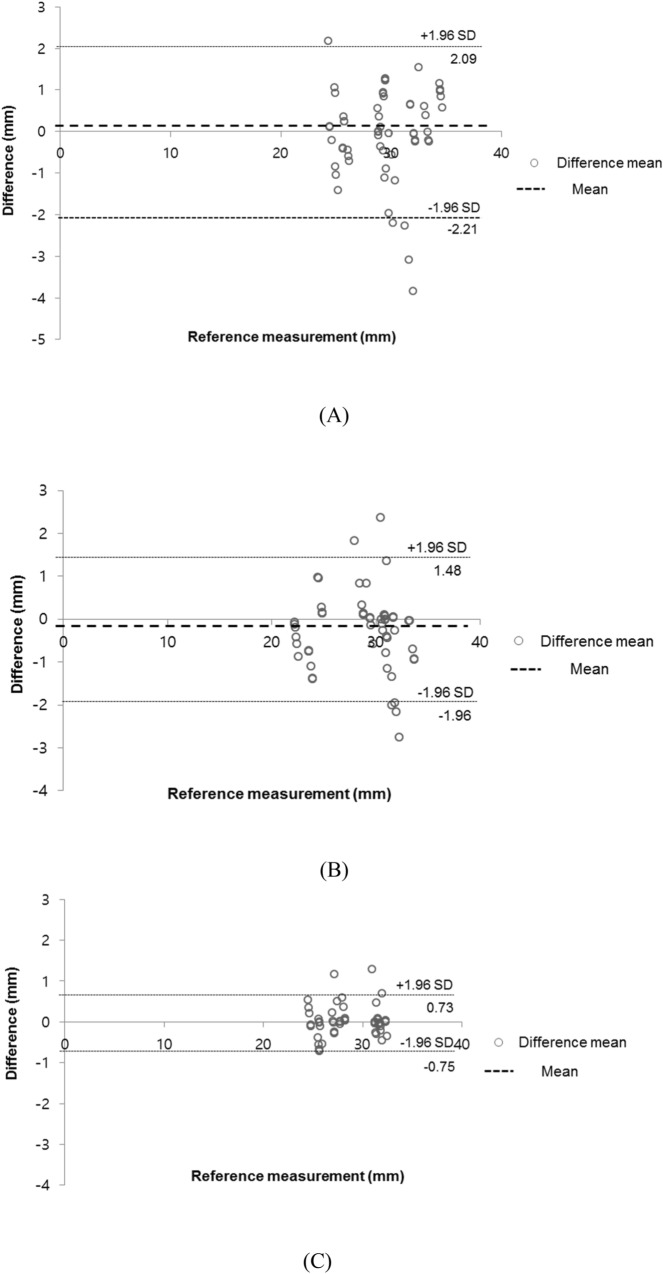
Left atrial appendage (LAA) occlusion (LAAO) is used to close the finger-like extension from the left atrium with occlusion devices to block the source of thrombosis. However, selection of the devices size is not easy due to various anatomical changes. The purpose of this study is patient-specific, computed tomography angiography (CTA)-based, three-dimensionally (3D) printed LAAO phantoms were applied pre-procedure to determine the size. Ten patients were enrolled prospectively in March 2019 and December 2020. The cardiac structure appearing in CTA was first segmented, and the left atrium and related structures in the LAAO procedure were modeled. The phantoms were fabricated using two methods of fused deposition modeling (FDM) and stereolithography (SLA) 3D printers with thermoplastic polyurethane (TPU) and flexible resin materials and evaluated by comparing their physical and material properties. The 3D-printed phantoms were directly used to confirm the shape of LAA, and to predict the device size for LAAO. In summary, the shore A hardness of TPU of FDM was about 80-85 shore A, and that of flexible resin of SLA was about 50-70 shore A. The measurement error between the STL model and 3D printing phantoms were 0.45 ± 0.37 mm (Bland-Altman, limits of agreement from - 1.8 to 1.6 mm). At the rehearsal, the estimations of device sizes were the exact same with those in the actual procedures of all 10 patients. In conclusion, simulation with a 3D-printed left atrium phantom could be used to predict the LAAO insertion device size accurately before the procedure.
左心耳(LAA)闭塞(LAAO)用于通过闭塞装置关闭从左心房延伸的指状结构,以阻断血栓形成的源头。然而,由于各种解剖结构的变化,选择设备的尺寸并不容易。本研究的目的是基于患者的、计算机断层血管造影(CTA)的、三维(3D)打印的 LAAO 模型,用于术前确定尺寸。2019 年 3 月和 2020 年 12 月,前瞻性纳入了 10 名患者。首先对 CTA 中出现的心脏结构进行分割,并对 LAAO 手术中的左心房和相关结构进行建模。使用两种方法,熔融沉积建模(FDM)和立体光刻(SLA)3D 打印机,用热塑性聚氨酯(TPU)和柔性树脂材料制造模型,并通过比较其物理和材料性能进行评估。3D 打印模型可直接用于确认 LAA 的形状,并预测 LAAO 的设备尺寸。总之,FDM 的 TPU 的肖氏 A 硬度约为 80-85 肖氏 A,而 SLA 的柔性树脂的肖氏 A 硬度约为 50-70 肖氏 A。STL 模型和 3D 打印模型之间的测量误差为 0.45±0.37mm(Bland-Altman,一致性界限从-1.8 至 1.6mm)。在排练过程中,所有 10 名患者的设备尺寸的估计与实际手术完全相同。总之,在手术前使用 3D 打印左心房模型进行模拟可以准确预测 LAAO 插入设备的尺寸。