Department of Microbiology and Immunology, University of Michigan, Ann Arbor, Michigan, USA.
mBio. 2022 Jun 28;13(3):e0103522. doi: 10.1128/mbio.01035-22. Epub 2022 May 12.
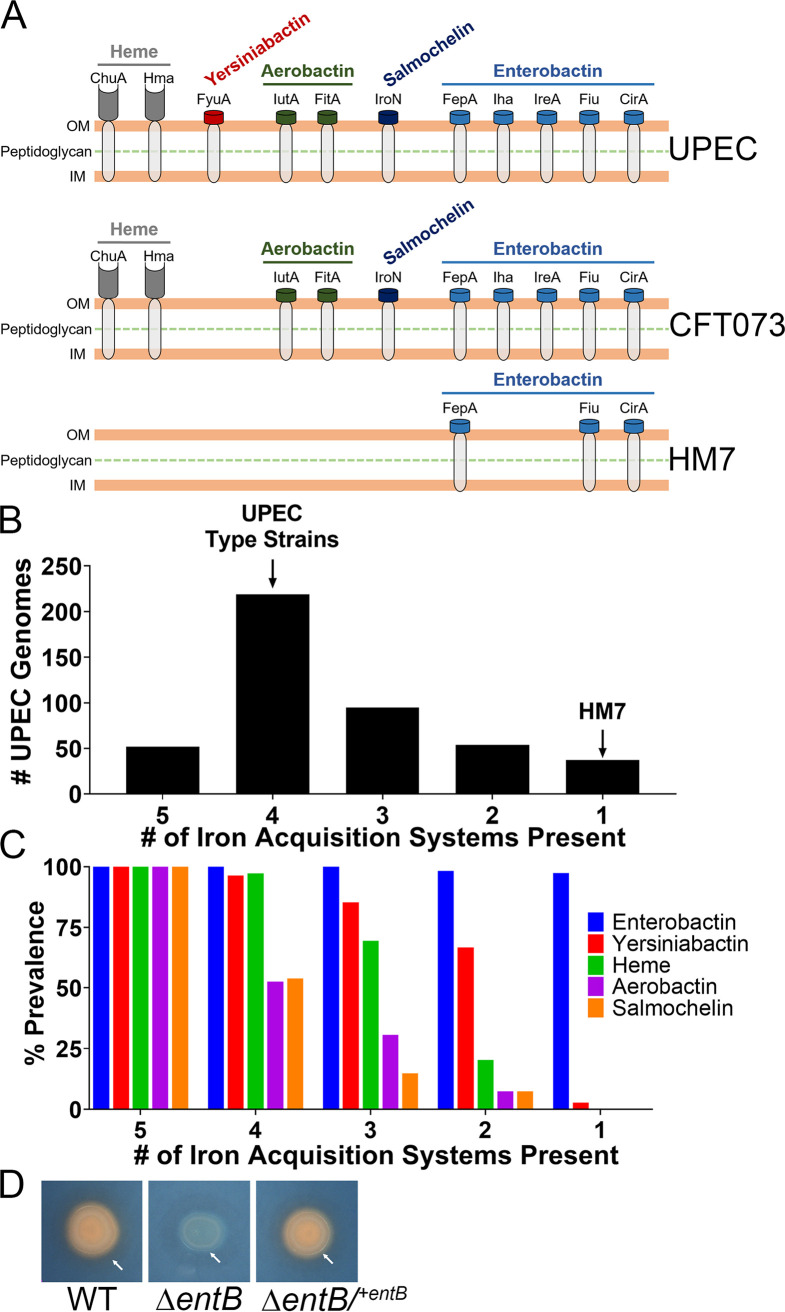
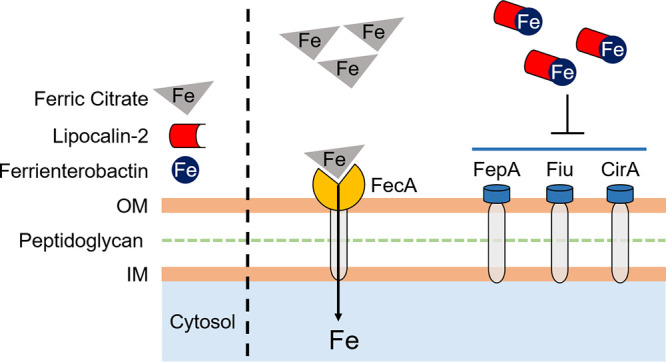
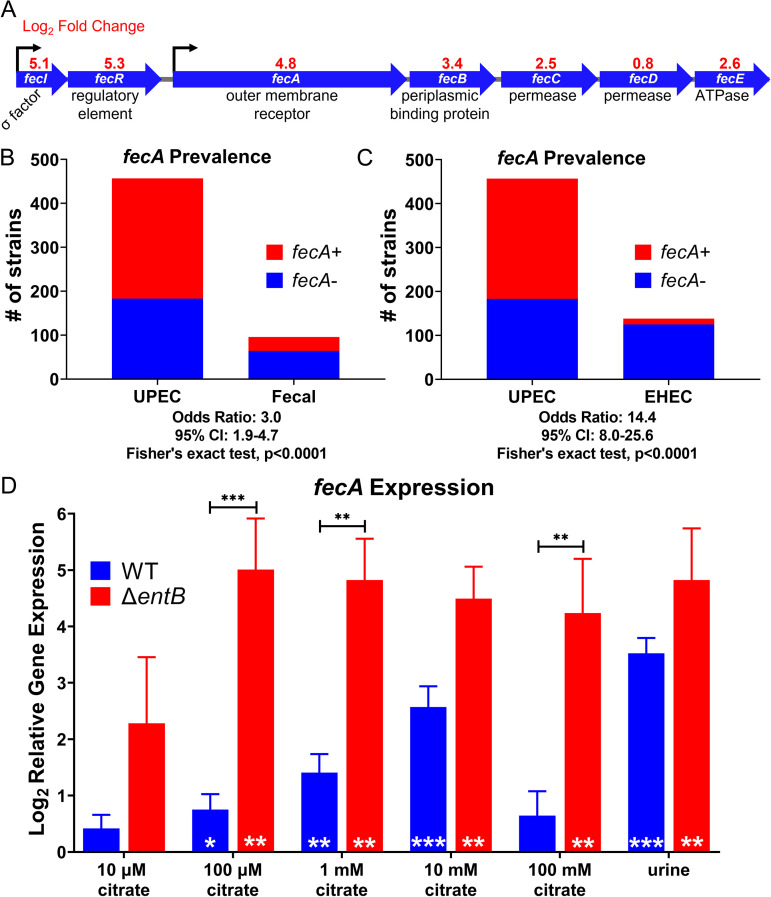
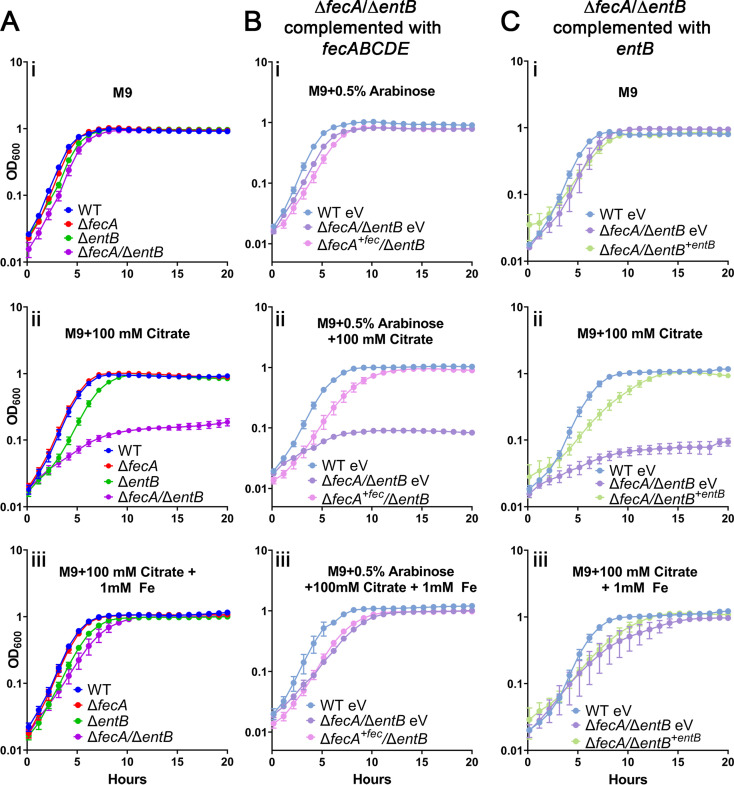
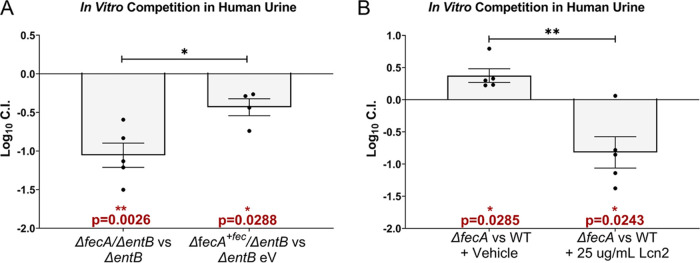
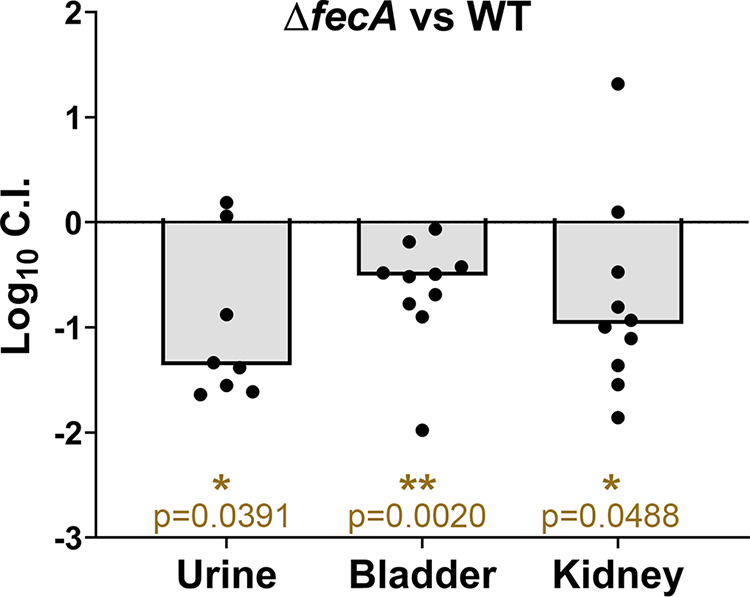
More than half of women will experience a urinary tract infection (UTI), with uropathogenic Escherichia coli (UPEC) causing ~80% of uncomplicated cases. Iron acquisition systems are essential for uropathogenesis, and UPEC strains encode highly diverse iron acquisition systems, underlining their importance. However, a recent UPEC clinical isolate, HM7, lacks this diversity and instead encodes the synthesis pathway for a sole siderophore, enterobactin. To determine if HM7 possesses unidentified iron acquisition systems, we performed RNA sequencing under iron-limiting conditions and demonstrated that the ferric citrate uptake system ( and ) was highly upregulated. Importantly, there are high levels of citrate within urine, some of which is bound to iron, and the system is enriched in UPEC isolates compared to fecal strains. Therefore, we hypothesized that HM7 and other similar strains use the system to acquire iron in the host. Deletion of both enterobactin biosynthesis and ferric citrate uptake (Δ/Δ) abrogates use of ferric citrate as an iron source, and provides an advantage in human urine in the absence of enterobactin. However, in a UTI mouse model, is a fitness factor independent of enterobactin production, likely due to the action of host lipocalin-2 chelating ferrienterobactin. These findings indicate that ferric citrate uptake is used as an iron source when siderophore efficacy is limited, such as in the host during UTI. Defining these novel compensatory mechanisms and understanding the nutritional hierarchy of preferred iron sources within the urinary tract are important in the search for new approaches to combat UTI. UPEC, the primary causative agent of uncomplicated UTI, is responsible for five billion dollars in health care costs in the United States each year. Rates of antibiotic resistance are on the rise; therefore, it is vital to understand the mechanisms of UPEC pathogenesis to uncover potential targets for novel therapeutics. Iron acquisition systems used to obtain iron from sequestered host sources are essential for UPEC survival during UTI and have been used as vaccine targets to prevent infection. This study reveals the ferric citrate uptake system is another important iron acquisition system that is highly enriched in UPEC strains. Ferric citrate uptake has not previously been associated with UPEC isolates, underlining the importance of the continued study of these strains to fully understand their mechanisms of pathogenesis.
超过一半的女性会经历尿路感染(UTI),其中尿路致病性大肠杆菌(UPEC)导致约 80%的非复杂性病例。铁获取系统对尿路致病性至关重要,而 UPEC 株系编码高度多样化的铁获取系统,这凸显了它们的重要性。然而,最近的 UPEC 临床分离株 HM7 缺乏这种多样性,而是编码了一种单一铁载体肠杆菌素的合成途径。为了确定 HM7 是否具有未被识别的铁获取系统,我们在铁限制条件下进行了 RNA 测序,结果表明,柠檬酸铁摄取系统( 和 )高度上调。重要的是,尿液中含有高水平的柠檬酸,其中一些与铁结合,并且 系统在 UPEC 分离株中比粪便菌株更为丰富。因此,我们假设 HM7 和其他类似菌株利用 系统在宿主中获取铁。肠杆菌素生物合成和柠檬酸铁摄取的缺失(Δ/Δ)消除了柠檬酸铁作为铁源的利用,并且 在没有肠杆菌素的情况下在人尿中提供了优势。然而,在尿路感染小鼠模型中, 是一种独立于肠杆菌素产生的适应因子,可能是由于宿主乳铁蛋白-2 螯合铁肠杆菌素的作用。这些发现表明,当 siderophore 功效受到限制时,例如在尿路感染期间的宿主中,柠檬酸铁摄取被用作铁源。定义这些新的补偿机制并了解尿路中首选铁源的营养层次对于寻找对抗 UTI 的新方法非常重要。UPEC 是简单性尿路感染的主要病原体,每年在美国造成 50 亿美元的医疗保健费用。抗生素耐药率正在上升;因此,了解 UPEC 发病机制的机制以发现潜在的新型治疗靶点至关重要。用于从宿主来源中获取铁的铁获取系统对 UPEC 在尿路感染期间的生存至关重要,并且已被用作疫苗靶点以预防感染。本研究揭示了柠檬酸铁摄取系统是另一种在 UPEC 株系中高度丰富的重要铁获取系统。柠檬酸铁摄取以前与 UPEC 分离株无关,这凸显了继续研究这些菌株以充分了解其发病机制的重要性。