Zhou Jie, Xing Zhaoquan, Xiao Yilei, Li Mengyou, Li Xin, Wang Ding, Dong Zhaogang
Department of Nursing, Liaocheng Vocational and Technical College, Liaocheng, China.
Department of Urology, Qilu Hospital of Shandong University, Jinan, China.
Front Mol Biosci. 2022 Apr 25;9:816939. doi: 10.3389/fmolb.2022.816939. eCollection 2022.
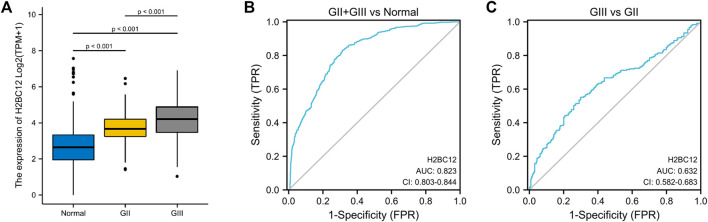
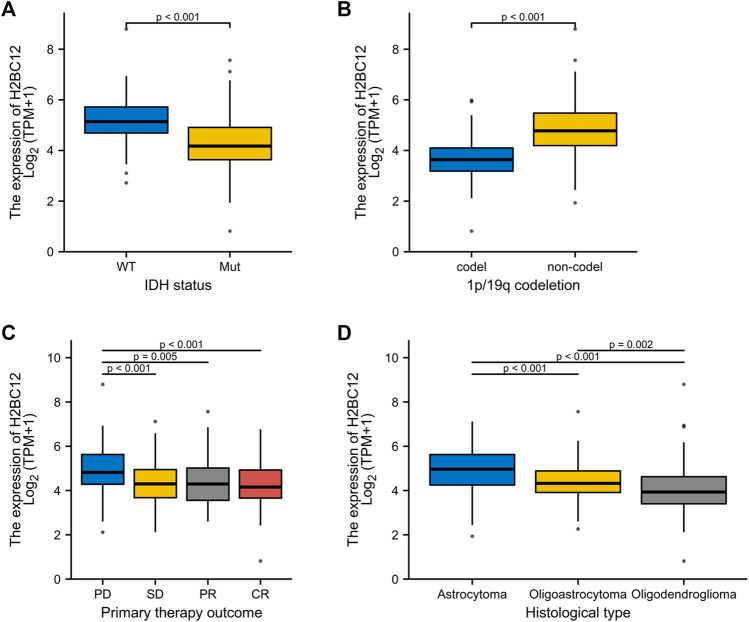
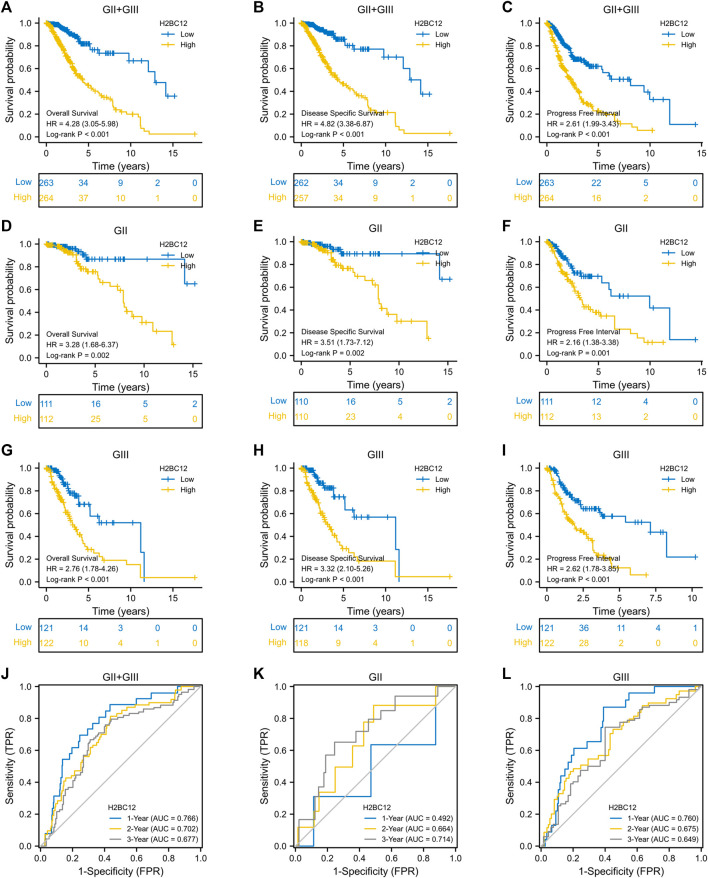
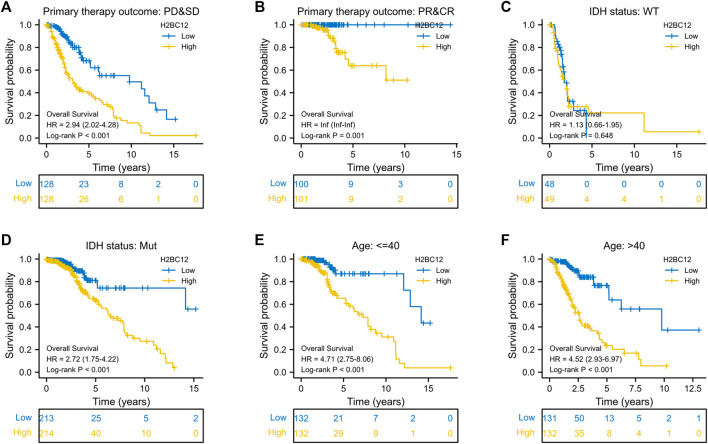
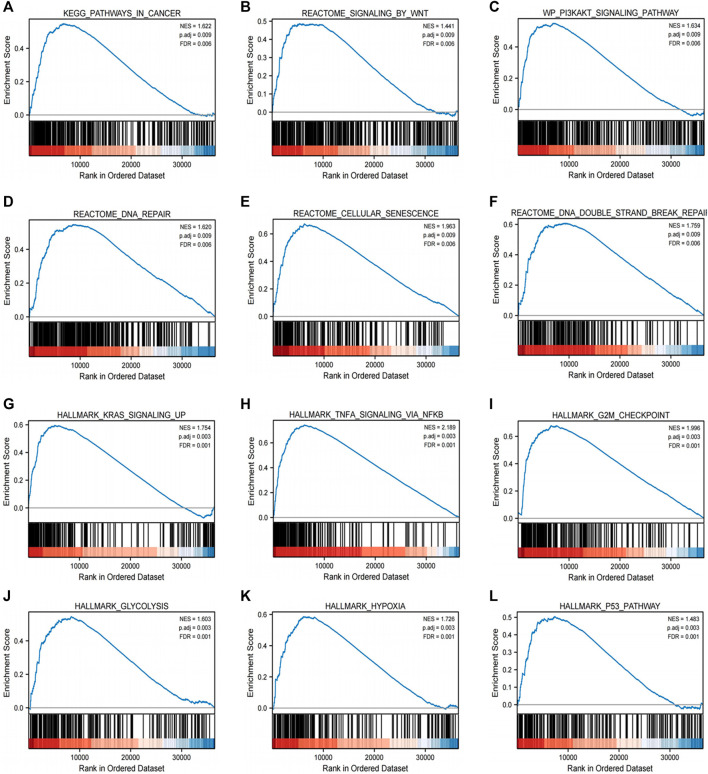
Glioma is a common primary malignant brain tumor. Grade II (GII) gliomas are prone to develop into anaplastic grade III (GIII) gliomas, which indicate a higher malignancy and poorer survival outcome. This study aimed to satisfy the increasing demand for novel sensitive biomarkers and potential therapeutic targets in the treatment of GII and GIII gliomas. A TCGA dataset was used to investigate the expression of H2BC12 mRNA in GII and GIII gliomas and its relation to clinical pathologic characteristics. Glioma tissues were collected to verify results from the TCGA dataset, and H2BC12 mRNA was detected by RT-qPCR. ROC analysis was employed to evaluate the classification power for GII and GIII. The significance of H2BC12 mRNA GII and GIII gliomas was also investigated. In addition, H2BC12 expression-related pathways were enriched by gene set enrichment analysis (GSEA). DNA methylation level and mutation of H2BC12 were analyzed by the UALCAN and CBioPortal databases, respectively. Based on the sample data from multiple databases and RT-qPCR, higher expression of H2BC12 mRNA was found in GII and GIII glioma tissue compared to normal tissue, which was consistent with a trend with our clinical specimen. H2BC12 mRNA had a better power in distinguishing between GII and GIII and yielded an AUC of 0.706 with a sensitivity of 76.9% and specificity of 81.8%. Meanwhile, high H2BC12 levels were associated with IDH status, 1p/19q codeletion, primary therapy outcome, and the histological type of gliomas. Moreover, the overall survival (OS), disease-specific survival (DSS), and progress-free interval (PFI) of GII glioma patients with higher levels of H2BC12 were shorter than those of patients with lower levels as well as GIII patients. In the multivariate analysis, a high H2BC12 level was an independent predictor for poor survival outcomes of gliomas. The Wnt or PI3K-AKT signaling pathways, DNA repair, cellular senescence, and DNA double-strand break repair were differentially activated in phenotypes that were positively associated with H2BC12. H2BC12 DNA methylation was high in TP53 nonmutant patients, and no H2BC12 mutation was observed in gliomas patients. H2BC12 is a promising biomarker for the diagnosis and prognosis of patients with WHO grade II and III gliomas.
胶质瘤是一种常见的原发性恶性脑肿瘤。二级(GII)胶质瘤易于发展为间变性三级(GIII)胶质瘤,这表明其恶性程度更高,生存结果更差。本研究旨在满足在GII和GIII胶质瘤治疗中对新型敏感生物标志物和潜在治疗靶点日益增长的需求。使用TCGA数据集来研究H2BC12 mRNA在GII和GIII胶质瘤中的表达及其与临床病理特征的关系。收集胶质瘤组织以验证TCGA数据集的结果,并通过RT-qPCR检测H2BC12 mRNA。采用ROC分析来评估对GII和GIII的分类能力。还研究了H2BC12 mRNA在GII和GIII胶质瘤中的意义。此外,通过基因集富集分析(GSEA)富集了与H2BC12表达相关的通路。分别通过UALCAN和CBioPortal数据库分析H2BC12的DNA甲基化水平和突变情况。基于来自多个数据库的样本数据和RT-qPCR,发现与正常组织相比,GII和GIII胶质瘤组织中H2BC12 mRNA的表达更高,这与我们临床标本的趋势一致。H2BC12 mRNA在区分GII和GIII方面具有更好的能力,其AUC为0.706,敏感性为76.9%,特异性为81.8%。同时,H2BC12高水平与IDH状态、1p/19q共缺失、初始治疗结果以及胶质瘤的组织学类型相关。此外,H2BC12水平较高的GII胶质瘤患者的总生存期(OS)、疾病特异性生存期(DSS)和无进展生存期(PFI)均短于H2BC12水平较低的患者以及GIII患者。在多变量分析中,H2BC12高水平是胶质瘤患者生存结果差的独立预测因素。在与H2BC12呈正相关的表型中,Wnt或PI3K-AKT信号通路、DNA修复、细胞衰老和DNA双链断裂修复被差异激活。TP53非突变患者中H2BC12的DNA甲基化较高,在胶质瘤患者中未观察到H2BC12突变。H2BC12是世界卫生组织二级和三级胶质瘤患者诊断和预后的一个有前景的生物标志物。