Shi Mengyuan, Cao Limin, Liu Huiyuan, Zhou Yuhan, Zhao Yuhong, Xia Yang
Department of Clinical Epidemiology, Shengjing Hospital of China Medical University, Shenyang, China.
The Third Central Hospital of Tianjin, Tianjin, China.
Front Aging Neurosci. 2022 Apr 25;14:845053. doi: 10.3389/fnagi.2022.845053. eCollection 2022.
Previous research has shown that tea drinking has a bearing on Cognitive Disorders, but the conclusions are inconsistent. The purpose of this research was to systematically assess the published evidence pertaining to tea drinking and the risk of cognitive disorders in older adults using a meta-analysis, and to concurrently evaluate the dose-response association.
A meta-analysis.
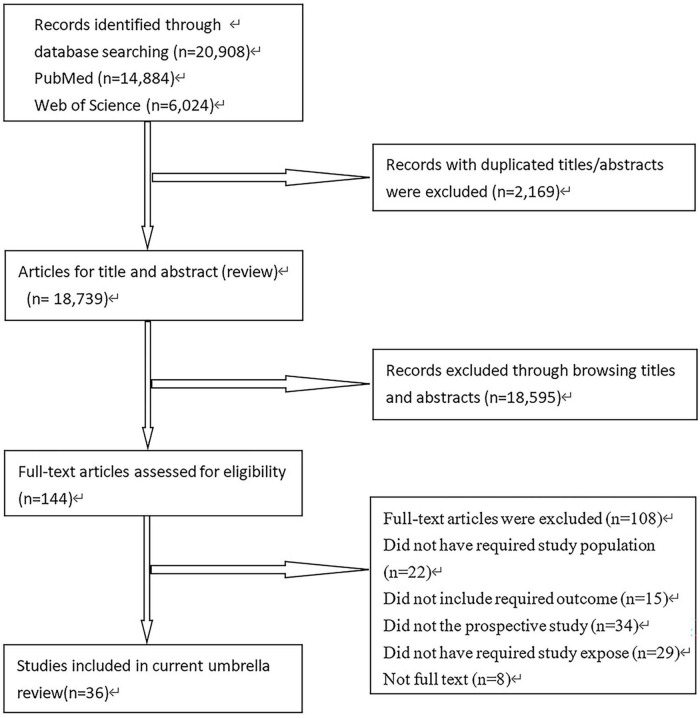
We used the PubMed and Web of Science databases for a literature search until 30 May 2021. We initially retrieved 20,908 studies (14,884 from PubMed and 6,024 from the Web of Science), Thirty-six studies met the inclusion criteria (7 case-control, 16 cohort, and 13 cross-sectional studies), involved 224,980 participants.
Pooled odd ratios (ORs) with their corresponding 95% confidence intervals (CIs) were used to evaluate the strength of the association under a fixed- or random-effect model according to heterogeneity test results.
The results showed that drinking tea was negatively associated with cognitive disorders (OR: 0.76, 95% CI: 0.70-0.82). Moreover, dose-response associations were found between tea drinking and cognitive disorders (1 time/day: OR, 0.81; 95% CI, 0.70-0.95; 1 cup/day: OR, 0.86; 95% CI, 0.78-0.94). In addition, subgroup analyses were performed according to study designs, study population, types of tea drinking, outcomes and methods used to assess outcomes. Most of the results in the subgroup analyses were consistent with the main results.
The results of the present study provided abundant evidence that tea drinking is inversely proportional with the occurrence of cognitive disorders in older adults. A linear dose-response association between tea drinking and decreased prevalence of cognitive disorders was found.
先前的研究表明,饮茶与认知障碍有关,但结论并不一致。本研究的目的是通过荟萃分析系统评估已发表的关于饮茶与老年人认知障碍风险的证据,并同时评估剂量反应关系。
荟萃分析。
我们使用PubMed和Web of Science数据库进行文献检索,截至2021年5月30日。我们最初检索到20908项研究(来自PubMed的14884项和来自Web of Science的6024项),36项研究符合纳入标准(7项病例对照研究、16项队列研究和13项横断面研究),涉及224980名参与者。
根据异质性检验结果,采用固定效应模型或随机效应模型,以合并比值比(OR)及其相应的95%置信区间(CI)来评估关联强度。
结果表明,饮茶与认知障碍呈负相关(OR:0.76,95%CI:0.70-0.82)。此外,还发现了饮茶与认知障碍之间的剂量反应关系(每天1次:OR,0.81;95%CI,0.70-0.95;每天1杯:OR,0.86;95%CI,0.78-0.94)。此外,还根据研究设计、研究人群、饮茶类型、结局以及评估结局的方法进行了亚组分析。亚组分析中的大多数结果与主要结果一致。
本研究结果提供了充分的证据,表明饮茶与老年人认知障碍的发生呈反比。发现饮茶与认知障碍患病率降低之间存在线性剂量反应关系。