Hou Yakun, Vasileva Elena A, Carne Alan, McConnell Michelle, El-Din A Bekhit Alaa, Mishchenko Natalia P
Department of Food Science, University of Otago PO Box 56 Dunedin 9054 New Zealand.
Laboratory of the Chemistry of Natural Quinonoid Compounds, G.B. Elyakov Pacific Institute of Bioorganic Chemistry, Far Eastern Branch of Russian Academy of Sciences Prospect 100 let Vladivostoku 159/2 690022 Vladivostok Russia
RSC Adv. 2018 Sep 21;8(57):32637-32650. doi: 10.1039/c8ra04777d. eCollection 2018 Sep 18.
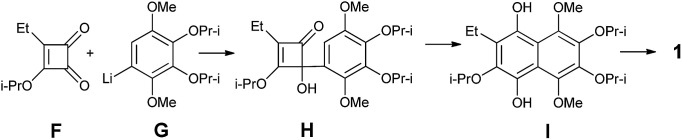
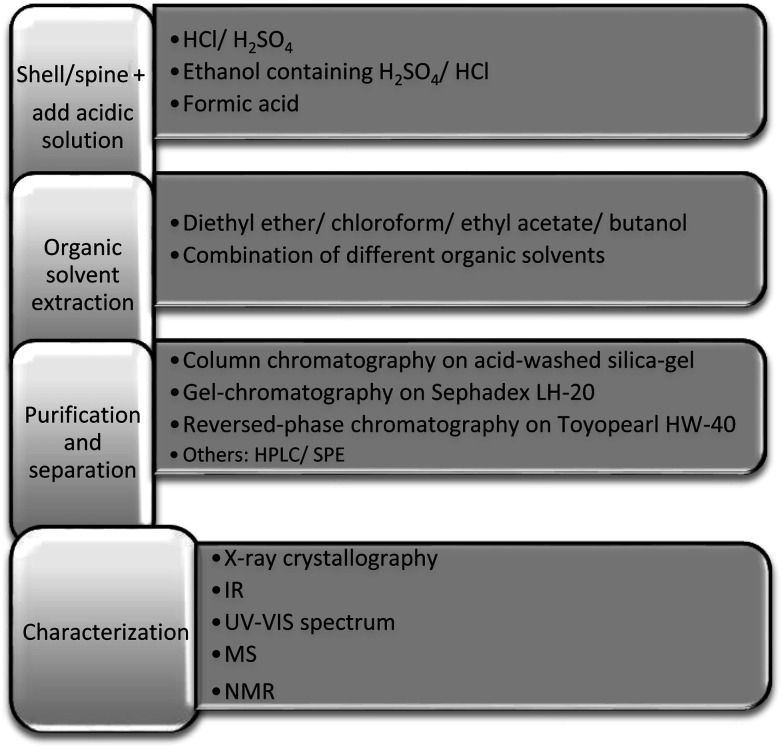
Quinones are widespread in nature and have been found in plants, fungi and bacteria, as well as in members of the animal kingdom. More than forty closely related naphthoquinones have been found in echinoderms, mainly in sea urchins but occasionally in brittle stars, sea stars and starfish. This review aims to examine controversial issues on the chemistry, biosynthesis, functions, stability and application aspects of the spinochrome class, a prominent group of secondary metabolites found in sea urchins. The emphasis of this review is on the isolation and structure of these compounds, together with evaluation of their relevant biological activities, source organisms, the location of origin and methods used for isolation and identification. In addition, the studies of their biosynthesis and ecological function, stability and chemical synthesis have been highlighted. This review aims to establish a focus for future spinochrome research and its potential for benefiting human health and well-being.
醌类在自然界中广泛存在,已在植物、真菌、细菌以及动物界成员中被发现。在棘皮动物中已发现四十多种密切相关的萘醌,主要存在于海胆中,但偶尔也存在于蛇尾、海星和海盘车中。本综述旨在探讨关于海胆中发现的一类重要次生代谢产物——海胆色素类在化学、生物合成、功能、稳定性和应用方面的争议性问题。本综述的重点是这些化合物的分离和结构,以及对其相关生物活性、来源生物、起源位置和分离鉴定方法的评估。此外,还突出了对其生物合成、生态功能、稳定性和化学合成的研究。本综述旨在为未来海胆色素研究及其对人类健康和福祉的潜在益处确立一个重点。