Wang Shuai, Ding Haichang, Wang Yuesong, Fan Congbin, Tu Yayi, Liu Gang, Pu Shouzhi
Jiangxi Key Laboratory of Organic Chemistry, Jiangxi Science and Technology Normal University Nanchang Jiangxi 330013 P. R. China
RSC Adv. 2018 Sep 25;8(58):33121-33128. doi: 10.1039/c8ra05963b. eCollection 2018 Sep 24.
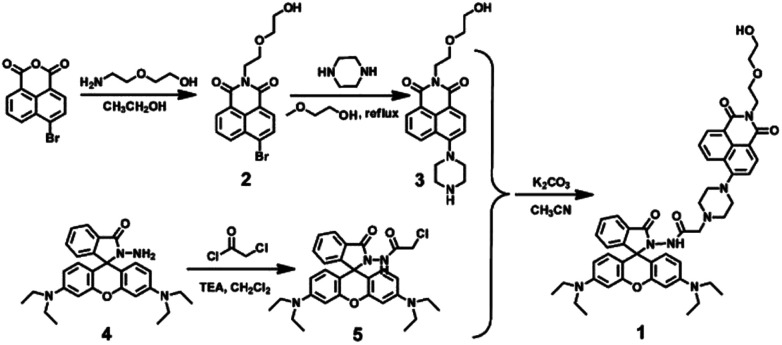
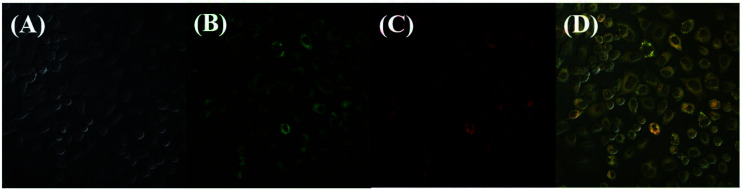
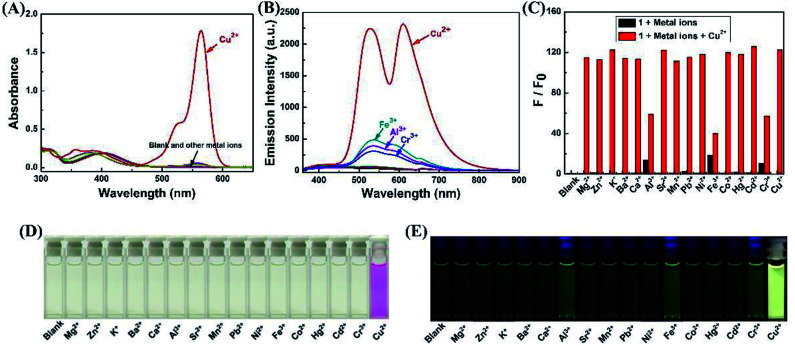
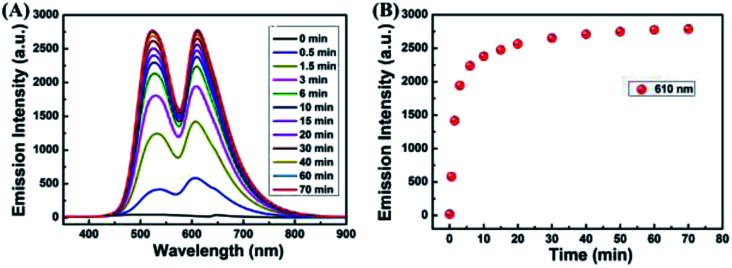
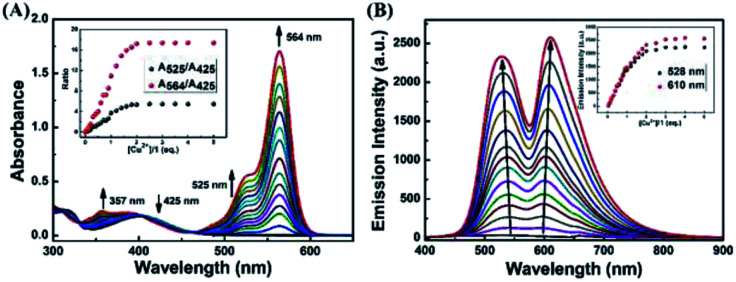
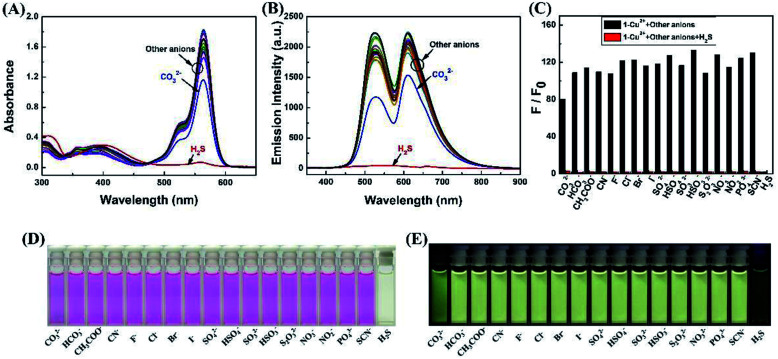
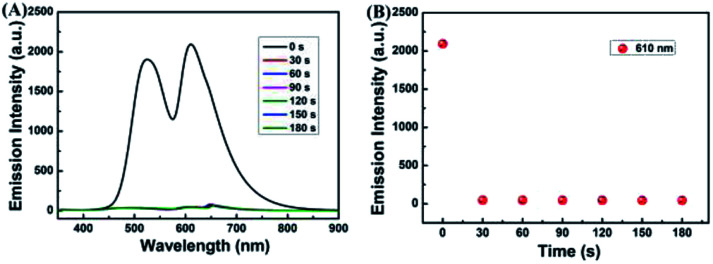
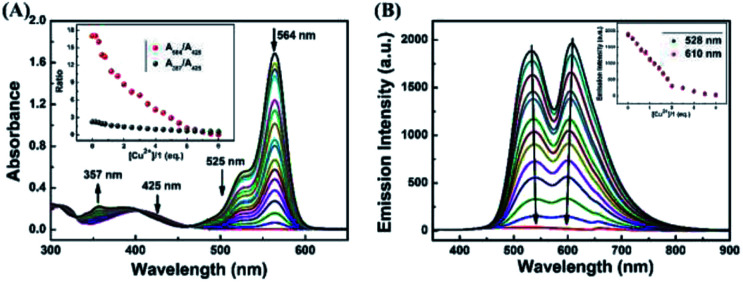
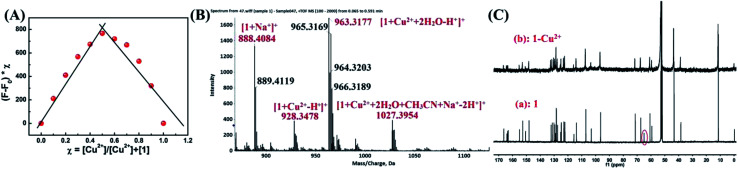
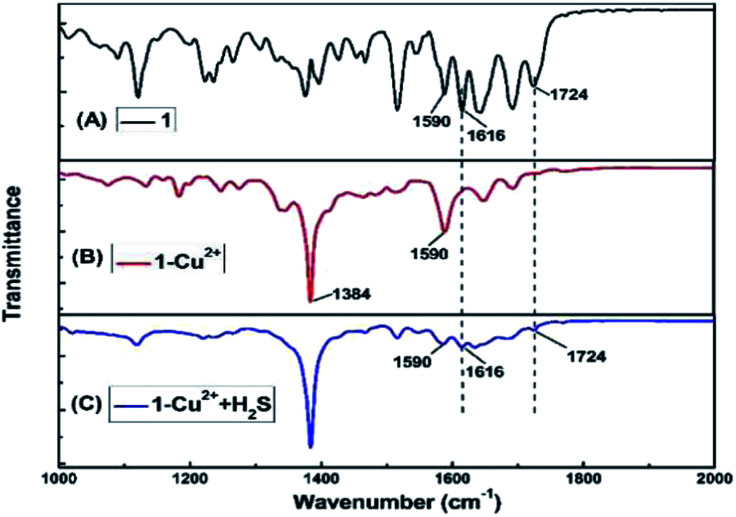
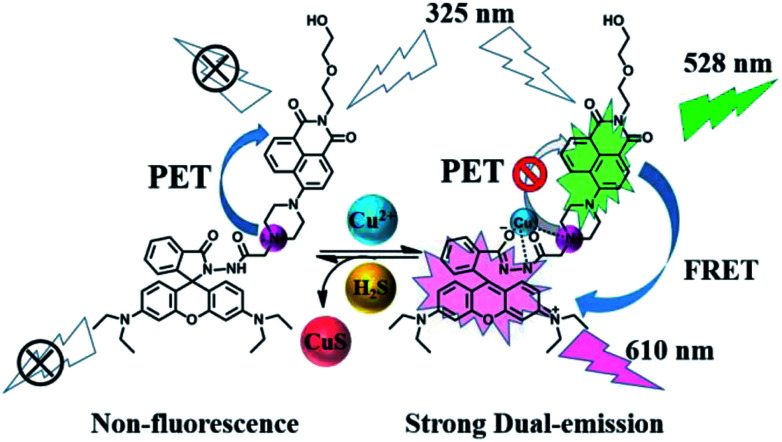
A novel colorimetric and fluorometric sensor with unique dual-channel emission to sequentially detect Cu and hydrogen sulfide (HS) was synthesized from naphthalimide-rhodamine B through the PET and FRET mechanism. The sensor showed a selective "off-on" fluorescence response with a 120-fold increase toward Cu, and its limits of detection were 0.26 μM and 0.17 μM for UV-vis and fluorescence measurements, respectively. In addition, 1-Cu was an efficient "on-off" sensor to detect HS with detection limits of 0.40 μM (UV-vis measurement) and 0.23 μM (fluorescence measurement), respectively. Furthermore, the sensor can also be used for biological imaging of intracellular staining in living cells. Therefore, the sensor should be highly promising for the detection of low level Cu and HS with great potential in many practical applications.
一种通过PET和FRET机制由萘二甲酰亚胺-罗丹明B合成的新型比色和荧光传感器,具有独特的双通道发射,可依次检测铜和硫化氢(HS)。该传感器对铜呈现选择性“关-开”荧光响应,荧光增强120倍,其紫外-可见和荧光测量的检测限分别为0.26 μM和0.17 μM。此外,1-Cu是一种检测HS的高效“开-关”传感器,其检测限分别为0.40 μM(紫外-可见测量)和0.23 μM(荧光测量)。此外,该传感器还可用于活细胞内染色的生物成像。因此,该传感器在检测低水平铜和HS方面具有很高的前景,在许多实际应用中具有巨大潜力。