Sun Bo, Tian Yu-Xiao, Jiang Min, Yuan Qiao, Chen Qing, Zhang Yong, Luo Ya, Zhang Fen, Tang Hao-Ru
College of Horticulture, Sichuan Agricultural University Chengdu 611130 China
RSC Adv. 2018 Oct 2;8(59):33845-33854. doi: 10.1039/c8ra05504a. eCollection 2018 Sep 28.
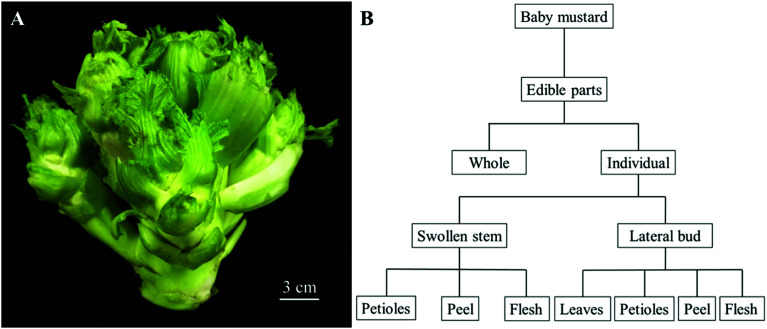
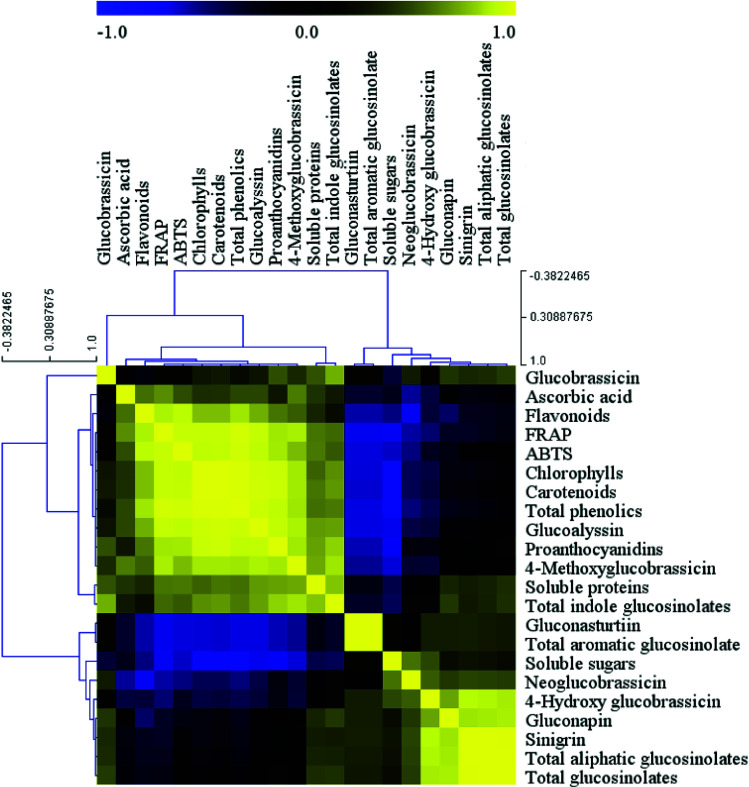
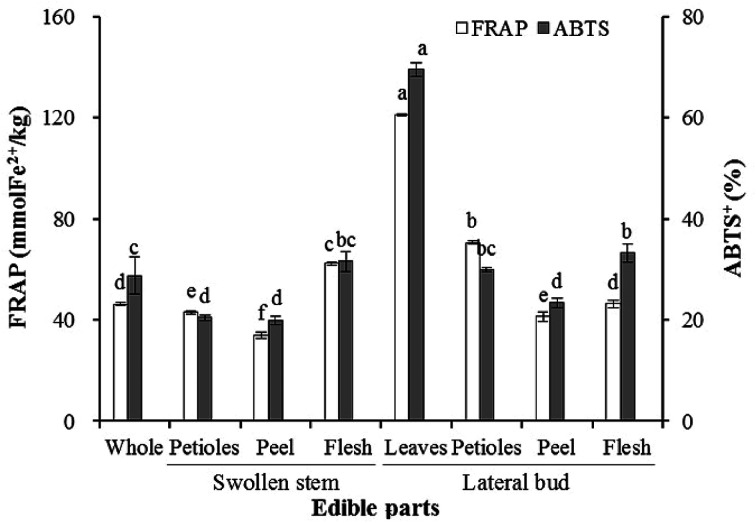
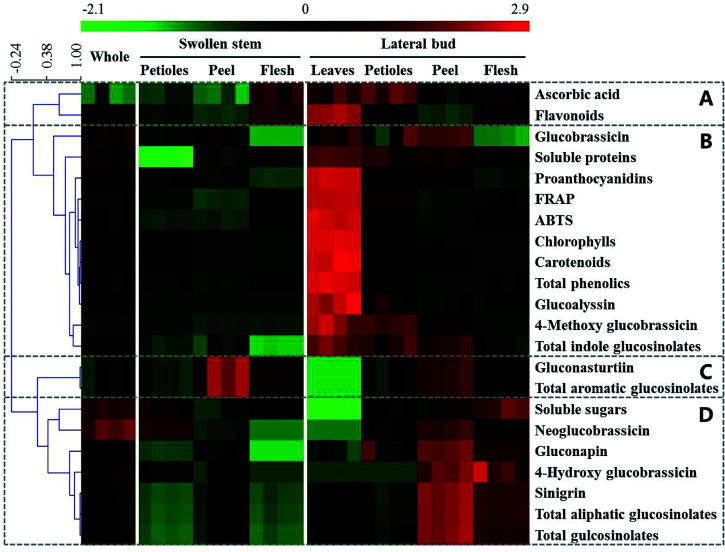
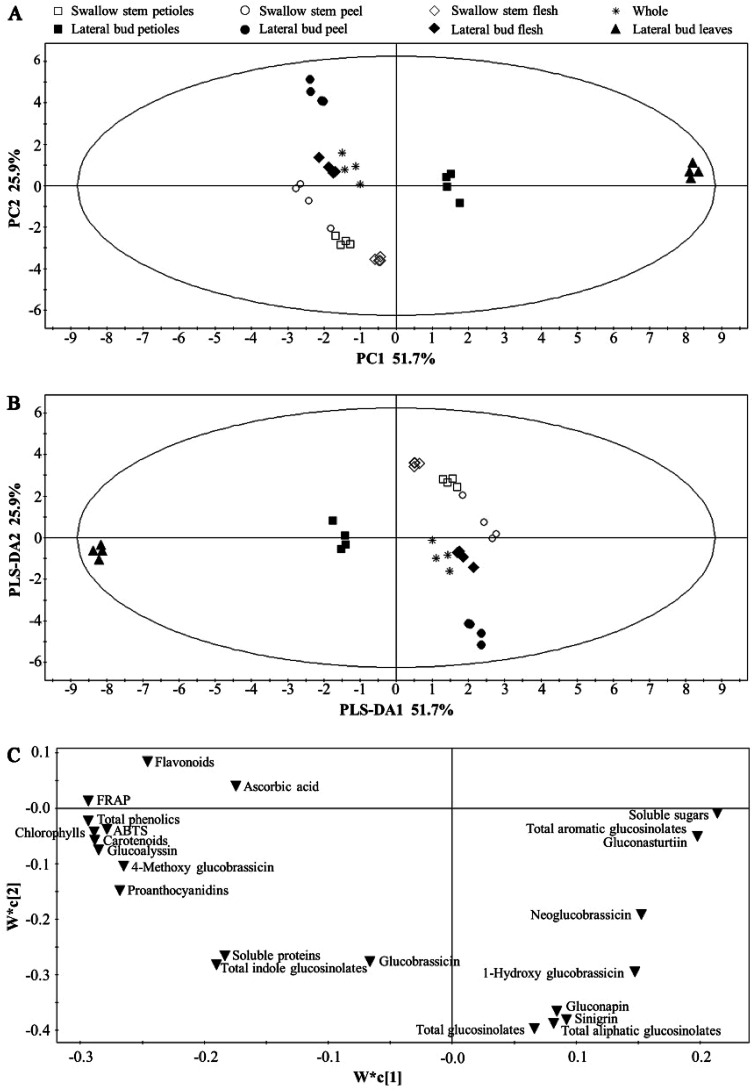
Despite being a brassicaceous vegetable that is widely consumed in winter and spring in Southwest China, there is lack of information available on baby mustard. The aim of this study was to determine the contents of soluble proteins, soluble sugars, chlorophylls, carotenoids, ascorbic acid, proanthocyanidins, flavonoids, total phenolics, and glucosinolates, as well as the antioxidant activity of the whole edible parts and seven individual edible parts (swollen stem: petioles, peel, flesh; lateral bud: leaves, petioles, peel, flesh) of baby mustard. The results showed that significant differences in health-promoting compounds and antioxidant activity existed between the different edible parts. The lateral bud of baby mustard possessed greater health-promoting compounds than the swollen stem. In particular, the lateral bud leaves possessed abundant antioxidant compounds and antioxidant activity, indicating that these should be conserved during harvesting due to their potential contribution to human health. Furthermore, aliphatic glucosinolates were predominant, and sinigrin was the most abundant glucosinolate in all the assessed parts of baby mustard, the content of which was 15.81 μmol g dry weight, accounting for more than 87% of the total glucosinolate content. However, the sinigrin content in baby mustard is lower than tuber mustard, which explains the less pungent flavor of baby mustard and its better suitability as a fresh vegetable. In addition, antioxidant activity was highly correlated with total phenolics, whereas gluconasturtiin and soluble sugars were negatively correlated with the majority of antioxidants.
尽管儿菜是一种十字花科蔬菜,在中国西南部地区冬春季节广泛食用,但关于儿菜的信息却十分匮乏。本研究旨在测定儿菜整个可食用部分以及七个单独可食用部分(茎瘤:叶柄、外皮、肉质;侧芽:叶片、叶柄、外皮、肉质)中可溶性蛋白、可溶性糖、叶绿素、类胡萝卜素、抗坏血酸、原花青素、黄酮类化合物、总酚和芥子油苷的含量,以及抗氧化活性。结果表明,不同可食用部分在促进健康的化合物和抗氧化活性方面存在显著差异。儿菜的侧芽比茎瘤含有更多促进健康的化合物。特别是,侧芽叶片含有丰富的抗氧化化合物和抗氧化活性,这表明在收获过程中应保留这些部分,因为它们对人体健康有潜在贡献。此外,脂肪族芥子油苷占主导地位,并且在儿菜所有评估部分中,黑芥子苷是含量最高的芥子油苷,其含量为15.81 μmol/g干重,占总芥子油苷含量的87%以上。然而,儿菜中的黑芥子苷含量低于榨菜,这解释了儿菜味道较淡以及更适合作为新鲜蔬菜的原因。此外,抗氧化活性与总酚高度相关,而葡萄糖芥苷和可溶性糖与大多数抗氧化剂呈负相关。