The Institute of Cancer Research, London, UK.
The Royal Marsden NHS Foundation Trust, Sutton, UK.
Clin Cancer Res. 2022 Jul 15;28(14):3104-3115. doi: 10.1158/1078-0432.CCR-21-4531.
Prostate-specific membrane antigen (PSMA) targeting therapies such as Lutetium-177 (177Lu)-PSMA-617 are affecting outcomes from metastatic castration-resistant prostate cancer (mCRPC). However, a significant subset of patients have prostate cancer cells lacking PSMA expression, raising concerns about treatment resistance attributable at least in part to heterogeneous PSMA expression. We have previously demonstrated an association between high PSMA expression and DNA damage repair defects in mCRPC biopsies and therefore hypothesized that DNA damage upregulates PSMA expression.
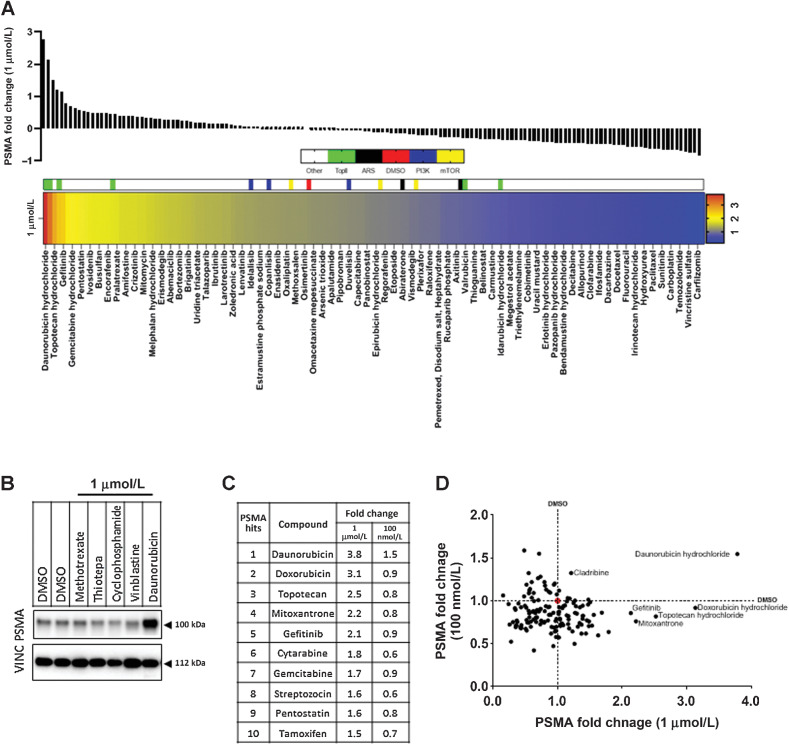
To test this relationship between PSMA and DNA damage we conducted a screen of 147 anticancer agents (NCI/NIH FDA-approved anticancer "Oncology Set") and treated tumor cells with repeated ionizing irradiation.
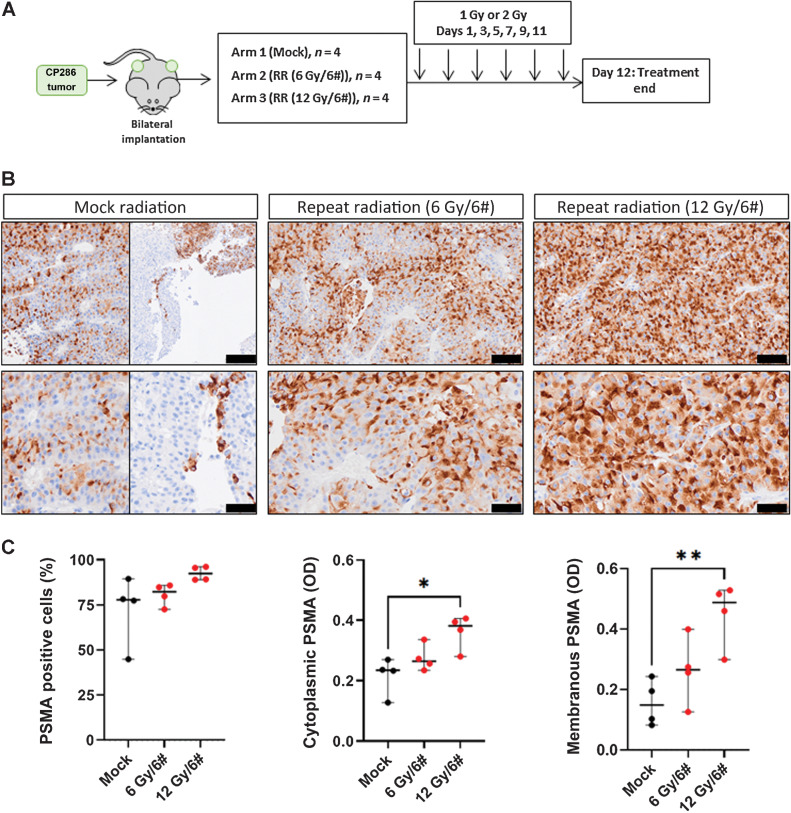
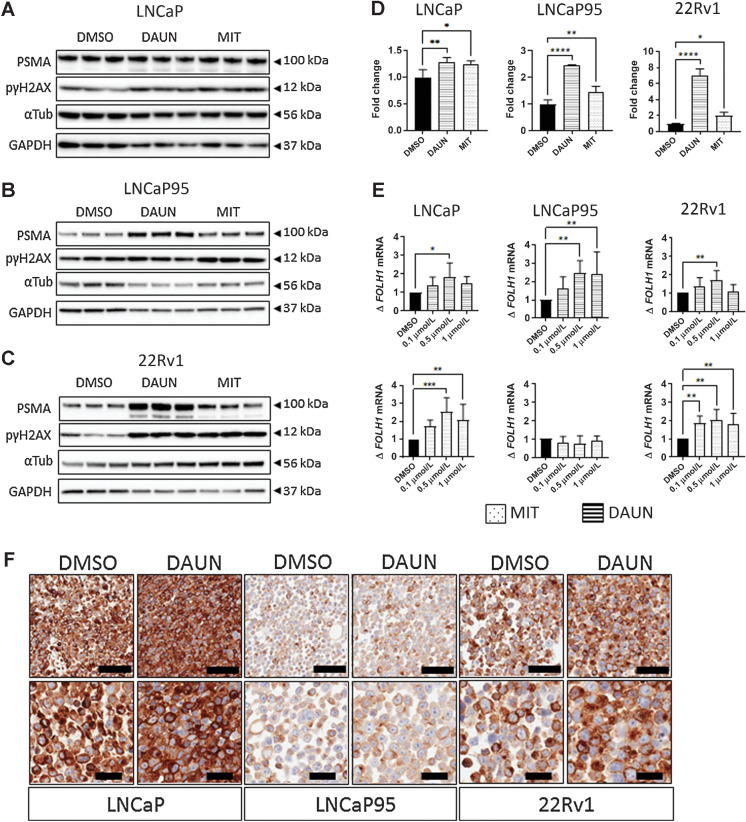
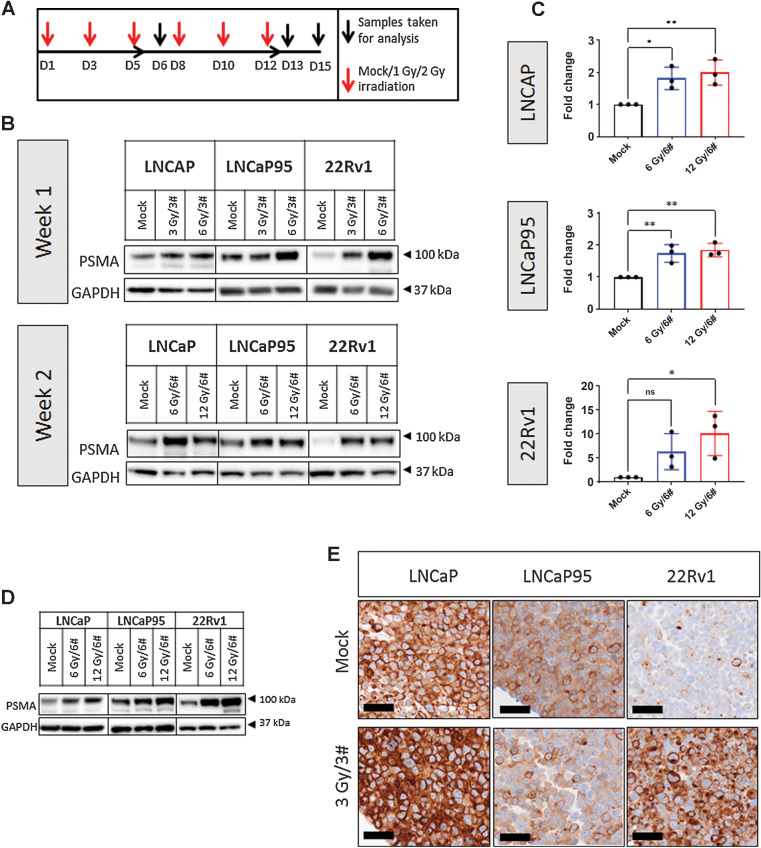
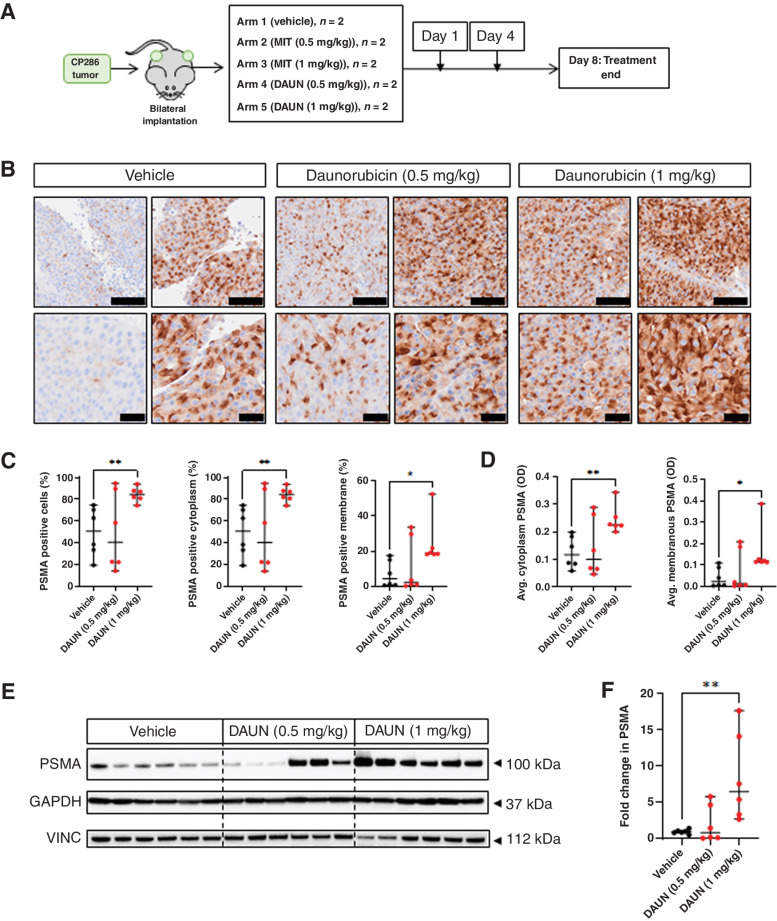
The topoisomerase-2 inhibitors, daunorubicin and mitoxantrone, were identified from the screen to upregulate PSMA protein expression in castration-resistant LNCaP95 cells; this result was validated in vitro in LNCaP, LNCaP95, and 22Rv1 cell lines and in vivo using an mCRPC patient-derived xenograft model CP286 identified to have heterogeneous PSMA expression. As double-strand DNA break induction by topoisomerase-2 inhibitors upregulated PSMA, we next studied the impact of ionizing radiation on PSMA expression; this also upregulated PSMA protein expression in a dose-dependent fashion.
The results presented herein are the first, to our knowledge, to demonstrate that PSMA is upregulated in response to double-strand DNA damage by anticancer treatment. These data support the study of rational combinations that maximize the antitumor activity of PSMA-targeted therapeutic strategies by upregulating PSMA.
前列腺特异性膜抗原(PSMA)靶向治疗,如镥-177(177Lu)-PSMA-617,正在影响转移性去势抵抗性前列腺癌(mCRPC)的治疗效果。然而,相当一部分患者的前列腺癌细胞缺乏 PSMA 表达,这引起了人们对治疗耐药性的担忧,至少部分原因是 PSMA 表达的异质性。我们之前已经证明,mCRPC 活检中 PSMA 高表达与 DNA 损伤修复缺陷之间存在关联,因此我们假设 DNA 损伤会上调 PSMA 的表达。
为了验证 PSMA 与 DNA 损伤之间的关系,我们进行了 147 种抗癌药物(NCI/NIH FDA 批准的抗癌“肿瘤学药物集”)的筛选,并对肿瘤细胞进行了重复的电离辐射处理。
从筛选中发现拓扑异构酶-2 抑制剂柔红霉素和米托蒽醌可上调去势抵抗性 LNCaP95 细胞中的 PSMA 蛋白表达;这一结果在体外的 LNCaP、LNCaP95 和 22Rv1 细胞系中得到了验证,并在体内使用具有异质性 PSMA 表达的 mCRPC 患者来源异种移植模型 CP286 中得到了验证。由于拓扑异构酶-2 抑制剂诱导的双链 DNA 断裂会上调 PSMA,我们接下来研究了电离辐射对 PSMA 表达的影响;这也以剂量依赖的方式上调了 PSMA 蛋白的表达。
本文首次证明,PSMA 可被抗癌药物治疗引起的双链 DNA 损伤所上调。这些数据支持了研究合理的联合治疗方案,通过上调 PSMA 来最大化 PSMA 靶向治疗策略的抗肿瘤活性。