Kim Christopher Y, Johnson Hannah, Peltier Sandy, Spitalnik Steven L, Hod Eldad A, Francis Richard O, Hudson Krystalyn E, Stone Elizabeth F, Gordy Dominique E, Fu Xiaoyun, Zimring James C, Amireault Pascal, Buehler Paul W, Wilson Robert B, D'Alessandro Angelo, Shchepinov Mikhail S, Thomas Tiffany
Department of Pathology and Cell Biology, Columbia University Irving Medical Center, New York-Presbyterian Hospital, New York, NY, United States.
Bloodworks Research Institute, Seattle, WA, United States.
Front Physiol. 2022 Apr 26;13:868578. doi: 10.3389/fphys.2022.868578. eCollection 2022.
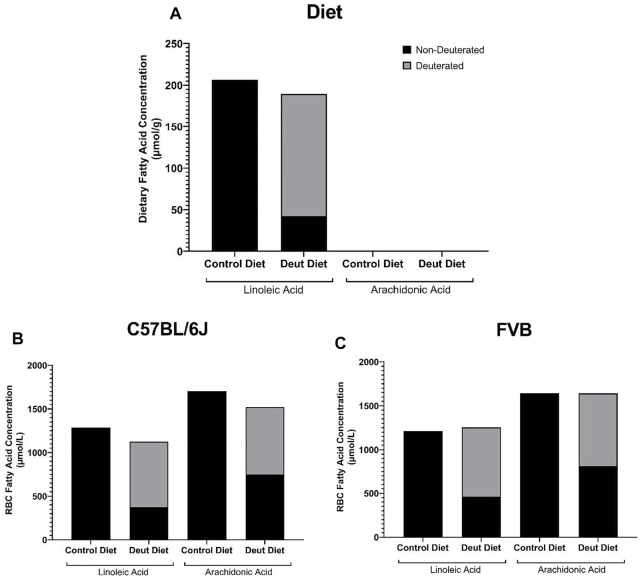
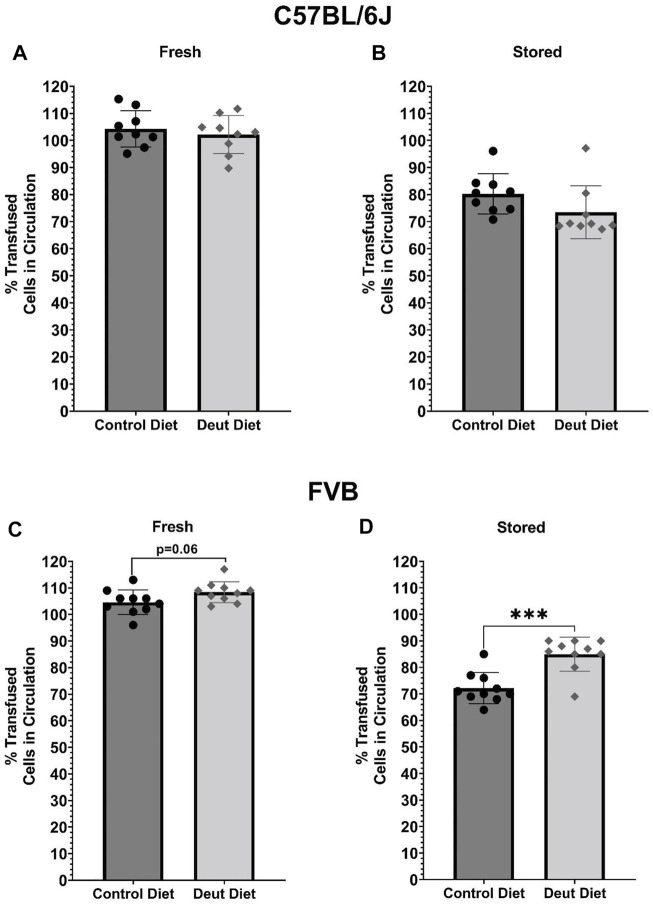
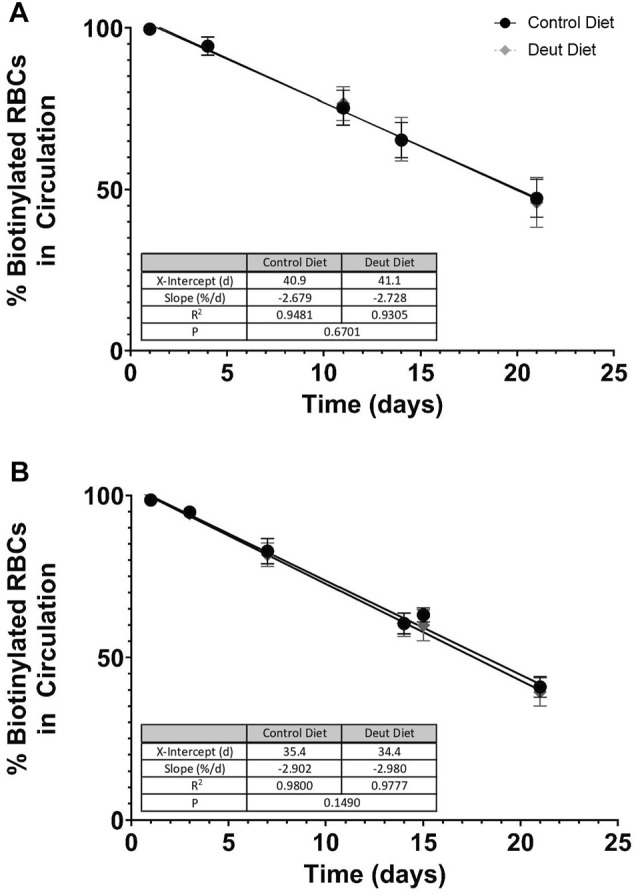
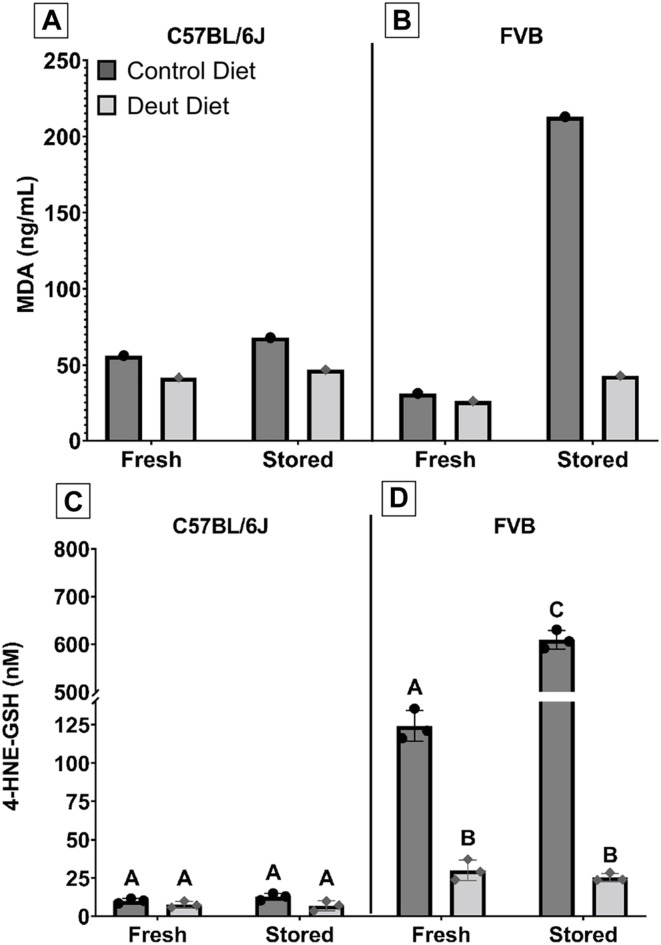
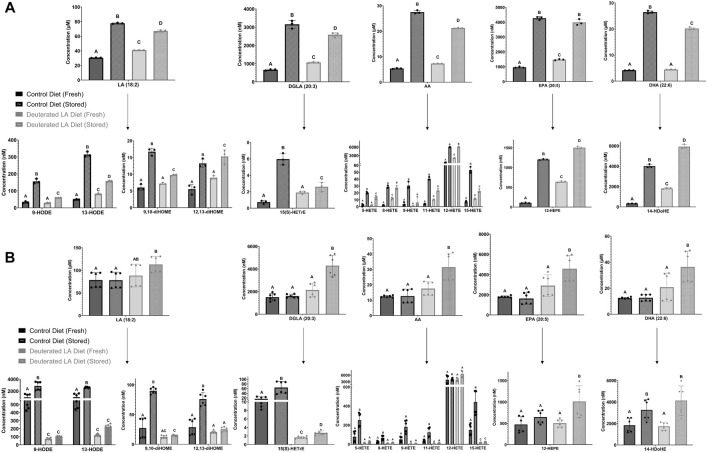
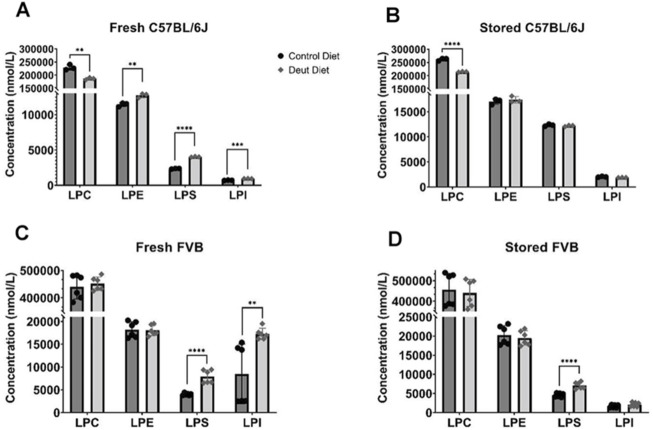
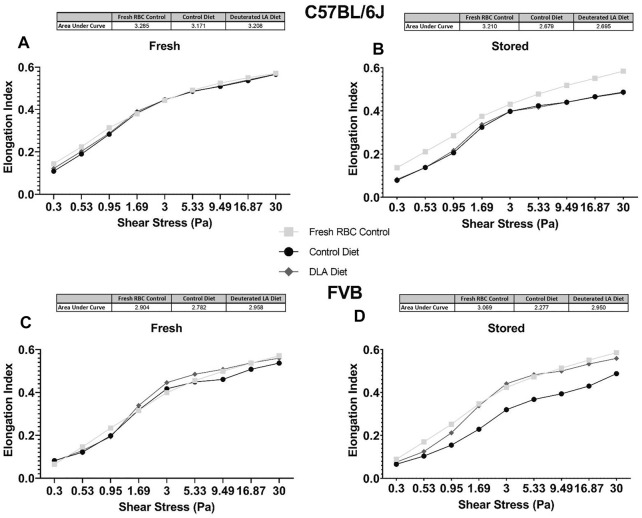
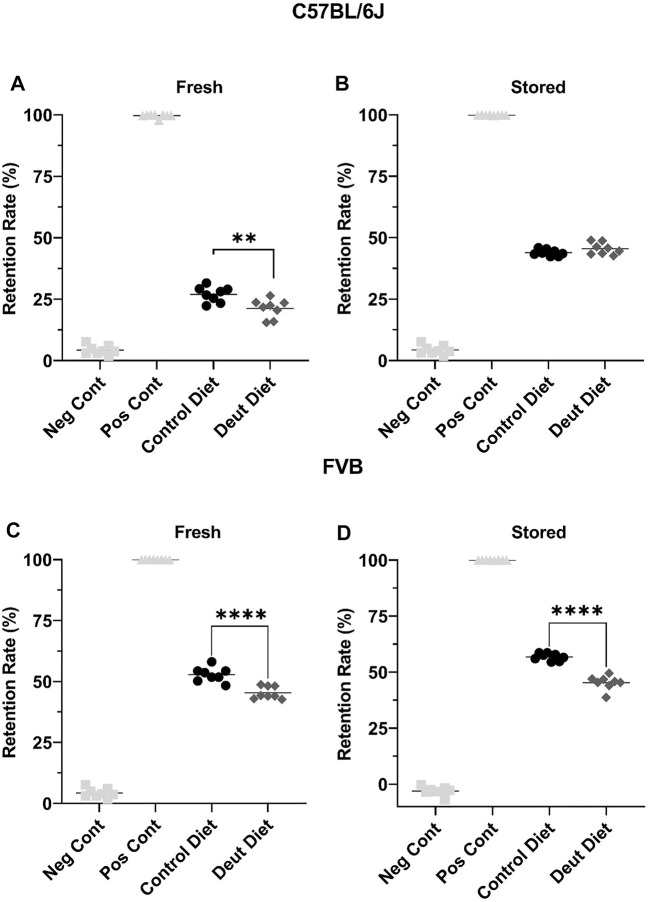
Long-chain polyunsaturated fatty acids (PUFAs) are important modulators of red blood cell (RBC) rheology. Dietary PUFAs are readily incorporated into the RBC membrane, improving RBC deformability, fluidity, and hydration. However, enriching the lipid membrane with PUFAs increases the potential for peroxidation in oxidative environments (e.g., refrigerated storage), resulting in membrane damage. Substitution of bis-allylic hydrogens with deuterium ions in PUFAs decreases hydrogen abstraction, thereby inhibiting peroxidation. If lipid peroxidation is a causal factor in the RBC storage lesion, incorporation of deuterated linoleic acid (DLA) into the RBC membrane should decrease lipid peroxidation, thereby improving RBC lifespan, deformability, filterability, and post-transfusion recovery (PTR) after cold storage. Mice associated with good (C57BL/6J) and poor (FVB) RBC storage quality received diets containing 11,11-D2-LA Ethyl Ester (1.0 g/100 g diet; deuterated linoleic acid) or non-deuterated LA Ethyl Ester (control) for 8 weeks. Deformability, filterability, lipidomics, and lipid peroxidation markers were evaluated in fresh and stored RBCs. DLA was incorporated into RBC membranes in both mouse strains. DLA diet decreased lipid peroxidation (malondialdehyde) by 25.4 and 31% percent in C57 mice and 12.9 and 79.9% in FVB mice before and after cold storage, respectively. In FVB, but not C57 mice, deformability filterability, and post-transfusion recovery were significantly improved. In a mouse model of poor RBC storage, with elevated reactive oxygen species production, DLA attenuated lipid peroxidation and significantly improved RBC storage quality.
长链多不饱和脂肪酸(PUFAs)是红细胞(RBC)流变学的重要调节剂。膳食中的多不饱和脂肪酸很容易掺入红细胞膜中,改善红细胞的变形性、流动性和水合作用。然而,用多不饱和脂肪酸丰富脂质膜会增加氧化环境(如冷藏储存)中过氧化的可能性,从而导致膜损伤。用氘离子取代多不饱和脂肪酸中的双烯丙基氢会减少氢的提取,从而抑制过氧化。如果脂质过氧化是红细胞储存损伤的一个致病因素,那么将氘代亚油酸(DLA)掺入红细胞膜中应该会减少脂质过氧化,从而提高红细胞在冷藏后的寿命、变形性、过滤性和输血后恢复率(PTR)。将红细胞储存质量良好(C57BL/6J)和较差(FVB)的小鼠分别喂食含有11,11-D2-亚油酸乙酯(1.0 g/100 g饮食;氘代亚油酸)或非氘代亚油酸乙酯(对照)的饮食8周。对新鲜和储存的红细胞进行变形性、过滤性、脂质组学和脂质过氧化标志物的评估。在两种小鼠品系中,DLA都被掺入了红细胞膜中。在冷藏前后,DLA饮食分别使C57小鼠的脂质过氧化(丙二醛)降低了25.4%和31%,使FVB小鼠的脂质过氧化降低了12.9%和79.9%。在FVB小鼠中,而不是C57小鼠中,变形性、过滤性和输血后恢复率得到了显著改善。在一个红细胞储存质量较差、活性氧产生增加的小鼠模型中,DLA减轻了脂质过氧化,并显著提高了红细胞的储存质量。