Zhou Zipeng, Li Dan, Fan Xiangyi, Yuan Yajiang, Wang Hongyu, Wang Dahao, Mei Xifan
Department of The First Clinical College, Liaoning University of Traditional Chinese Medicine, No. 79, Chongshan East Road, Huanggu District, Shenyang City, Liaoning Province 110847, P.R. China.
Department of Orthopedics, First Affiliated Hospital of Jinzhou Medical University, Jinzhou, China.
Regen Biomater. 2021 Dec 2;9:rbab072. doi: 10.1093/rb/rbab072. eCollection 2022.
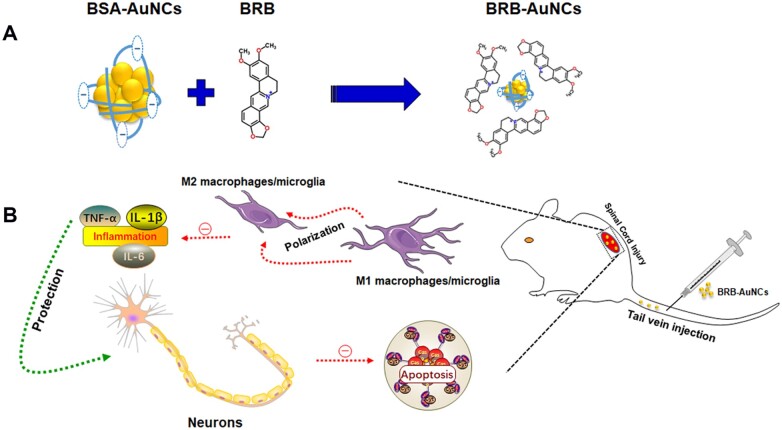
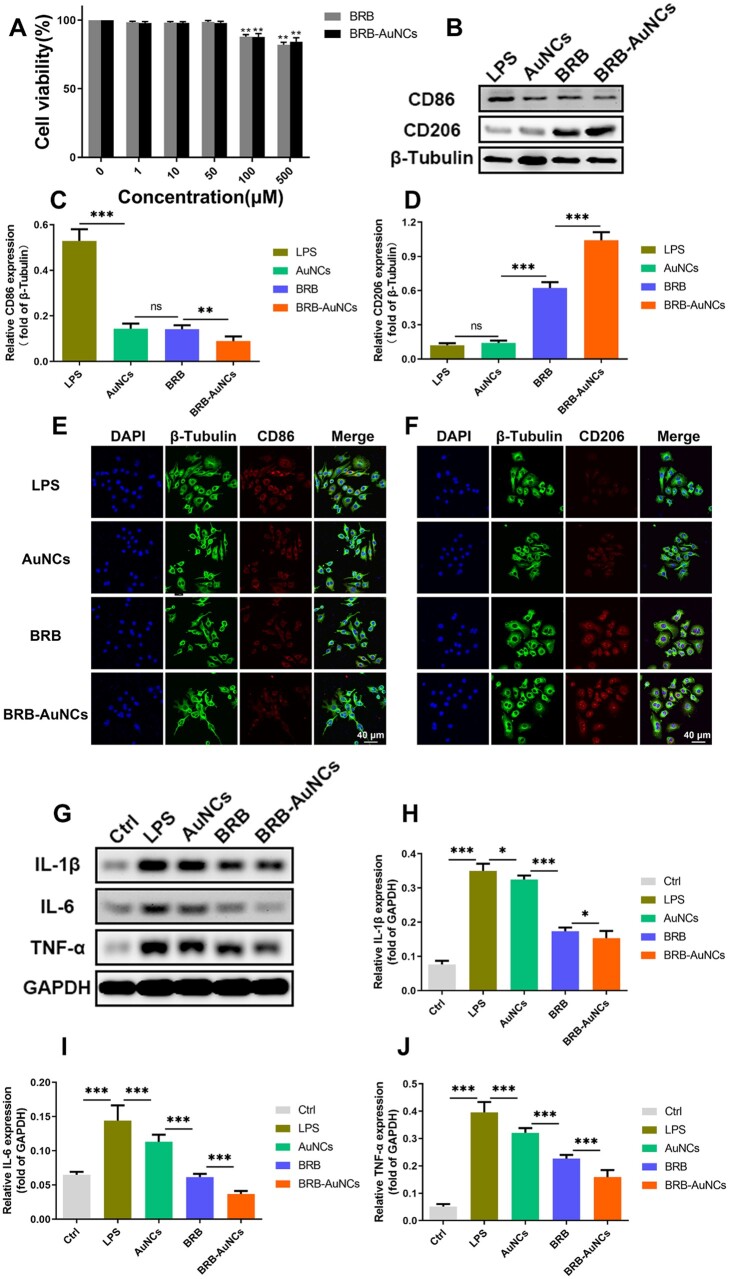
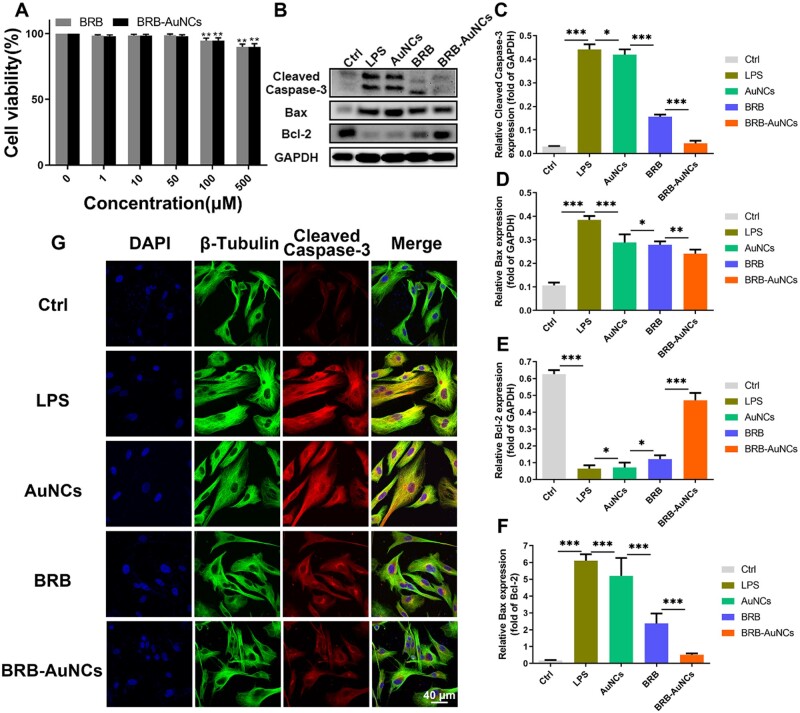
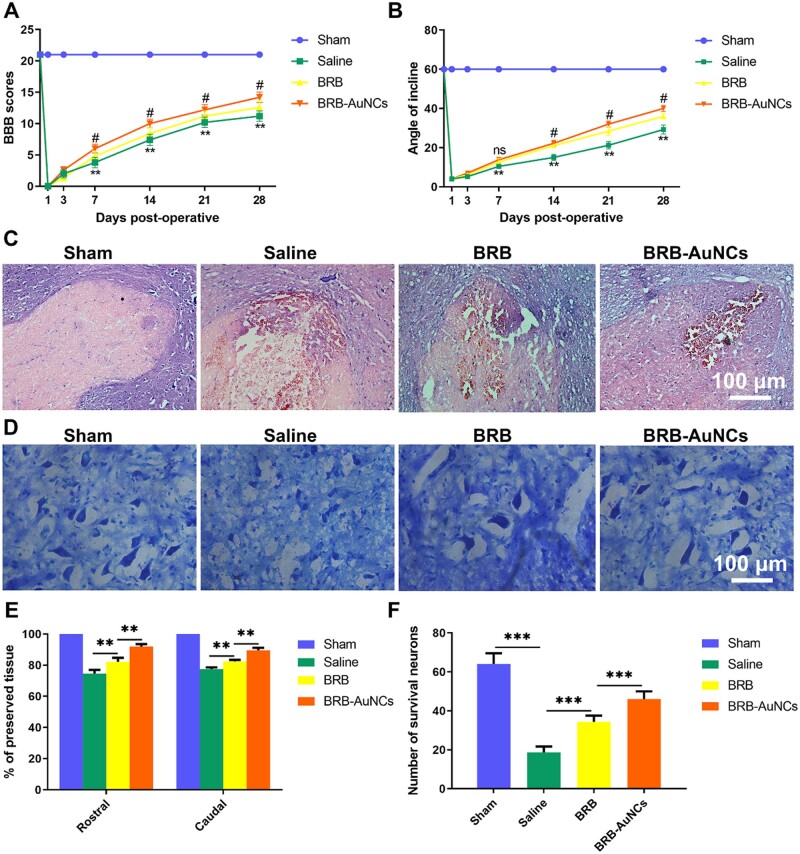
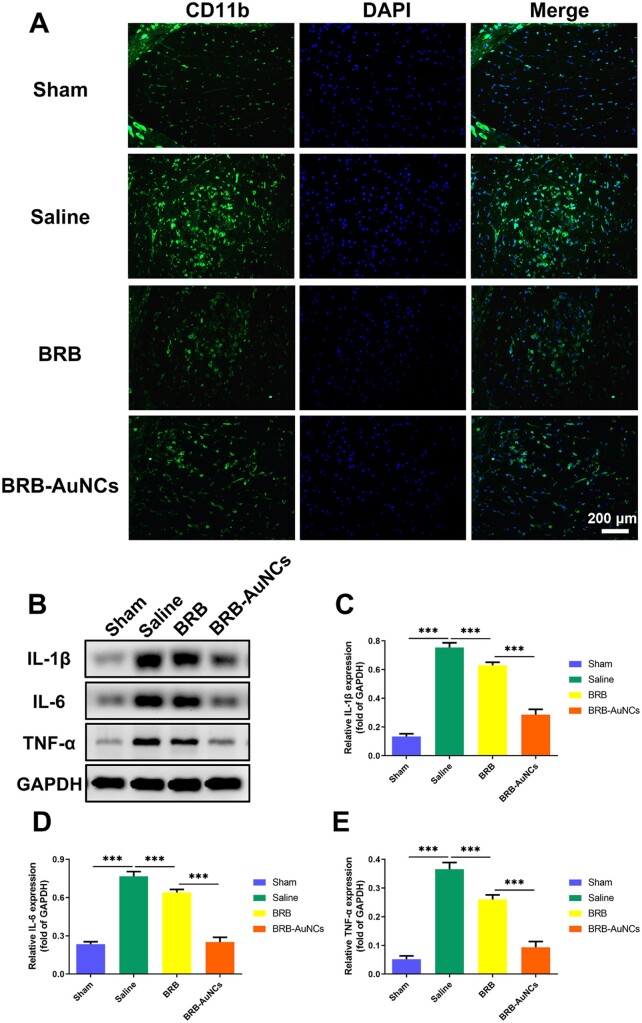
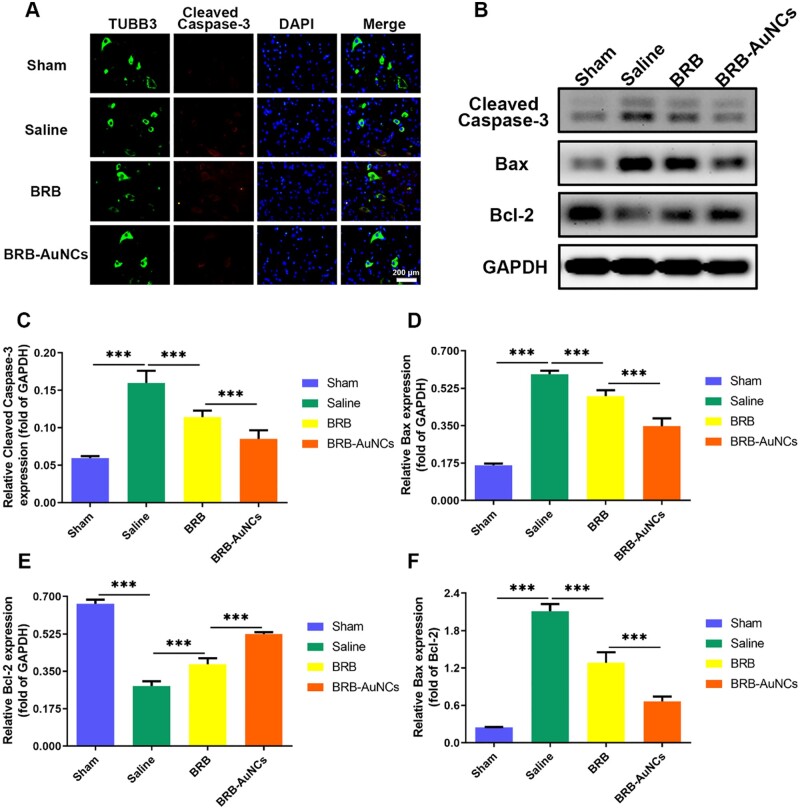
Spinal cord injury (SCI) leads to nerve cell apoptosis and loss of motor function. Herein, excessive activation of the M1 phenotype macrophages/microglia is found to be the main reason for the poor prognosis of SCI, but the selective activation phenotype (M2) macrophages/microglia facilitates the recovery of SCI. Thereafter, we used gold nanoclusters loaded berberine (BRB-AuNCs) to reduce inflammation by inhibiting the activation of M1 phenotype macrophages/microglia, which simultaneously inhibited neuronal apoptosis after SCI. and experiments showed that BRB-AuNCs reduced M1 protein marker CD86, increased M2 protein marker CD206, reduced inflammation and apoptotic cytokines (IL-1β, IL-6, TNF-α, Cleaved Caspase-3 and Bax). These results indicate that BRB-AuNCs have excellent anti-inflammatory and anti-apoptotic effects by inducing the polarization of macrophages/microglia from M1 phenotype to M2 phenotype. Thereafter, the motor functions of SCI rats were significantly improved after treatment with BRB-AuNCs. This work not only provides a new way for the treatment of SCI but also broadens BRB utilization strategies.
脊髓损伤(SCI)会导致神经细胞凋亡和运动功能丧失。在此,发现M1表型巨噬细胞/小胶质细胞的过度激活是SCI预后不良的主要原因,但选择性激活表型(M2)巨噬细胞/小胶质细胞有助于SCI的恢复。此后,我们使用负载黄连素的金纳米团簇(BRB-AuNCs)通过抑制M1表型巨噬细胞/小胶质细胞的激活来减轻炎症,这同时抑制了SCI后的神经元凋亡。实验表明,BRB-AuNCs降低了M1蛋白标志物CD86,增加了M2蛋白标志物CD206,减少了炎症和凋亡细胞因子(IL-1β、IL-6、TNF-α、裂解的半胱天冬酶-3和Bax)。这些结果表明,BRB-AuNCs通过诱导巨噬细胞/小胶质细胞从M1表型向M2表型极化而具有优异的抗炎和抗凋亡作用。此后,用BRB-AuNCs治疗后,SCI大鼠的运动功能得到显著改善。这项工作不仅为SCI的治疗提供了新途径,还拓宽了黄连素的应用策略。