Sun Na, Xiong Yuting, Qing Guangyan, Zhao Yanyan, Li Xiuling, Liang Xinmiao
Pharmacy College, Dalian Medical University No. 9 Westen Lvshun South Road Dalian 116044 P.R. China
Key Laboratory of Separation Science for Analytical Chemistry, Dalian Institute of Chemical Physics, Chinese Academy of Sciences 457 Zhongshan Road Dalian 116023 P. R. China
RSC Adv. 2018 Nov 19;8(68):38780-38786. doi: 10.1039/c8ra07192f. eCollection 2018 Nov 16.
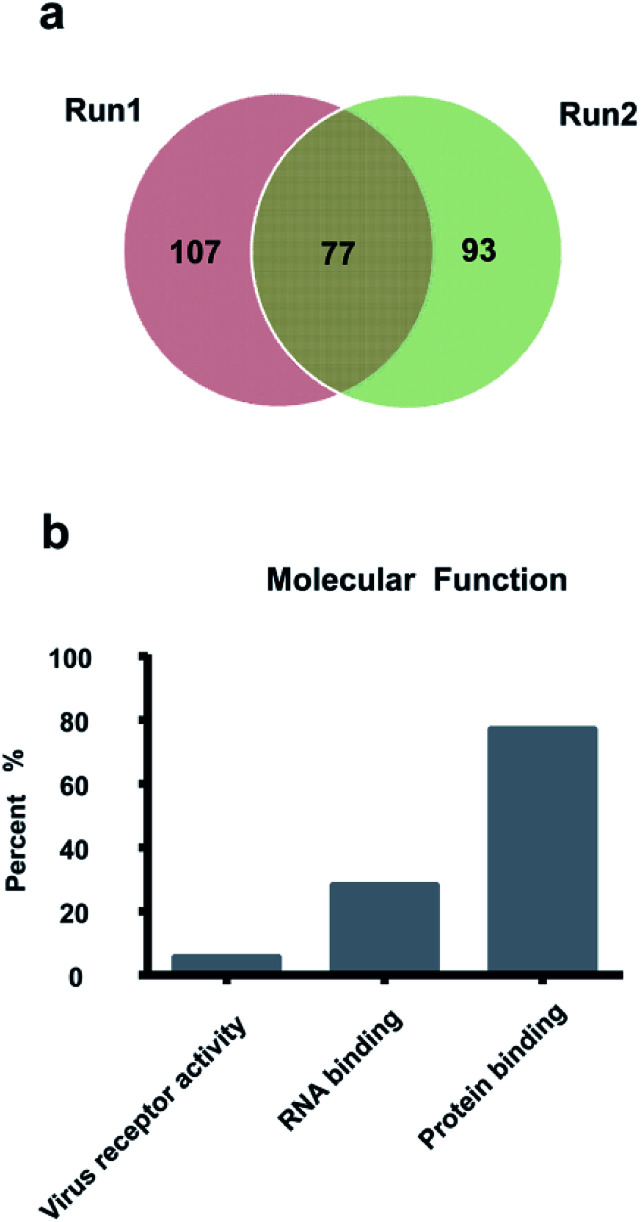
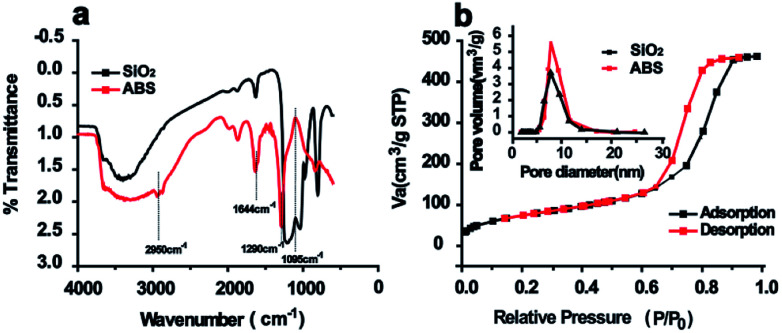
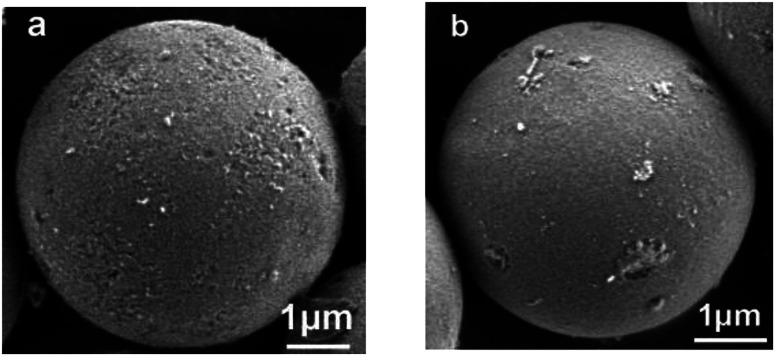
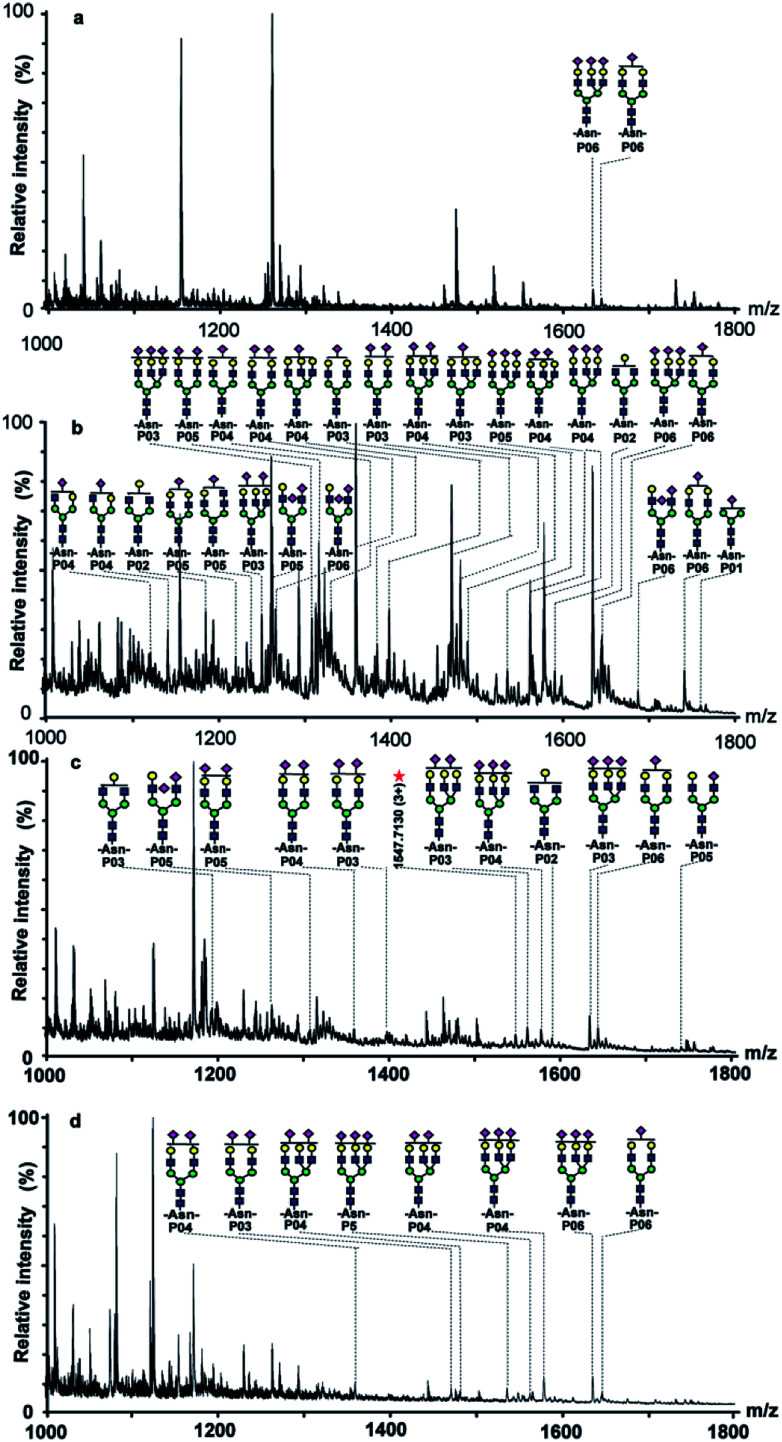
Abnormal sialylation of glycoprotein is associated with different kinds of cancers and neurodegenerative diseases. However, analysis of low abundance sialylated glycopeptides (SGPs) from complex biological samples is still a big challenge. To solve the problem, materials with high SGPs enrichment selectivity should be designed and prepared. Inspired by the saccharide-saccharide interaction in life systems, a d-allose@SiO (ABS) material was prepared and applied in SGPs enrichment under hydrophilic interaction liquid chromatography (HILIC) mode. Fourier-transform infrared (FTIR) spectroscopy, scanning electron microscope (SEM), and nitrogen adsorption experiment results proved that the ABS matrix was successfully synthesized. The SGPs enrichment selectivity of ABS matrix was evaluated with Nano Electrospray Ionization Quadrupole Time-of-Flight Mass Spectrometry (Nano ESI Q-TOF/MS). The results indicated that the SGPs enrichment selectivity was notably higher with the ABS matrix (24 SGPs) than the commercially available Sepharose CL-6B (9 SGPs) and TiO (8 SGPs), taking digests of fetuin/bovine serum albumin (BSA) (1 : 10, w/w) as the test sample. The SGPs enrichment performance of ABS matrix was further validated by the interference, recovery rate, and reproducibility evaluation experiments. In the end, the ABS matrix was applied in the analysis of real biosample (HeLa cell lysates). Totally 301 SGPs with 277 glycosylation sites from 186 glycoprotein were successfully characterized by taking HeLa S3 cell lysate as target sample in two replicated experiments. The results indicated that the ABS matrix had great potential to be applied in the enrichment of SGPs from complex biological samples.
糖蛋白的异常唾液酸化与多种癌症和神经退行性疾病相关。然而,分析复杂生物样品中低丰度唾液酸化糖肽(SGPs)仍然是一项巨大挑战。为解决该问题,应设计并制备具有高SGPs富集选择性的材料。受生命系统中糖-糖相互作用的启发,制备了一种D-阿洛糖@SiO(ABS)材料,并将其应用于亲水相互作用液相色谱(HILIC)模式下的SGPs富集。傅里叶变换红外(FTIR)光谱、扫描电子显微镜(SEM)和氮吸附实验结果证明成功合成了ABS基质。用纳升电喷雾电离四极杆飞行时间质谱(Nano ESI Q-TOF/MS)评估了ABS基质的SGPs富集选择性。结果表明,以胎球蛋白/牛血清白蛋白(BSA)(1 : 10,w/w)的酶解物作为测试样品时,ABS基质(24种SGPs)的SGPs富集选择性显著高于市售的琼脂糖CL-6B(9种SGPs)和TiO(8种SGPs)。通过干扰、回收率和重现性评估实验进一步验证了ABS基质的SGPs富集性能。最后,将ABS基质应用于实际生物样品(HeLa细胞裂解物)的分析。以HeLa S3细胞裂解物为目标样品,在两次重复实验中成功鉴定出来自186种糖蛋白的总共301种具有277个糖基化位点的SGPs。结果表明,ABS基质在从复杂生物样品中富集SGPs方面具有巨大的应用潜力。