• 文献检索
  • 文档翻译
  • 深度研究
  • 学术资讯
  • Suppr Zotero 插件Zotero 插件
  • 邀请有礼
  • 套餐&价格
  • 历史记录
应用&插件
Suppr Zotero 插件Zotero 插件浏览器插件Mac 客户端Windows 客户端微信小程序
定价
高级版会员购买积分包购买API积分包
服务
文献检索文档翻译深度研究API 文档MCP 服务
关于我们
关于 Suppr公司介绍联系我们用户协议隐私条款
关注我们

Suppr 超能文献

核心技术专利:CN118964589B侵权必究
粤ICP备2023148730 号-1Suppr @ 2026

文献检索

告别复杂PubMed语法,用中文像聊天一样搜索,搜遍4000万医学文献。AI智能推荐,让科研检索更轻松。

立即免费搜索

文件翻译

保留排版,准确专业,支持PDF/Word/PPT等文件格式,支持 12+语言互译。

免费翻译文档

深度研究

AI帮你快速写综述,25分钟生成高质量综述,智能提取关键信息,辅助科研写作。

立即免费体验

2019冠状病毒病污名与其他污名的比较:显性态度有别,隐性过程相似

Comparisons Between COVID-19 Stigma and Other Stigmas: Distinct in Explicit Attitudes and Similar in Implicit Process.

作者信息

Zhu Jiajia, Yan Lihua, Mu Yan

机构信息

CAS Key Laboratory of Behavioral Science, Institute of Psychology, Chinese Academy of Sciences, Beijing, China.

Department of Psychology, University of Chinese Academy of Sciences, Beijing, China.

出版信息

Front Psychol. 2022 Apr 26;13:848993. doi: 10.3389/fpsyg.2022.848993. eCollection 2022.

DOI:10.3389/fpsyg.2022.848993
PMID:35558720
原文链接:https://pmc.ncbi.nlm.nih.gov/articles/PMC9087195/
Abstract

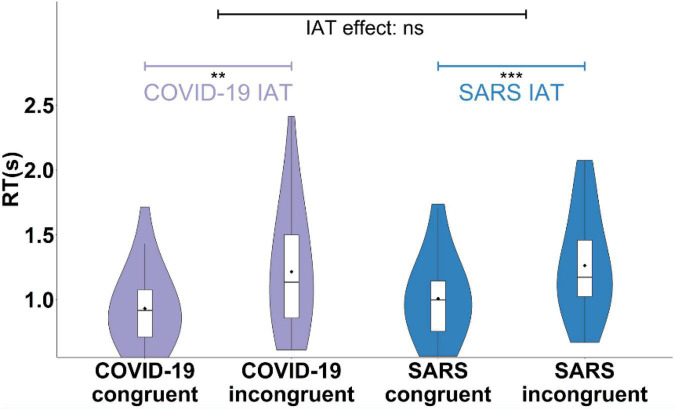
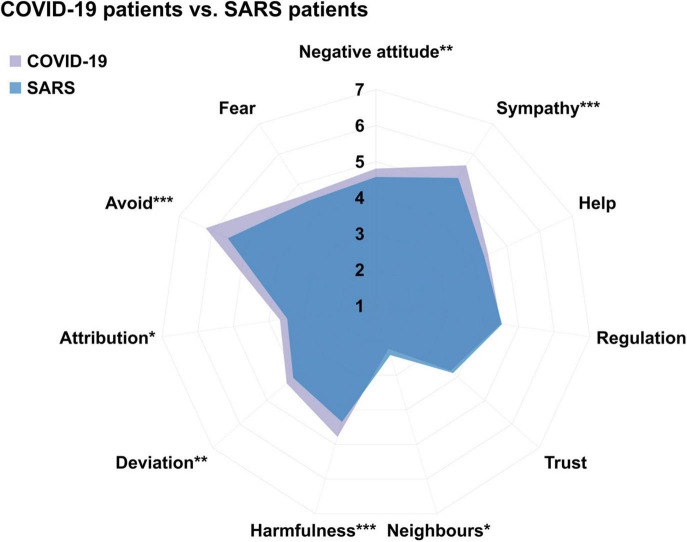
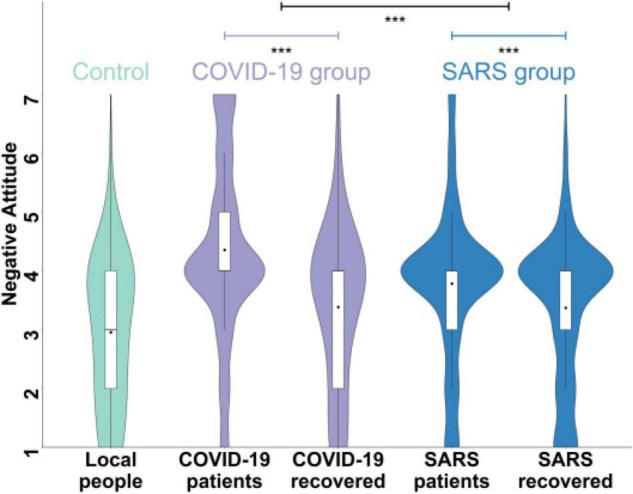
Since the outbreak of COVID-19, the public stigma associated with COVID-19 has emerged. To better understand the COVID-19 stigma, the present research conducted three studies on 1,493 Chinese participants from the outbreak to the recovery period of the COVID-19 pandemic to examine the psychological mechanisms of COVID-19 stigma by comparing it with other disease-related stigmas in terms of their explicit and implicit processes. Study 1 and Study 2 jointly demonstrated that the public endorsed more stigma toward the COVID-19 related people (i.e., the COVID-19 patients) relative to the other disease-related people (i.e., the SARS patients, people with flu) in multiple explicit aspects, including emotional, motivational, cognitive, and social processing. Using the implicit association test (IAT), Study 3 found no significant difference in the implicit measures of the COVID-19 vs. the SARS groups, which further revealed that the pandemic stigmas (i.e., COVID-19 and SARS) were similar at the implicit level. These findings suggest common (implicit level) but distinct (explicit level) psychological processes of the pandemic-related stigmas, which provide reference to policymakers in formulating suitable interventions to deal with COVID-19 stigma and a newly generated potential stigma and provide psychological support for the public in the future.

摘要

自新冠疫情爆发以来,与新冠病毒相关的公众污名化现象便已出现。为了更好地理解新冠污名,本研究针对1493名中国参与者,在新冠疫情从爆发到恢复期开展了三项研究,通过将新冠污名与其他疾病相关污名在显性和隐性过程方面进行比较,来探究新冠污名的心理机制。研究1和研究2共同表明,在包括情感、动机、认知和社会处理等多个显性方面,公众对新冠相关人群(即新冠患者)的污名化程度高于其他疾病相关人群(即非典患者、流感患者)。研究3使用内隐联想测验(IAT)发现,新冠组与非典组在内隐测量上没有显著差异,这进一步表明,在隐性层面上,疫情污名(即新冠和非典)是相似的。这些发现揭示了与疫情相关污名的共同(隐性层面)但不同(显性层面)的心理过程,这为政策制定者制定合适的干预措施以应对新冠污名和新产生的潜在污名提供了参考,并为未来的公众提供心理支持。
https://cdn.ncbi.nlm.nih.gov/pmc/blobs/19cd/9087195/7b1d3366d3a8/fpsyg-13-848993-g003.jpg
https://cdn.ncbi.nlm.nih.gov/pmc/blobs/19cd/9087195/594e7915c3cd/fpsyg-13-848993-g001.jpg
https://cdn.ncbi.nlm.nih.gov/pmc/blobs/19cd/9087195/ff9bb23b420a/fpsyg-13-848993-g002.jpg
https://cdn.ncbi.nlm.nih.gov/pmc/blobs/19cd/9087195/7b1d3366d3a8/fpsyg-13-848993-g003.jpg
https://cdn.ncbi.nlm.nih.gov/pmc/blobs/19cd/9087195/594e7915c3cd/fpsyg-13-848993-g001.jpg
https://cdn.ncbi.nlm.nih.gov/pmc/blobs/19cd/9087195/ff9bb23b420a/fpsyg-13-848993-g002.jpg
https://cdn.ncbi.nlm.nih.gov/pmc/blobs/19cd/9087195/7b1d3366d3a8/fpsyg-13-848993-g003.jpg

相似文献

1
Comparisons Between COVID-19 Stigma and Other Stigmas: Distinct in Explicit Attitudes and Similar in Implicit Process.2019冠状病毒病污名与其他污名的比较:显性态度有别,隐性过程相似
Front Psychol. 2022 Apr 26;13:848993. doi: 10.3389/fpsyg.2022.848993. eCollection 2022.
2
Oxytocin modulation of explicit pandemic stigma in men with varying social anxiety levels.催产素对不同社交焦虑水平男性中明确的大流行污名的调节作用。
Neuropharmacology. 2024 Dec 15;261:110140. doi: 10.1016/j.neuropharm.2024.110140. Epub 2024 Sep 7.
3
Social Distance in COVID-19: Drawing the line between protective behavior and stigma manifestation.新冠疫情期间的社交距离:在保护行为和污名表现之间划清界限。
Psychiatriki. 2021 Sep 20;32(3):183-186. doi: 10.22365/jpsych.2021.025. Epub 2021 Aug 5.
4
Study of the relationship between implicit and explicit stigmas associated with mental illness.研究与精神疾病相关的内隐和外显污名之间的关系。
Psychiatry Res. 2019 Feb;272:663-668. doi: 10.1016/j.psychres.2018.12.172. Epub 2018 Dec 31.
5
Mental Health Stigma: Explicit and Implicit Attitudes of Canadian Undergraduate Students, Medical School Students, and Psychiatrists.心理健康污名:加拿大本科生、医学生和精神科医生的外显和内隐态度。
Can J Psychiatry. 2019 Mar;64(3):209-217. doi: 10.1177/0706743718792193. Epub 2018 Jul 29.
6
Explicit and Implicit Attitudes of Canadian Psychiatrists Toward People With Mental Illness.加拿大精神科医生对精神疾病患者的显性和隐性态度。
Can J Psychiatry. 2015 Oct;60(10):451-9. doi: 10.1177/070674371506001006.
7
Stigma and Discrimination (SAD) at the Time of the SARS-CoV-2 Pandemic.SARS-CoV-2 大流行时期的污名化和歧视(SAD)。
Int J Environ Res Public Health. 2020 Aug 31;17(17):6341. doi: 10.3390/ijerph17176341.
8
Stigma toward Wuhan people during the COVID-19 epidemic: an exploratory study based on social media.新冠疫情期间针对武汉人的污名化:基于社交媒体的探索性研究
BMC Public Health. 2021 Oct 29;21(1):1958. doi: 10.1186/s12889-021-12001-2.
9
Understanding the Link between COVID-19 and HIV/AIDS Stigmas.了解新冠病毒与艾滋病毒/艾滋病污名之间的联系。
J Appl Soc Sci (Boulder). 2023 Jun;17(2):272-290. doi: 10.1177/19367244231159609. Epub 2023 Mar 19.
10
Can side effect expectations be assessed implicitly? A comparison of explicit and implicit expectations of vaccination side effects.能否通过内隐方式评估副作用预期?接种疫苗副作用的内隐与外显预期的比较。
J Psychosom Res. 2024 Apr;179:111616. doi: 10.1016/j.jpsychores.2024.111616. Epub 2024 Feb 20.

引用本文的文献

1
Correction approaches and hashtag framing in addressing Mpox misinformation on Instagram.在Instagram上应对猴痘错误信息的纠正方法和标签框架
Health Educ Res. 2025 Mar 24;40(2). doi: 10.1093/her/cyaf009.
2
Characteristics of People Who Do Not Disclose Positive COVID-19 Infection.未披露新冠病毒检测呈阳性感染情况的人群特征。
Med J Islam Repub Iran. 2023 Jun 7;37:64. doi: 10.47176/mjiri.37.64. eCollection 2023.
3
SARS-CoV-2 case detection using community event-based surveillance system-February-September 2020: lessons learned from Senegal.

本文引用的文献

1
A Comparison of COVID-19 Stigma and AIDS Stigma During the COVID-19 Pandemic: A Cross-Sectional Study in China.新冠疫情期间新冠病毒病污名与艾滋病污名的比较:一项中国的横断面研究
Front Psychiatry. 2021 Dec 1;12:782501. doi: 10.3389/fpsyt.2021.782501. eCollection 2021.
2
Coronavirus Disease 2019-Related Stigma in China: A Descriptive Study.中国2019年冠状病毒病相关污名化现象:一项描述性研究。
Front Psychol. 2021 Aug 11;12:694988. doi: 10.3389/fpsyg.2021.694988. eCollection 2021.
3
The neuroscience of empathy and compassion in pro-social behavior.
利用社区事件监测系统检测 SARS-CoV-2 病例-2020 年 2 月至 9 月:塞内加尔的经验教训。
BMJ Glob Health. 2023 Jun;8(6). doi: 10.1136/bmjgh-2023-012300.
4
Tuberculosis related barriers and facilitators among immigrants in Atlantic Canada: A qualitative study.加拿大大西洋地区移民中与结核病相关的障碍和促进因素:一项定性研究。
PLOS Glob Public Health. 2023 Jun 5;3(6):e0001997. doi: 10.1371/journal.pgph.0001997. eCollection 2023.
5
Stigma, Post-traumatic Stress, and COVID-19 Vaccination Intent in Mongolia, India, and the United States.蒙、印、美三国的污名、创伤后应激和 COVID-19 疫苗接种意愿
Int J Environ Res Public Health. 2023 Jan 23;20(3):2084. doi: 10.3390/ijerph20032084.
6
Trait Empathy Modulates Patterns of Personal and Social Emotions During the COVID-19 Pandemic.特质共情在新冠疫情期间调节个人情绪和社会情绪模式。
Front Psychol. 2022 Jun 10;13:893328. doi: 10.3389/fpsyg.2022.893328. eCollection 2022.
同理心和同情心在亲社会行为中的神经科学。
Neuropsychologia. 2021 Aug 20;159:107925. doi: 10.1016/j.neuropsychologia.2021.107925. Epub 2021 Jun 26.
4
Stigma and misconceptions in the time of the COVID-19 pandemic: A field experiment in India.新冠疫情时期的污名与误解:印度实地实验。
Soc Sci Med. 2021 Jun;278:113966. doi: 10.1016/j.socscimed.2021.113966. Epub 2021 Apr 28.
5
Intolerance of COVID-19-Related Uncertainty and Negative Emotions among Chinese Adolescents: A Moderated Mediation Model of Risk Perception, Social Exclusion and Perceived Efficacy.中国青少年对新冠不确定性和负面情绪的容忍度:风险感知、社会排斥和感知效能的中介调节模型。
Int J Environ Res Public Health. 2021 Mar 11;18(6):2864. doi: 10.3390/ijerph18062864.
6
Reducing the stigma of mental health disorders with a focus on low- and middle-income countries.关注中低收入国家,减少精神健康障碍污名化。
Asian J Psychiatr. 2021 Apr;58:102601. doi: 10.1016/j.ajp.2021.102601. Epub 2021 Feb 13.
7
The relationship between cultural tightness-looseness and COVID-19 cases and deaths: a global analysis.文化紧密-宽松度与 COVID-19 病例和死亡人数之间的关系:全球分析。
Lancet Planet Health. 2021 Mar;5(3):e135-e144. doi: 10.1016/S2542-5196(20)30301-6. Epub 2021 Jan 29.
8
Reducing stigma and discrimination associated with COVID-19: early stage pandemic rapid review and practical recommendations.减少与 COVID-19 相关的耻辱和歧视:大流行早期快速审查和实用建议。
Epidemiol Psychiatr Sci. 2021 Jan 28;30:e15. doi: 10.1017/S2045796021000056.
9
A Narrative Review of Stigma Related to Infectious Disease Outbreaks: What Can Be Learned in the Face of the Covid-19 Pandemic?关于传染病爆发相关污名化的叙述性综述:面对新冠疫情能学到什么?
Front Psychiatry. 2020 Dec 2;11:565919. doi: 10.3389/fpsyt.2020.565919. eCollection 2020.
10
Evolution of intersectional perceived discrimination and internalized stigma during COVID-19 lockdown among the general population in Spain.在西班牙,普通人群在 COVID-19 封锁期间对交叉感知歧视和内化耻辱感的演变。
Int J Soc Psychiatry. 2022 Feb;68(1):55-63. doi: 10.1177/0020764020975802. Epub 2020 Dec 4.