Department of Otorhinolaryngology Head and Neck Surgery, Ningbo Medical Center Lihuili Hospital, Ningbo, Zhejiang Province, China.
Department of Otorhinolaryngology Head and Neck Surgery, Ningbo Yinzhou Second Hospital, Ningbo, Zhejiang Province, China.
J Clin Lab Anal. 2022 Jun;36(6):e24484. doi: 10.1002/jcla.24484. Epub 2022 May 13.
Immunotherapy is changing head and neck squamous cell carcinoma (HNSCC) treatment pattern. According to the Chinese Society of Clinical Oncology (CSCO) guidelines, immunotherapy has been deemed as first-line recommendation for recurrent/metastatic HNSCC, marking that advanced HNSCC has officially entered the era of immunotherapy. Long non-coding RNAs (lncRNAs) impact every step of cancer immunity. Therefore, reliable immune-lncRNAs able to accurately predict the immune landscape and survival of HNSCC are crucial to clinical management.
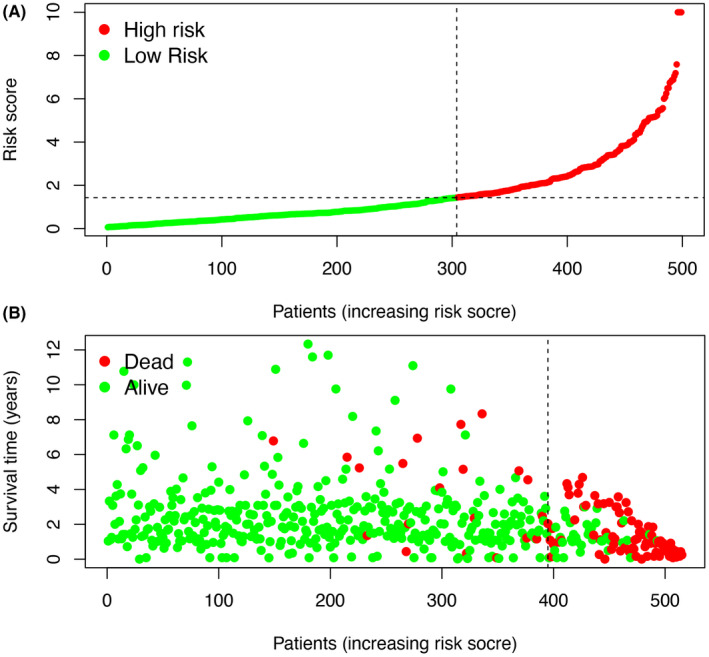
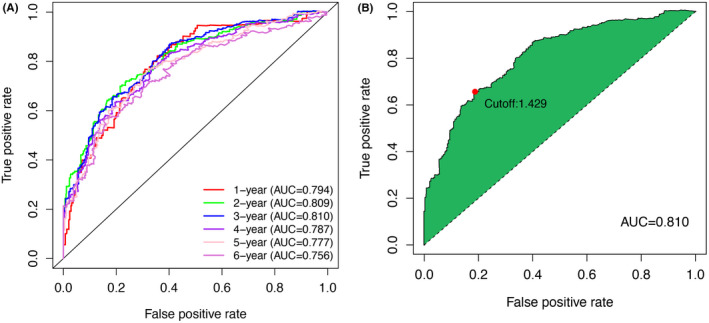
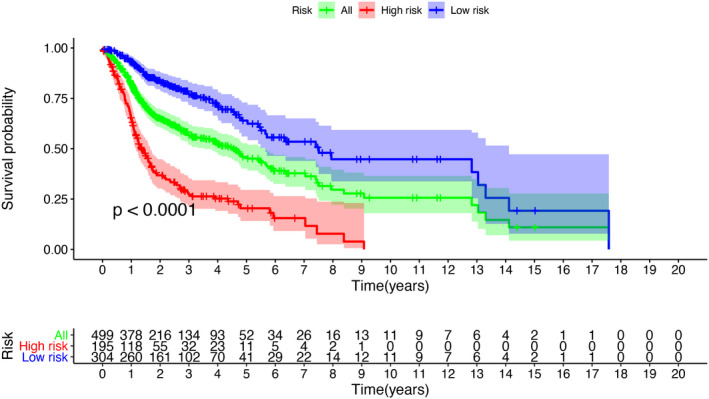
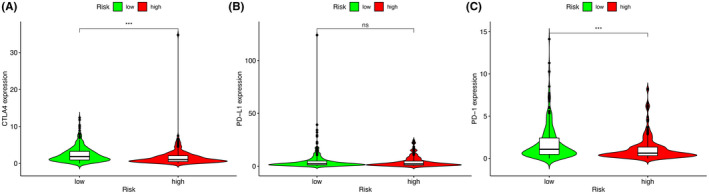
In the current study, we downloaded the transcriptomic and clinical data of HNSCC from The Cancer Genome Atlas and identified differentially expressed immune-related lncRNAs (DEir-lncRNAs). Further then, Cox and least absolute shrinkage and selection operator (LASSO) regression analyses were performed to identify proper DEir-lncRNAs to construct optimal risk model. Low-risk and high-risk groups were classified based on the optimal cut-off value generated by the areas under curve for receiver operating characteristic curves (AUC), and Kaplan-Meier survival curves were utilized to validate the prediction model. We then evaluated the model based on the clinical factors, immune cell infiltration, and chemotherapeutic and immunotherapeutic efficacy between two groups.
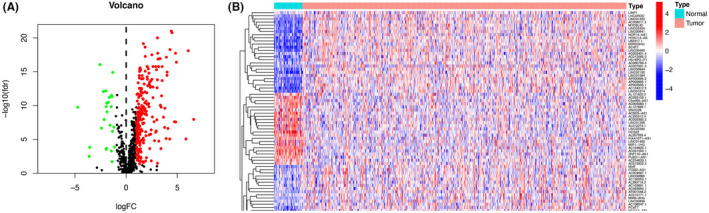
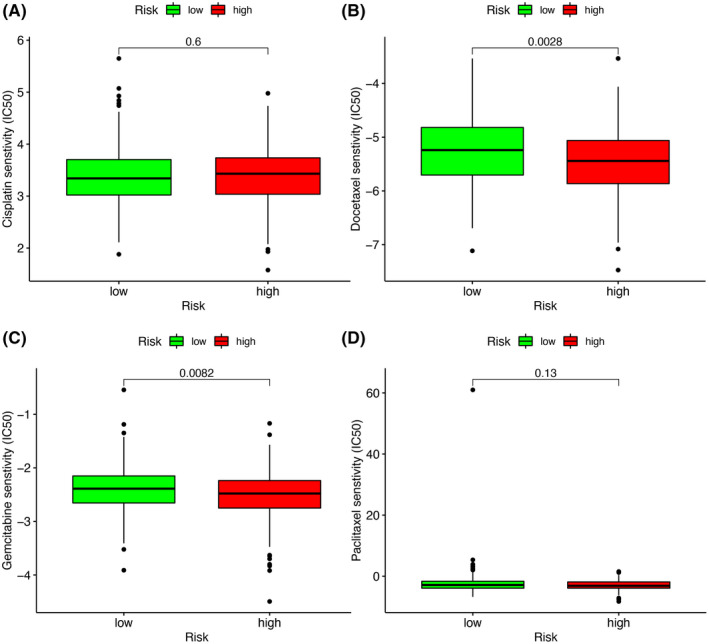
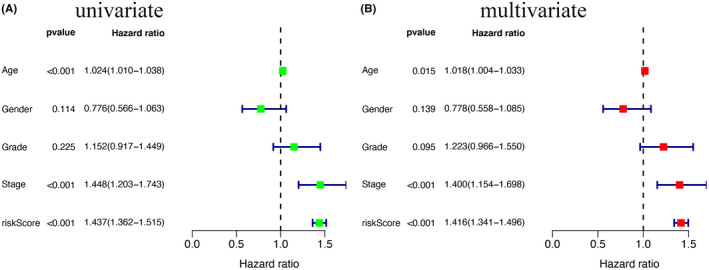
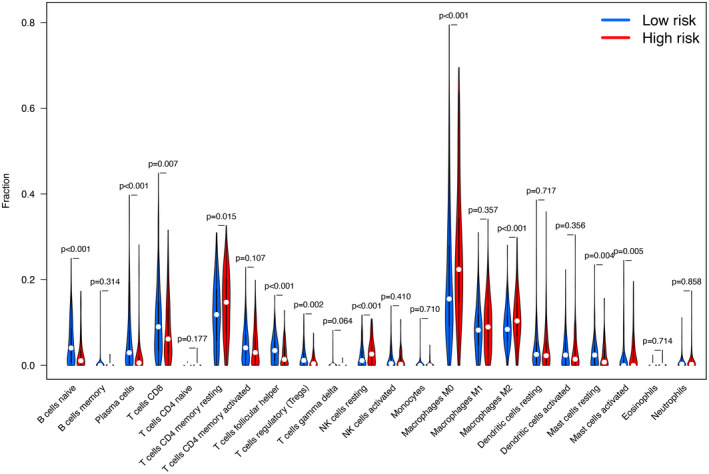
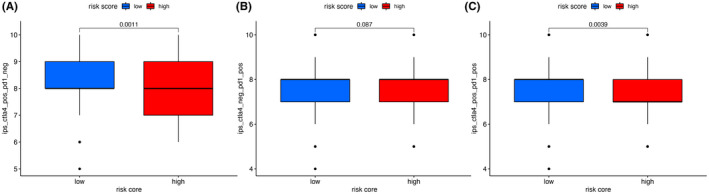
In our study, we identified 256 Deir-lncRNAs in HNSCC. A total of 18 Deir-lncRNA pairs (consisting of 35 Deir-lncRNAs) were used to construct a risk model significantly associated with survival of HNSCC. Cox proportional hazard regression analysis confirmed that our risk model could be served as an independent prognostic indicator. Besides, HNSCC patients with low-risk score significantly enriched of CD8 T cell, and corelated with high chemosensitivity and immunotherapeutic sensitivity.
Our risk model could be served as a promising clinical prediction indicator, effective discoursing of the immune cell infiltration of HNSCC patients, and distinguishing patients who could benefit from chemotherapy and immunotherapy.
免疫疗法正在改变头颈部鳞状细胞癌(HNSCC)的治疗模式。根据中国临床肿瘤学会(CSCO)指南,免疫疗法被认为是复发性/转移性 HNSCC 的一线推荐,标志着晚期 HNSCC 正式进入免疫治疗时代。长链非编码 RNA(lncRNA)影响癌症免疫的每一个步骤。因此,能够准确预测 HNSCC 免疫景观和生存的可靠免疫-lncRNA 对于临床管理至关重要。
在本研究中,我们从癌症基因组图谱(TCGA)下载了 HNSCC 的转录组和临床数据,并鉴定了差异表达的免疫相关 lncRNA(DEir-lncRNA)。然后,进行 Cox 和最小绝对值收缩和选择算子(LASSO)回归分析,以确定合适的 DEir-lncRNA 来构建最佳风险模型。根据曲线下面积(AUC)为接收者操作特征曲线(ROC)生成的最佳截断值对低风险和高风险组进行分类,并利用 Kaplan-Meier 生存曲线验证预测模型。然后,我们根据两组之间的临床因素、免疫细胞浸润和化疗和免疫治疗效果评估模型。
在我们的研究中,我们在 HNSCC 中鉴定了 256 个 Deir-lncRNA。总共使用 18 对 Deir-lncRNA(由 35 个 Deir-lncRNA 组成)构建了与 HNSCC 生存显著相关的风险模型。Cox 比例风险回归分析证实,我们的风险模型可以作为独立的预后指标。此外,低风险评分的 HNSCC 患者显著富含 CD8 T 细胞,与高化疗敏感性和免疫治疗敏感性相关。
我们的风险模型可以作为一种有前途的临床预测指标,有效地讨论 HNSCC 患者的免疫细胞浸润,并区分哪些患者可能受益于化疗和免疫治疗。