Department of Neurosurgery and Center for Neuroregeneration, Houston Methodist Research Institute, 6670 Bertner Avenue, Houston, TX 77030, USA.
Department of Computer Science, Rice University, Houston, TX 77005, USA.
Int J Mol Sci. 2022 Apr 19;23(9):4476. doi: 10.3390/ijms23094476.
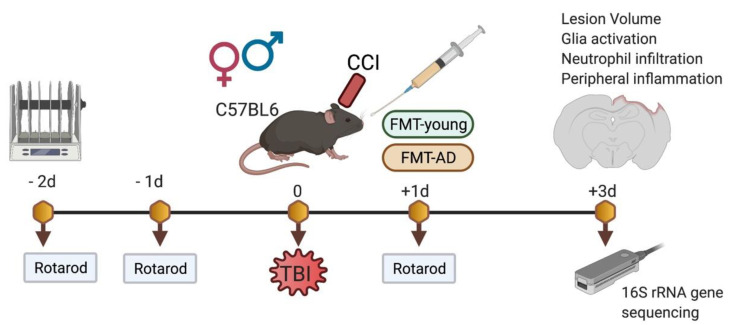
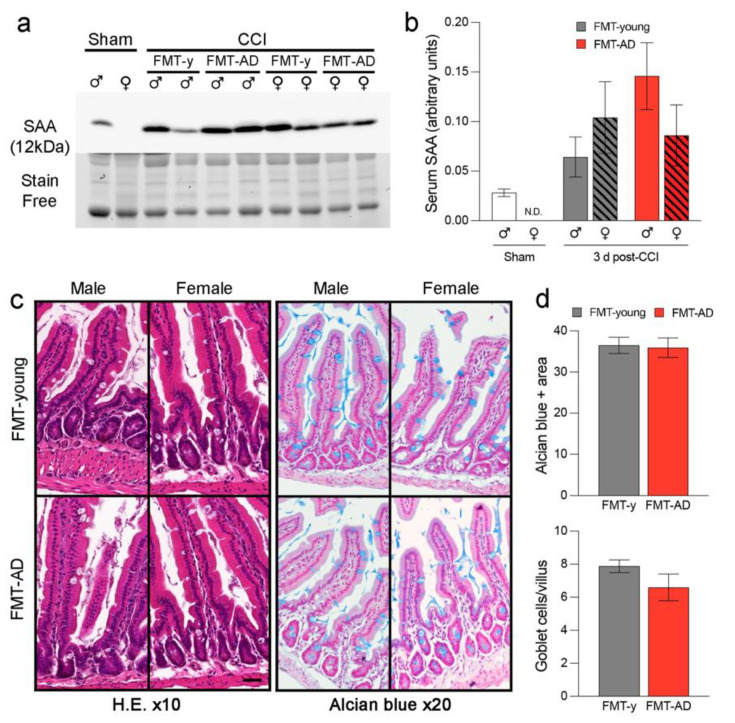
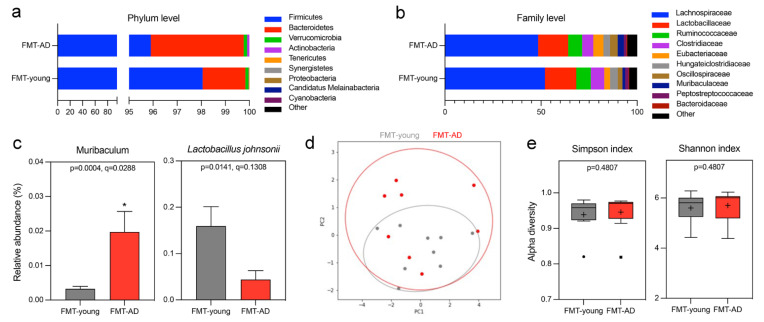
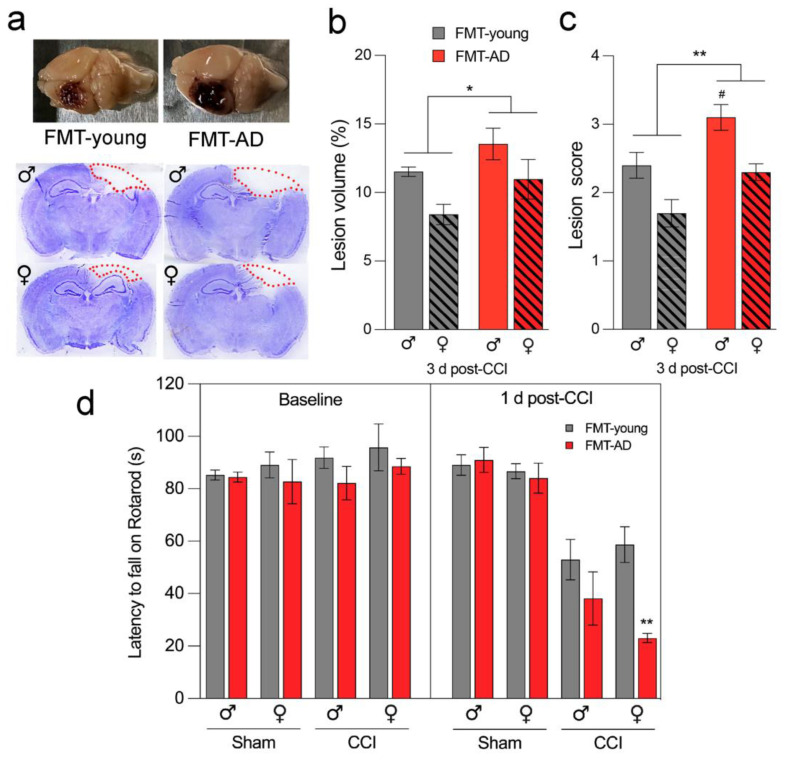
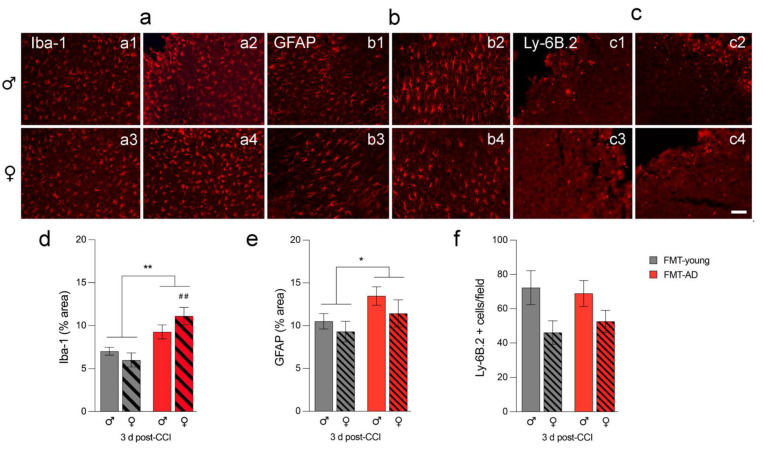
Traumatic brain injury (TBI) causes neuroinflammation and neurodegeneration, both of which increase the risk and accelerate the progression of Alzheimer's disease (AD). The gut microbiome is an essential modulator of the immune system, impacting the brain. AD has been related with reduced diversity and alterations in the community composition of the gut microbiota. This study aimed to determine whether the gut microbiota from AD mice exacerbates neurological deficits after TBI in control mice. We prepared fecal microbiota transplants from 18 to 24 month old 3×Tg-AD (FMT-AD) and from healthy control (FMT-young) mice. FMTs were administered orally to young control C57BL/6 (wild-type, WT) mice after they underwent controlled cortical impact (CCI) injury, as a model of TBI. Then, we characterized the microbiota composition of the fecal samples by full-length 16S rRNA gene sequencing analysis. We collected the blood, brain, and gut tissues for protein and immunohistochemical analysis. Our results showed that FMT-AD administration stimulates a higher relative abundance of the genus and a decrease in compared to FMT-young in WT mice. Furthermore, WT mice exhibited larger lesion, increased activated microglia/macrophages, and reduced motor recovery after FMT-AD compared to FMT-young one day after TBI. In summary, we observed gut microbiota from AD mice to have a detrimental effect and aggravate the neuroinflammatory response and neurological outcomes after TBI in young WT mice.
创伤性脑损伤 (TBI) 可引起神经炎症和神经退行性变,这两者都会增加阿尔茨海默病 (AD) 的风险并加速其进展。肠道微生物组是免疫系统的重要调节剂,会对大脑产生影响。AD 与肠道微生物群落多样性降低和组成改变有关。本研究旨在确定 AD 小鼠的肠道微生物群是否会加剧 TBI 后对照小鼠的神经功能缺损。我们从 18 至 24 月龄的 3×Tg-AD(FMT-AD)和健康对照(FMT-young)小鼠中制备粪便微生物群移植体。FMTs 被口服给予接受皮质撞击伤(CCI)损伤后的年轻对照 C57BL/6(野生型,WT)小鼠,作为 TBI 的模型。然后,我们通过全长 16S rRNA 基因测序分析来描述粪便样本中的微生物群落组成。我们收集血液、大脑和肠道组织,用于蛋白质和免疫组织化学分析。我们的结果表明,与 FMT-young 相比,FMT-AD 给药可刺激 WT 小鼠中属的相对丰度增加和属的相对丰度减少。此外,与 FMT-young 相比,WT 小鼠在 TBI 后 1 天接受 FMT-AD 后表现出更大的病变、增加的活化小胶质细胞/巨噬细胞和运动功能恢复减少。总之,我们观察到 AD 小鼠的肠道微生物群具有有害作用,并加剧了年轻 WT 小鼠 TBI 后的神经炎症反应和神经学结果。