Biomaterials and Bioengineering Laboratory, Centro de Investigación Traslacional San Alberto Magno, Universidad Católica de Valencia San Vicente Mártir, c/Guillem de Castro 94, 46001 Valencia, Spain.
Department of Pharmaceutics and Pharmaceutical Technology, Faculty of Pharmacy, Yarmouk University, Irbid 21163, Jordan.
Int J Mol Sci. 2022 Apr 19;23(9):4486. doi: 10.3390/ijms23094486.
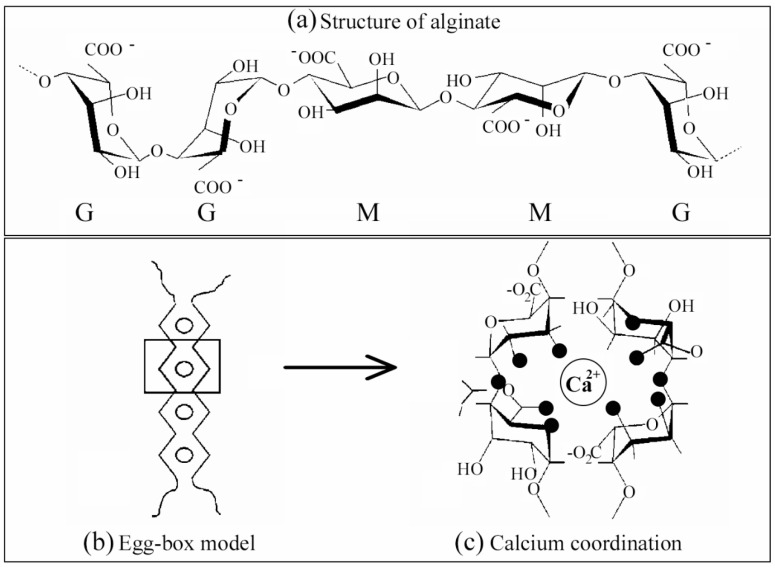
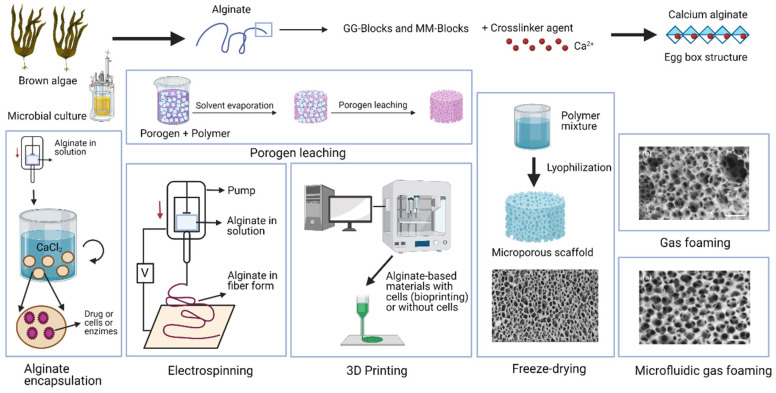
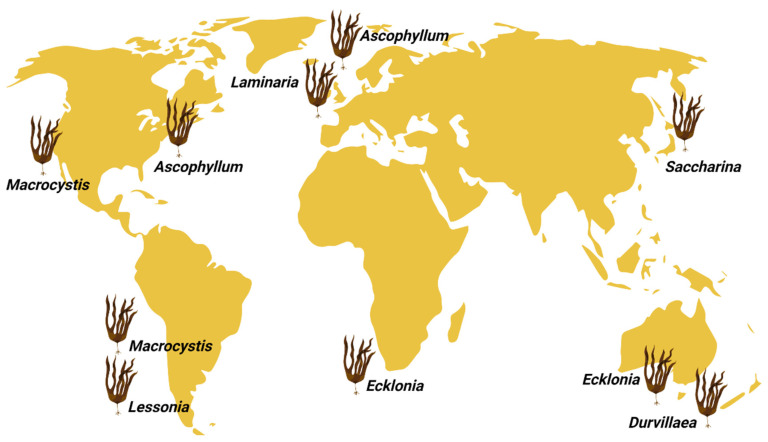
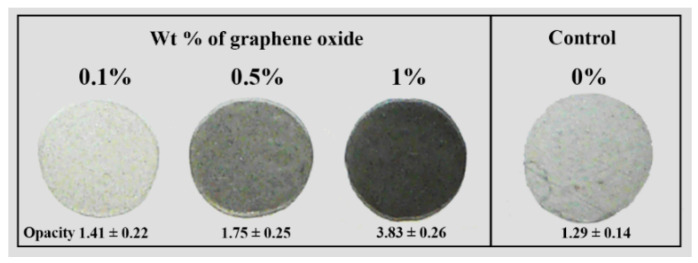
Alginate is an excellent biodegradable and renewable material that is already used for a broad range of industrial applications, including advanced fields, such as biomedicine and bioengineering, due to its excellent biodegradable and biocompatible properties. This biopolymer can be produced from brown algae or a microorganism culture. This review presents the principles, chemical structures, gelation properties, chemical interactions, production, sterilization, purification, types, and alginate-based hydrogels developed so far. We present all of the advanced strategies used to remarkably enhance this biopolymer's physicochemical and biological characteristics in various forms, such as injectable gels, fibers, films, hydrogels, and scaffolds. Thus, we present here all of the material engineering enhancement approaches achieved so far in this biopolymer in terms of mechanical reinforcement, thermal and electrical performance, wettability, water sorption and diffusion, antimicrobial activity, in vivo and in vitro biological behavior, including toxicity, cell adhesion, proliferation, and differentiation, immunological response, biodegradation, porosity, and its use as scaffolds for tissue engineering applications. These improvements to overcome the drawbacks of the alginate biopolymer could exponentially increase the significant number of alginate applications that go from the paper industry to the bioprinting of organs.
藻酸盐是一种极好的可生物降解和可再生材料,由于其优异的可生物降解性和生物相容性,已被广泛应用于工业领域,包括先进的生物医学和生物工程领域。这种生物聚合物可以从褐藻或微生物培养物中生产。本综述介绍了原理、化学结构、凝胶性质、化学相互作用、生产、灭菌、纯化、类型以及迄今为止开发的基于藻酸盐的水凝胶。我们介绍了所有先进的策略,以显著增强这种生物聚合物在各种形式下的物理化学和生物特性,如可注射凝胶、纤维、薄膜、水凝胶和支架。因此,我们在这里介绍了迄今为止在这种生物聚合物中实现的所有材料工程增强方法,包括机械增强、热和电性能、润湿性、水吸附和扩散、抗菌活性、体内和体外生物学行为,包括毒性、细胞黏附、增殖和分化、免疫反应、生物降解、孔隙率以及将其用作组织工程应用的支架。这些改进措施克服了藻酸盐生物聚合物的缺点,可以使藻酸盐的应用数量呈指数级增长,从纸张工业到器官的生物打印。