State Key Laboratory of Medicinal Chemical Biology, College of Pharmacy and Tianjin Key Laboratory of Molecular Drug Research, Nankai University, Tianjin 300350, China.
School of Life Science and Bio-Pharmaceutics, Shenyang Pharmaceutical University, Shenyang 110016, China.
Int J Mol Sci. 2022 Apr 21;23(9):4583. doi: 10.3390/ijms23094583.
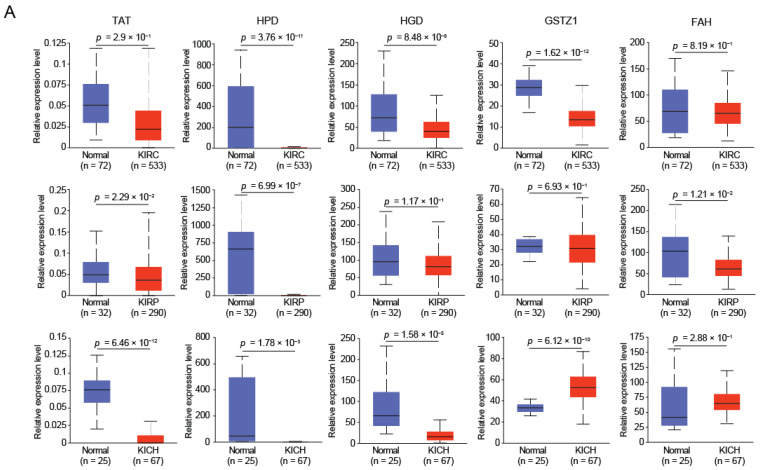
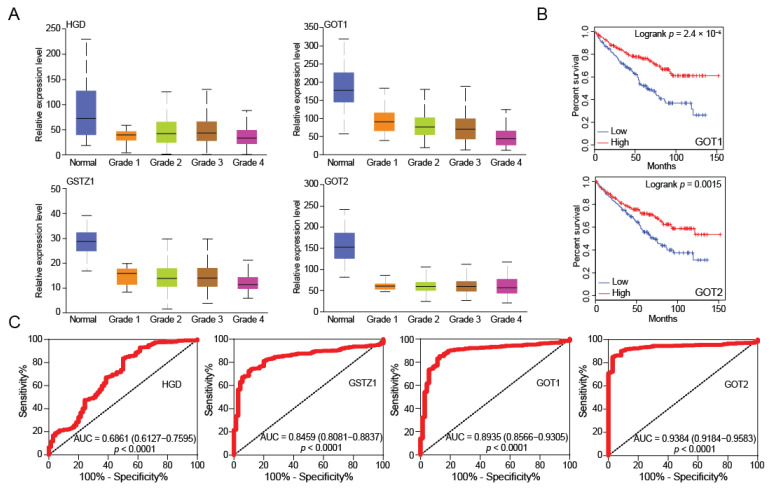
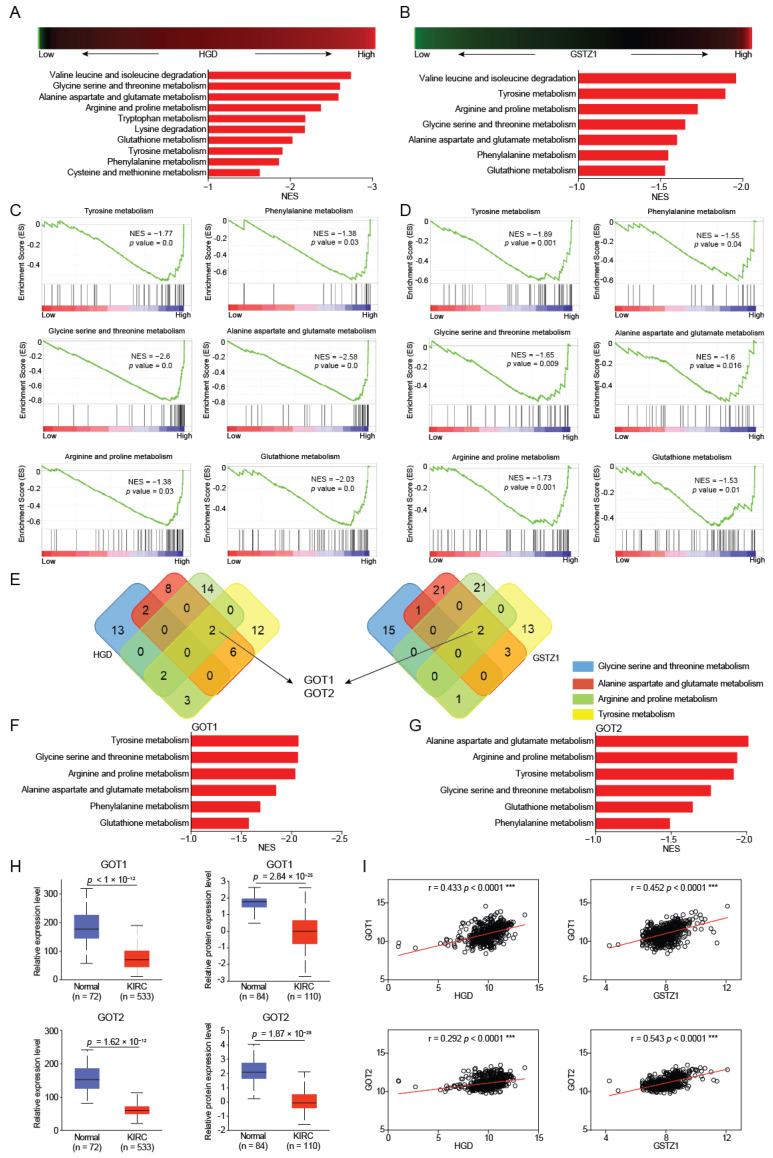
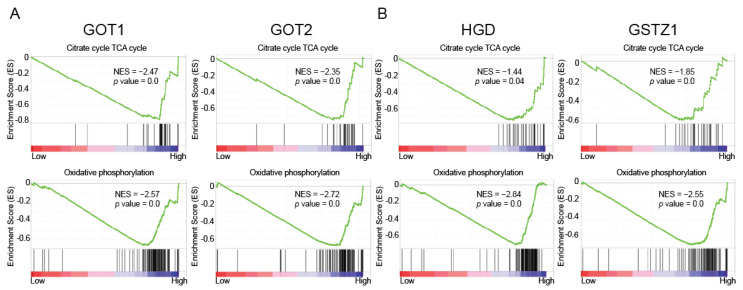
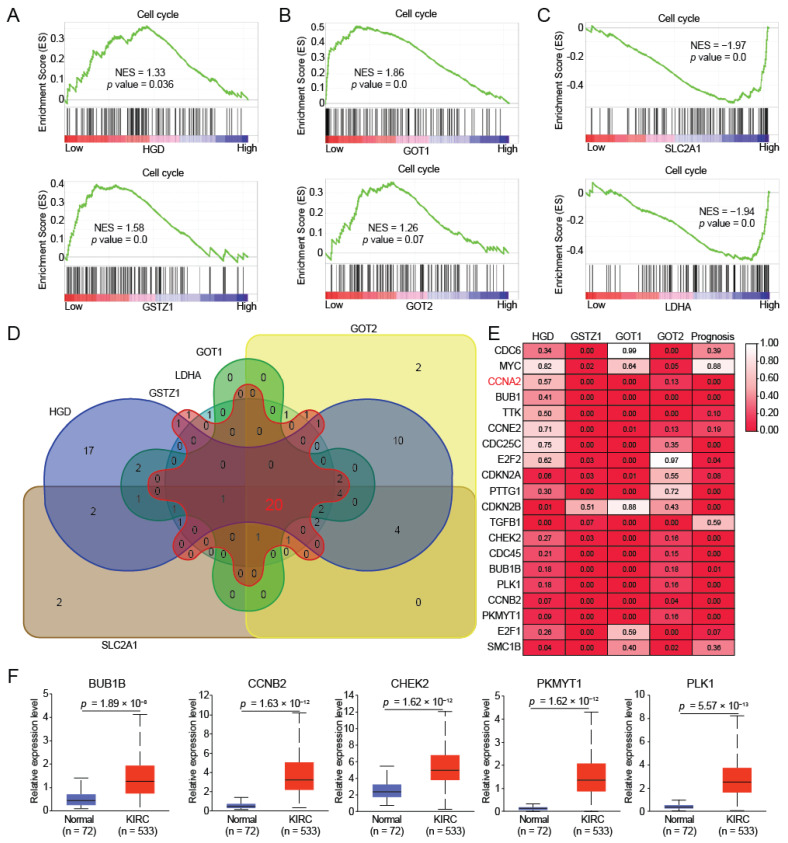
Kidney renal clear cell carcinoma (KIRC) with poor prognosis is the main histological subtype of renal cell carcinoma, accounting for more than 80% of patients. Most patients are diagnosed at an advanced stage due to being asymptomatic early on. Advanced KIRC has an extremely poor prognosis due to its inherent resistance to radiotherapy and chemotherapy. Therefore, a comprehensive understanding of the molecular mechanisms of KIRC and the development of effective early diagnostic and therapeutic strategies is urgently needed. In this study, we aimed to identify the prognosis-related biomarker and analyzed its relationship with tumor progression. Metabolic changes are an important feature of kidney cancer, where the reduction of fumarate allows us to target the tyrosine metabolic pathway. The homogentisate 1,2-dioxygenase (HGD) and glutathione S-transferase zeta 1 (GSTZ1) related with prognosis of KIRC was identified through bioinformatics analysis based on The Cancer Genome Atlas (TCGA) databases. Mechanistically, we found that decreased HGD and GSTZ1 promote aerobic glycolysis in KIRC, coordinate the balance of amino acid metabolism and energy metabolism in tumor cells, and ultimately activate the tumor cell cycle and tumor progression. In summary, we identified the tyrosine metabolizing enzymes HGD and GSTZ1 as biomarkers of KIRC, which will further the understanding of the tumor metabolism profile, provide novel strategies and theoretical support for diagnosing and treating KIRC and as referential for future clinical research.
肾透明细胞癌(KIRC)预后不良,是肾细胞癌的主要组织学亚型,占患者的 80%以上。由于早期无症状,大多数患者在晚期才被诊断出来。由于其对放疗和化疗的固有耐药性,晚期 KIRC 的预后极差。因此,全面了解 KIRC 的分子机制以及开发有效的早期诊断和治疗策略是当务之急。在这项研究中,我们旨在确定与预后相关的生物标志物,并分析其与肿瘤进展的关系。代谢变化是肾癌的一个重要特征,富马酸的减少使我们能够靶向酪氨酸代谢途径。基于癌症基因组图谱(TCGA)数据库的生物信息学分析,确定了与 KIRC 预后相关的延胡索酸酶(HGD)和谷胱甘肽 S-转移酶 ζ 1(GSTZ1)。从机制上讲,我们发现 HGD 和 GSTZ1 的减少促进了 KIRC 中的有氧糖酵解,协调了肿瘤细胞中氨基酸代谢和能量代谢的平衡,最终激活了肿瘤细胞周期和肿瘤进展。总之,我们确定了酪氨酸代谢酶 HGD 和 GSTZ1 作为 KIRC 的生物标志物,这将进一步了解肿瘤代谢谱,为 KIRC 的诊断和治疗提供新的策略和理论支持,并为未来的临床研究提供参考。