Tissue Architecture and Regeneration Research Group, School of Life Sciences, College of Liberal Arts and Sciences, University of Westminster, London W1W 6 UW, UK.
Department of Biology, University of Ottawa, Ottawa, ON K1N 6N5, Canada.
Int J Mol Sci. 2022 Apr 23;23(9):4683. doi: 10.3390/ijms23094683.
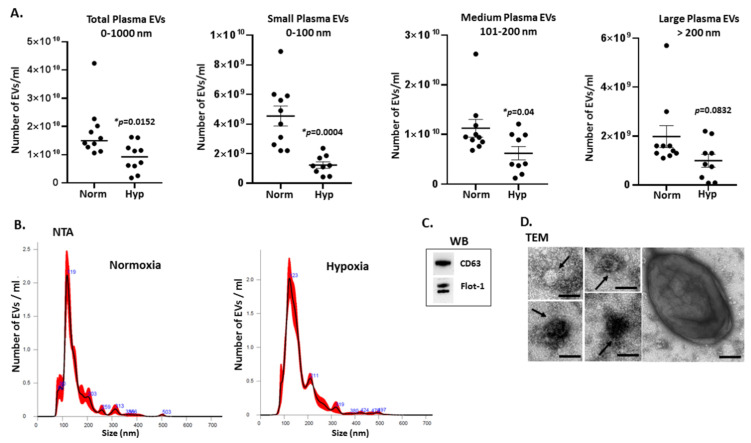
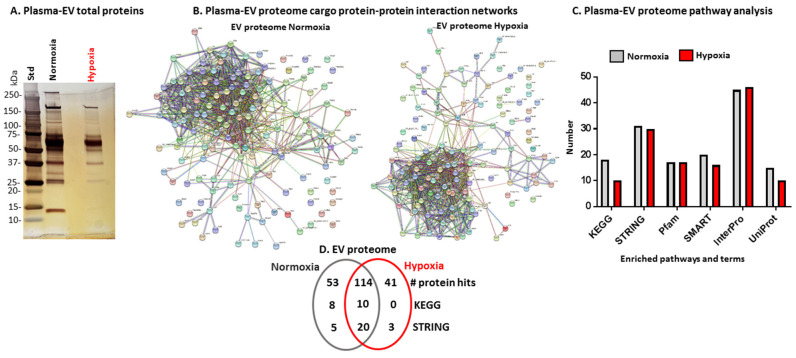
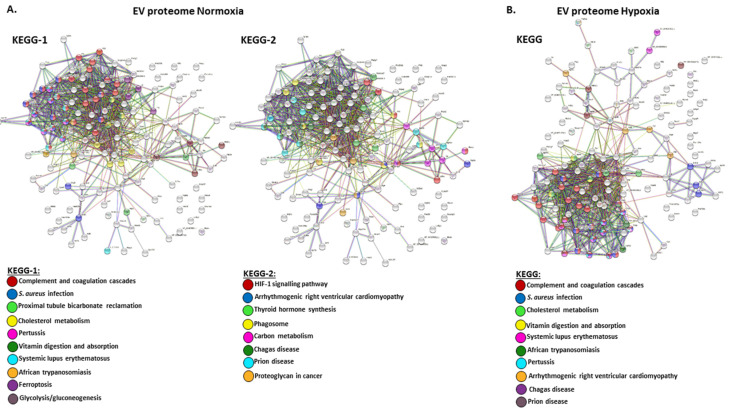
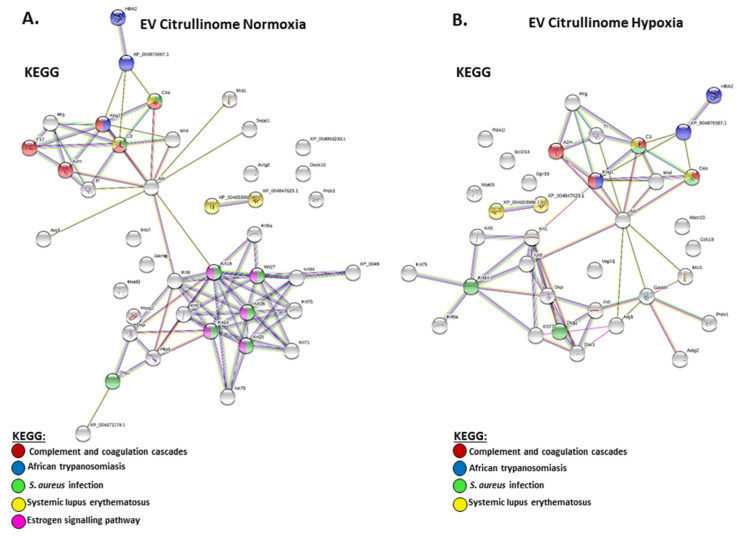
Peptidylarginine deiminases (PADs) and extracellular vesicles (EVs) may be indicative biomarkers of physiological and pathological status and adaptive responses, including to diseases and disorders of the central nervous system (CNS) and related to hypoxia. While these markers have been studied in hypoxia-intolerant mammals, in vivo investigations in hypoxia-tolerant species are lacking. Naked mole-rats (NMR) are among the most hypoxia-tolerant mammals and are thus a good model organism for understanding natural and beneficial adaptations to hypoxia. Thus, we aimed to reveal CNS related roles for PADs in hypoxia tolerance and identify whether circulating EV signatures may reveal a fingerprint for adaptive whole-body hypoxia responses in this species. We found that following in vivo acute hypoxia, NMR: (1) plasma-EVs were remodelled, (2) whole proteome EV cargo contained more protein hits (including citrullinated proteins) and a higher number of associated KEGG pathways relating to the total proteome of plasma-EVs Also, (3) brains had a trend for elevation in PAD1, PAD3 and PAD6 protein expression, while PAD2 and PAD4 were reduced, while (4) the brain citrullinome had a considerable increase in deiminated protein hits with hypoxia (1222 vs. 852 hits in normoxia). Our findings indicate that circulating EV signatures are modified and proteomic content is reduced in hypoxic conditions in naked mole-rats, including the circulating EV citrullinome, while the brain citrullinome is elevated and modulated in response to hypoxia. This was further reflected in elevation of some PADs in the brain tissue following acute hypoxia treatment. These findings indicate a possible selective role for PAD-isozymes in hypoxia response and tolerance.
肽基精氨酸脱亚氨酶(PADs)和细胞外囊泡(EVs)可能是生理和病理状态以及适应反应的指示性生物标志物,包括对中枢神经系统(CNS)疾病和障碍的反应,以及与缺氧相关的反应。虽然这些标志物已经在对缺氧敏感的哺乳动物中进行了研究,但在对缺氧耐受的物种中缺乏体内研究。裸鼹鼠(NMR)是对缺氧最耐受的哺乳动物之一,因此是研究理解对缺氧的自然和有益适应的良好模型生物。因此,我们旨在揭示 PADs 在缺氧耐受中的中枢神经系统相关作用,并确定循环 EV 特征是否可以揭示该物种对全身缺氧适应反应的特征。我们发现,在体内急性缺氧后,NMR:(1)血浆-EVs 发生重塑,(2)整个蛋白质组 EV 货物包含更多的蛋白质命中(包括瓜氨酸化蛋白质)和更多的相关 KEGG 途径与血浆-EVs 的总蛋白质组相关联。此外,(3)大脑中 PAD1、PAD3 和 PAD6 蛋白表达呈上升趋势,而 PAD2 和 PAD4 减少,而(4)脑瓜氨酸组在缺氧时(1222 个命中与正常氧时的 852 个命中相比)的脱亚胺化蛋白命中有相当大的增加。我们的研究结果表明,在裸鼹鼠的缺氧条件下,循环 EV 特征发生改变,蛋白质组内容减少,包括循环 EV 瓜氨酸组,而大脑瓜氨酸组在缺氧时升高并发生调节。急性缺氧处理后大脑组织中一些 PADs 的升高进一步反映了这一点。这些发现表明 PAD 同工酶在缺氧反应和耐受中可能具有选择性作用。