Du Ruifeng, Li Baoying, Han Xu, Xiao Ke, Wang Xiang, Zhang Chaoqi, Arbiol Jordi, Cabot Andreu
Catalonia Energy Research Institute-IREC, Sant Adrià de Besòs, 08930 Barcelona, Spain.
Departament d'Enginyeria Electrònica i Biomèdica, Universitat de Barcelona, 08028 Barcelona, Spain.
Nanomaterials (Basel). 2022 May 4;12(9):1557. doi: 10.3390/nano12091557.
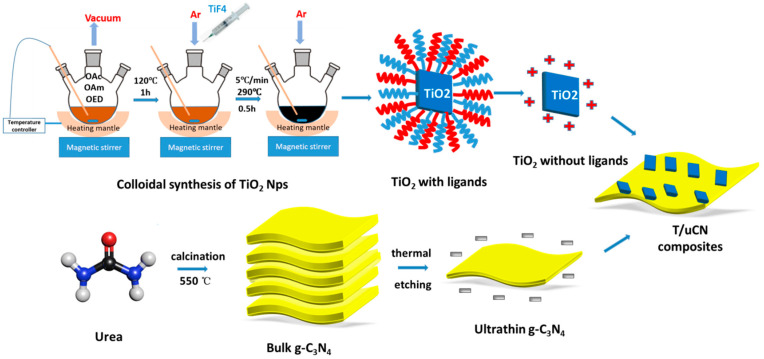
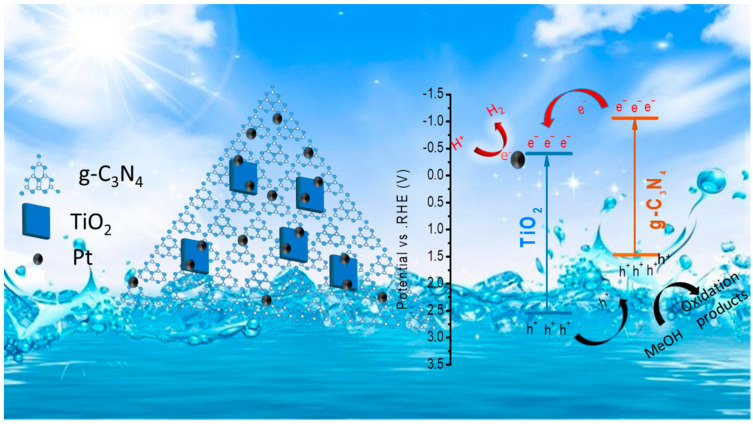
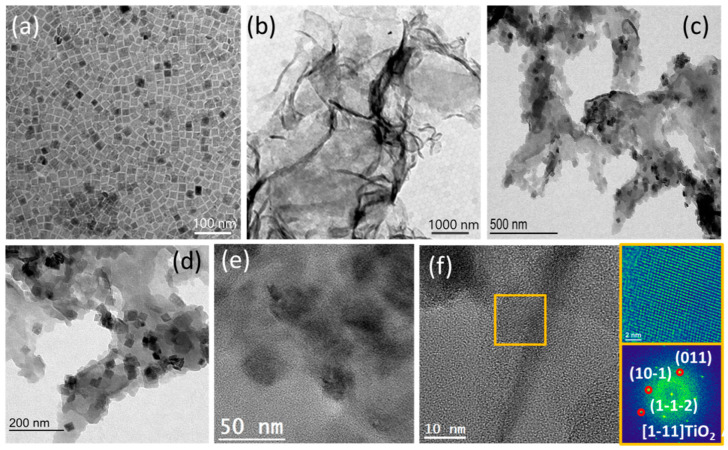
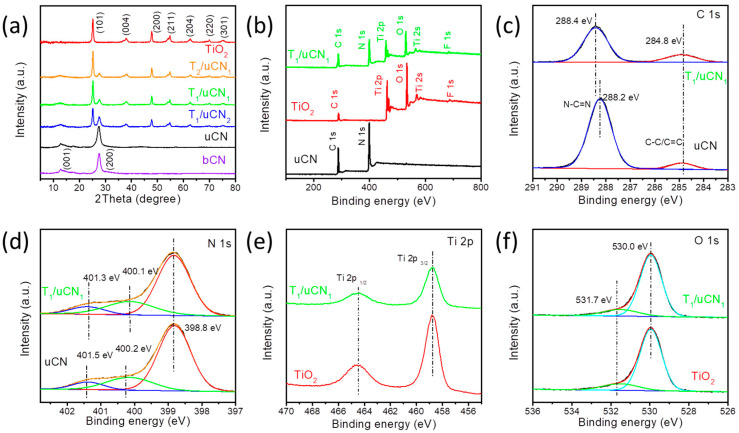
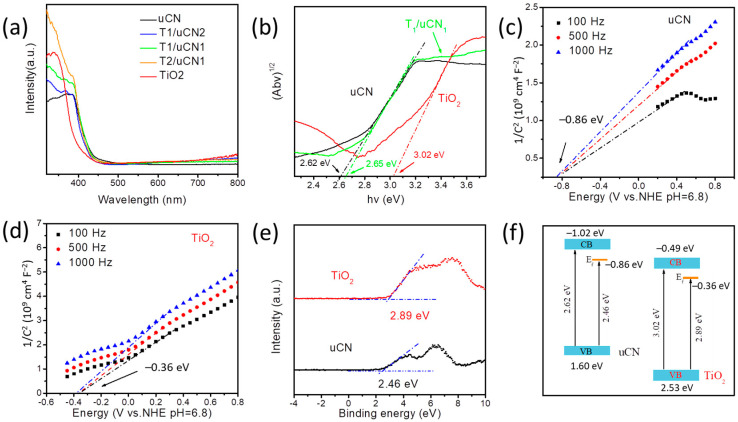
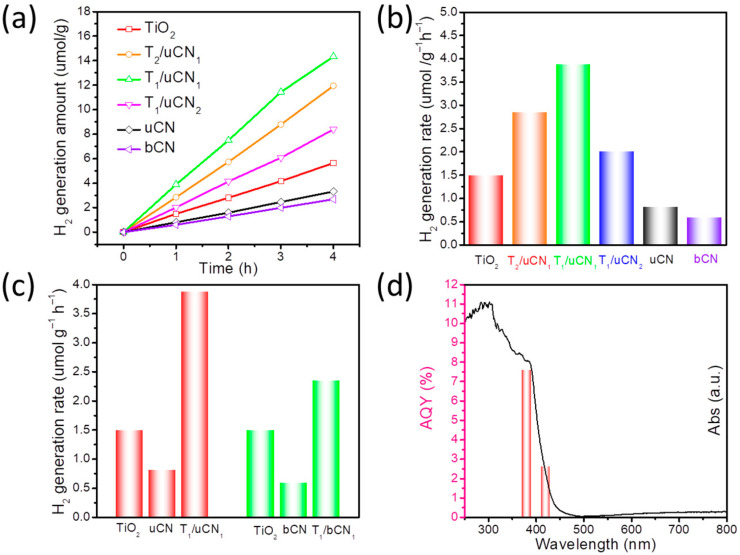
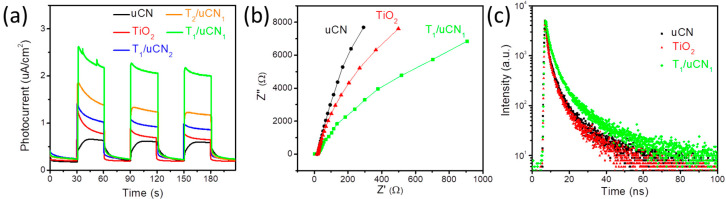
Photocatalytic hydrogen evolution is considered one of the promising routes to solve the energy and environmental crises. However, developing efficient and low-cost photocatalysts remains an unsolved challenge. In this work, ultrathin 2D g-CN nanosheets are coupled with flat TiO nanoparticles as face-to-face 2D/2D heterojunction photocatalysts through a simple electrostatic self-assembly method. Compared with g-CN and pure TiO nanosheets, 2D/2D TiO/g-CN heterojunctions exhibit effective charge separation and transport properties that translate into outstanding photocatalytic performances. With the optimized heterostructure composition, stable hydrogen evolution activities are threefold and fourfold higher than those of pure TiO and g-CN are consistently obtained. Benefiting from the favorable 2D/2D heterojunction structure, the TiO/g-CN photocatalyst yields H evolution rates up to 3875 μmol·g·h with an AQE of 7.16% at 380 nm.
光催化析氢被认为是解决能源和环境危机的一条有前景的途径。然而,开发高效且低成本的光催化剂仍然是一个未解决的挑战。在这项工作中,超薄二维石墨相氮化碳(g-CN)纳米片通过简单的静电自组装方法与扁平的二氧化钛(TiO)纳米颗粒耦合,形成面对面的二维/二维异质结光催化剂。与g-CN和纯TiO纳米片相比,二维/二维TiO/g-CN异质结表现出有效的电荷分离和传输特性,这转化为出色的光催化性能。通过优化的异质结构组成,稳定的析氢活性始终比纯TiO和g-CN高三倍和四倍。受益于良好的二维/二维异质结结构,TiO/g-CN光催化剂在380 nm处的析氢速率高达3875 μmol·g⁻¹·h⁻¹,表观量子效率(AQE)为7.16%。