Lodrini Marco, Wünschel Jasmin, Thole-Kliesch Theresa M, Grimaldi Maddalena, Sprüssel Annika, Linke Rasmus B, Hollander Jan F, Tiburtius Daniela, Künkele Annette, Schulte Johannes H, Lankes Erwin, Elgeti Thomas, Hundsdörfer Patrick, Astrahantseff Kathy, Simon Thorsten, Eggert Angelika, Deubzer Hedwig E
Department of Pediatric Hematology and Oncology, Charité-Universitätsmedizin Berlin, 13353 Berlin, Germany.
Experimental and Clinical Research Center (ECRC) of the Charité and the Max-Delbrück-Center for Molecular Medicine (MDC) in the Helmholtz Association, 13125 Berlin, Germany.
Cancers (Basel). 2022 Apr 21;14(9):2080. doi: 10.3390/cancers14092080.
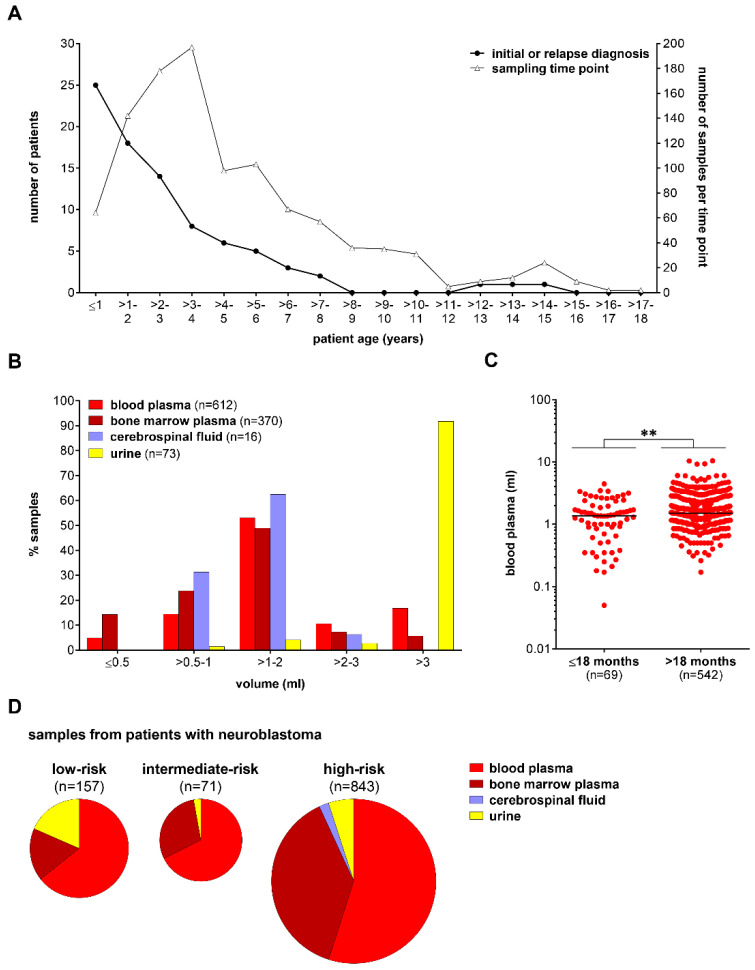
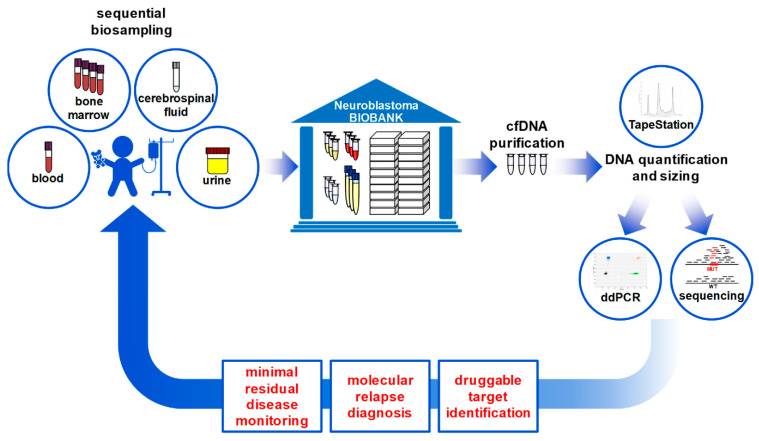
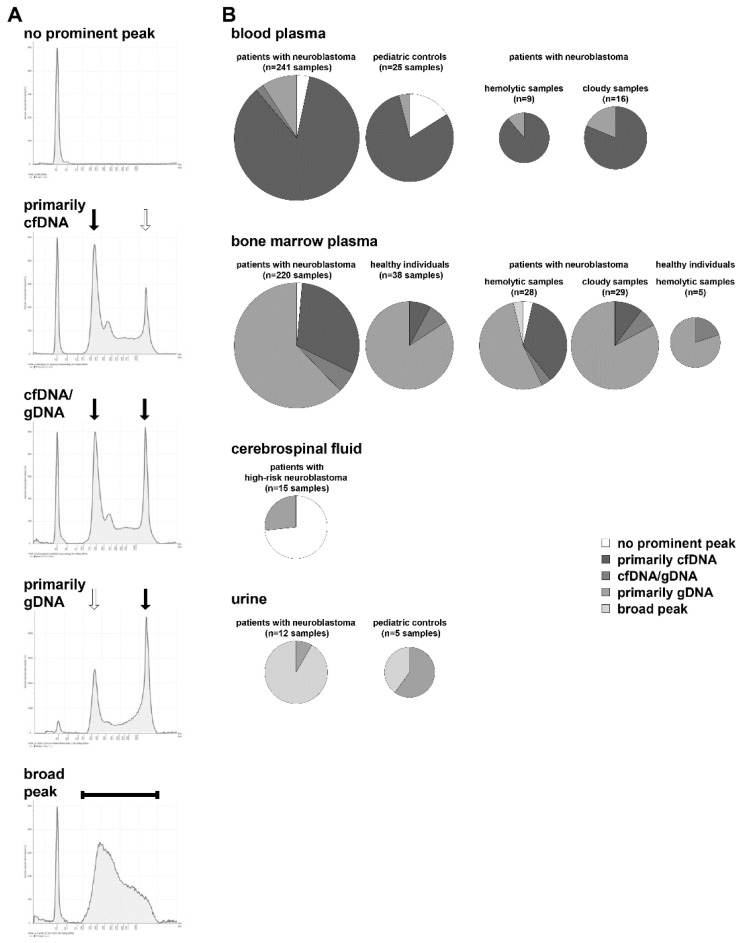
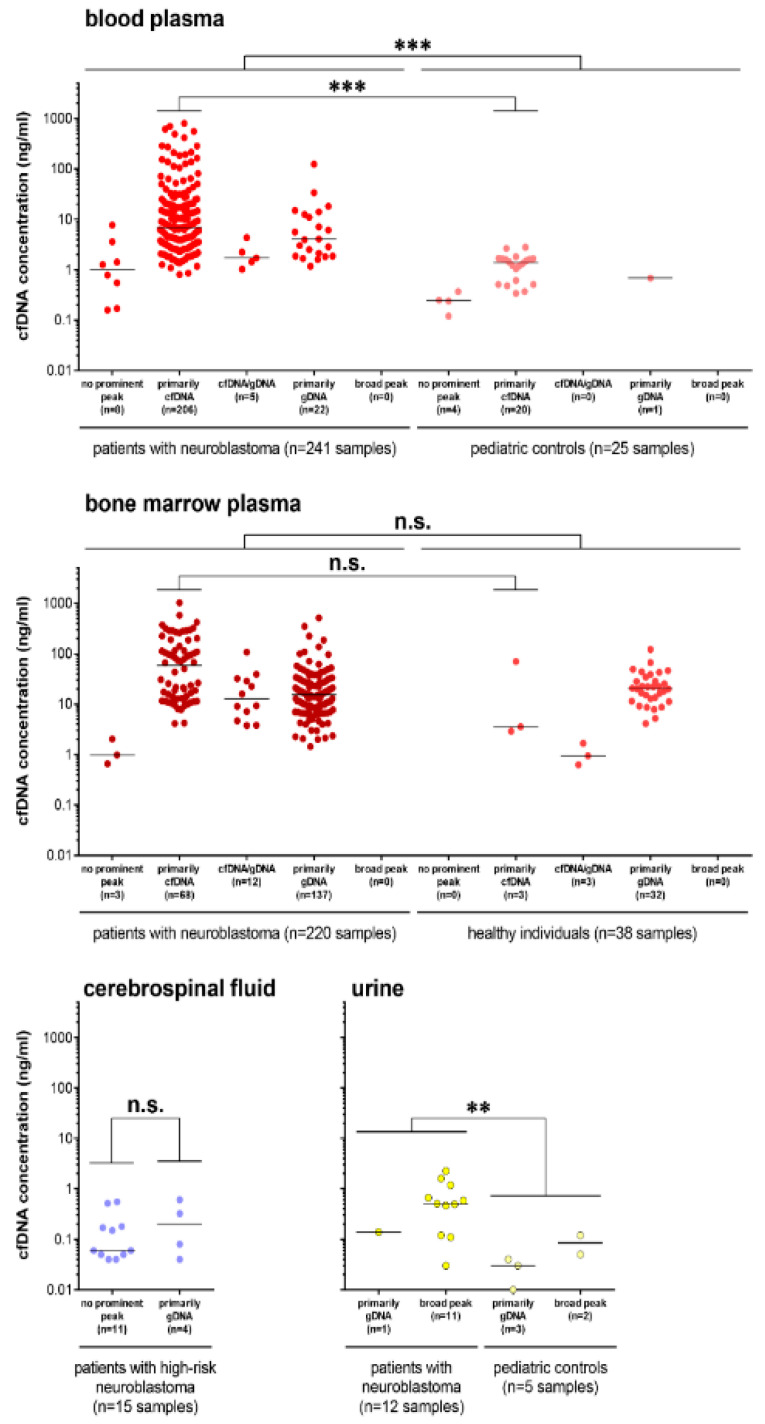
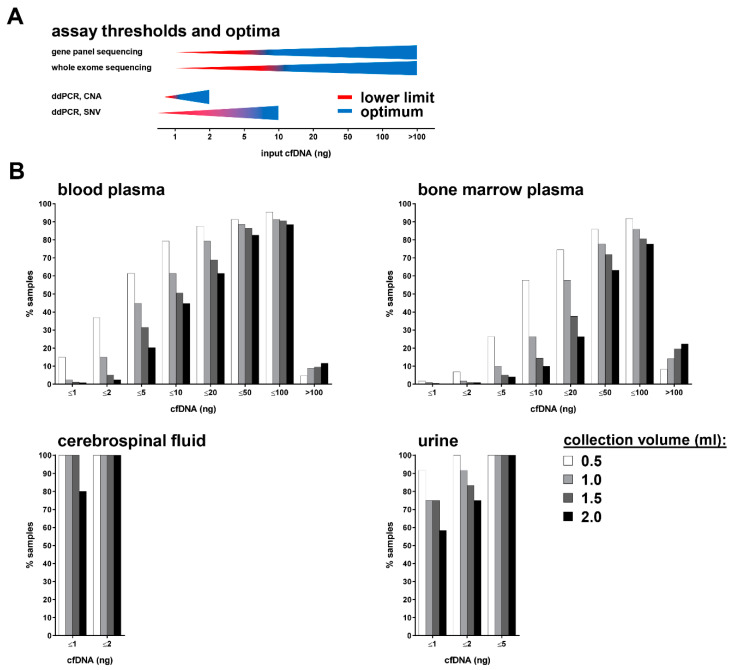
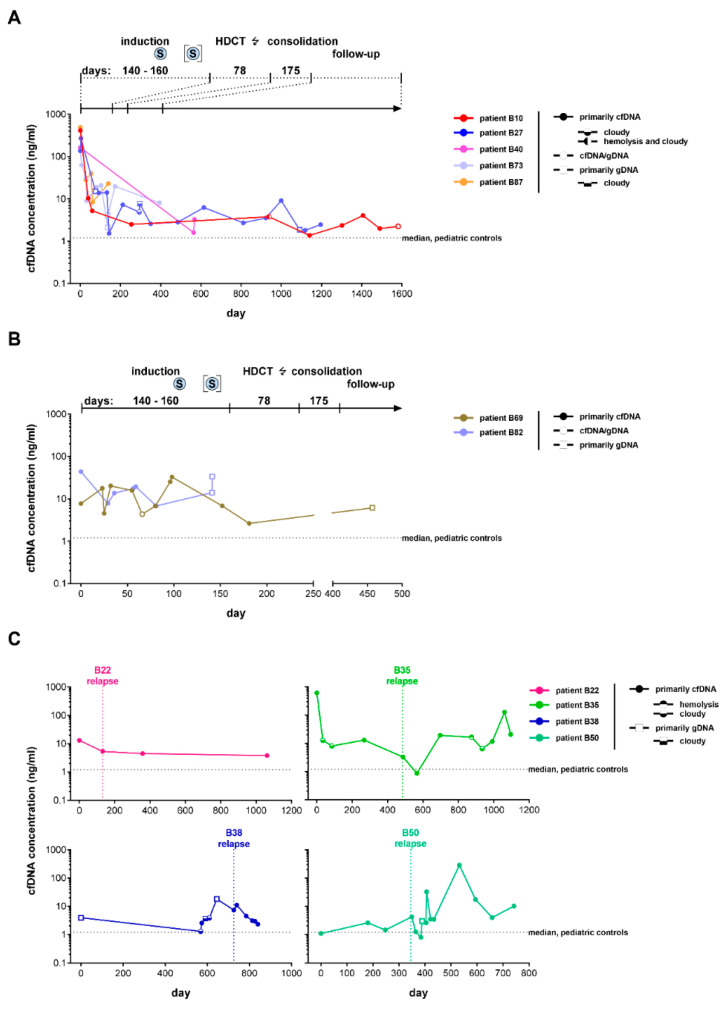
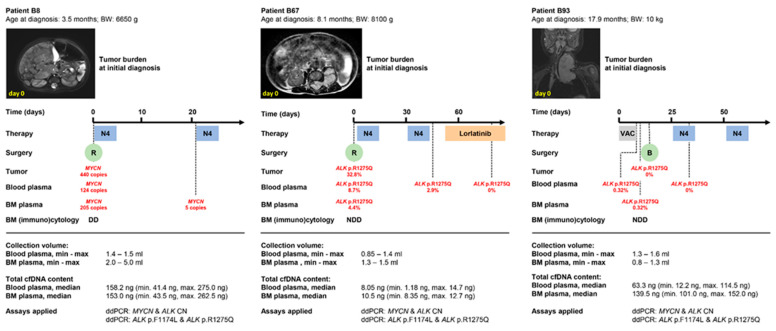
Liquid biopsy strategies in pediatric patients are challenging due to low body weight. This study investigated cfDNA size distribution and concentration in blood, bone marrow, cerebrospinal fluid, and urine from 84 patients with neuroblastoma classified as low ( = 28), intermediate ( = 6), or high risk ( = 50) to provide key data for liquid biopsy biobanking strategies. The average volume of blood and bone marrow plasma provided ranged between 1 and 2 mL. Analysis of 637 DNA electropherograms obtained by Agilent TapeStation measurement revealed five different major profiles and characteristic DNA size distribution patterns for each of the biofluids. The proportion of samples containing primarily cfDNA was, at 85.5%, the highest for blood plasma. The median cfDNA concentration amounted to 6.28 ng/mL (blood plasma), 58.2 ng/mL (bone marrow plasma), 0.08 ng/mL (cerebrospinal fluid), and 0.49 ng/mL (urine) in samples. Meta-analysis of the dataset demonstrated that multiple cfDNA-based assays employing the same biofluid sample optimally require sampling volumes of 1 mL for blood and bone marrow plasma, 2 mL for cerebrospinal fluid, and as large as possible for urine samples. A favorable response to treatment was associated with a rapid decrease in blood-based cfDNA concentration in patients with high-risk neuroblastoma. Blood-based cfDNA concentration was not sufficient as a single parameter to indicate high-risk disease recurrence. We provide proof of concept that monitoring neuroblastoma-specific markers in very small blood volumes from infants is feasible.
由于体重较低,儿科患者的液体活检策略具有挑战性。本研究调查了84例神经母细胞瘤患者血液、骨髓、脑脊液和尿液中的cfDNA大小分布及浓度,这些患者被分为低危(n = 28)、中危(n = 6)或高危(n = 50)组,以提供液体活检生物样本库策略的关键数据。提供的血液和骨髓血浆平均体积在1至2 mL之间。对通过安捷伦TapeStation测量获得的637份DNA电泳图的分析揭示了每种生物流体的五种不同主要图谱和特征性DNA大小分布模式。主要含有cfDNA的样本比例在血浆中最高,为85.5%。样本中cfDNA浓度中位数在血浆中为6.28 ng/mL,骨髓血浆中为58.2 ng/mL,脑脊液中为0.08 ng/mL,尿液中为0.49 ng/mL。数据集的荟萃分析表明,对于基于cfDNA的多种检测,使用相同生物流体样本时,血液和骨髓血浆最佳采样体积为1 mL,脑脊液为2 mL,尿液样本则尽可能大。高危神经母细胞瘤患者对治疗的良好反应与血液中cfDNA浓度的快速下降相关。基于血液的cfDNA浓度作为指示高危疾病复发的单一参数并不充分。我们提供了概念验证,即监测婴儿极少量血液中的神经母细胞瘤特异性标志物是可行的。