Department of Neurosurgery, Kantonsspital St. Gallen, Rorschacherstrasse 95, 9600, St. Gallen, Switzerland.
Neurosurgical Department, Klinikum Stuttgart, Stuttgart, Germany.
BMC Cancer. 2019 Mar 1;19(1):192. doi: 10.1186/s12885-019-5394-x.
Central nervous system lymphomas (CNSL) is a devastating disease. Currently, a confirmatory biopsy is required prior to treatment.
Our investigation aims to prove the feasibility of a minimally-invasive diagnostic approach for the molecular characterization of CNSL.
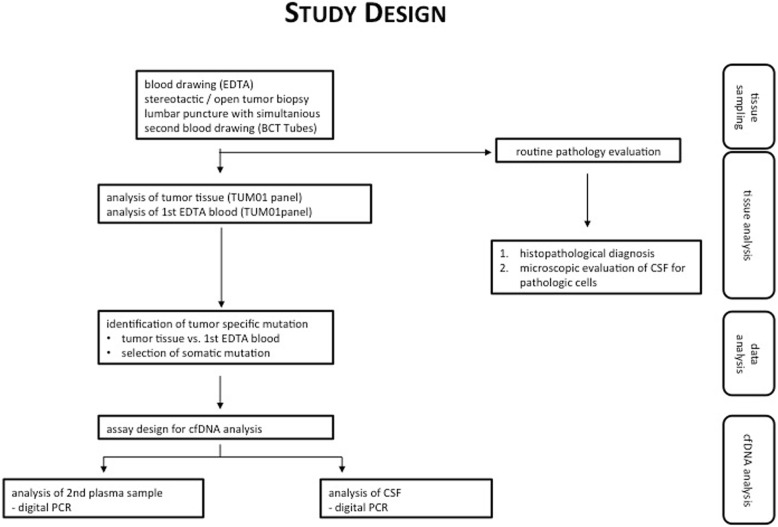
Tissue biopsies from 6 patients with suspected CNSL were analyzed using a 649gene next-generation sequencing (NGS) tumor panel (tumor vs. reference tissue (EDTA-blood)). The individual somatic mutation pattern was used as a basis for the digital PCR analyzing circulating tumor DNA (ctDNA) from plasma and cerebrospinal fluid (CSF) samples, identifying one selected tumor mutation during this first step of the feasibility investigation.
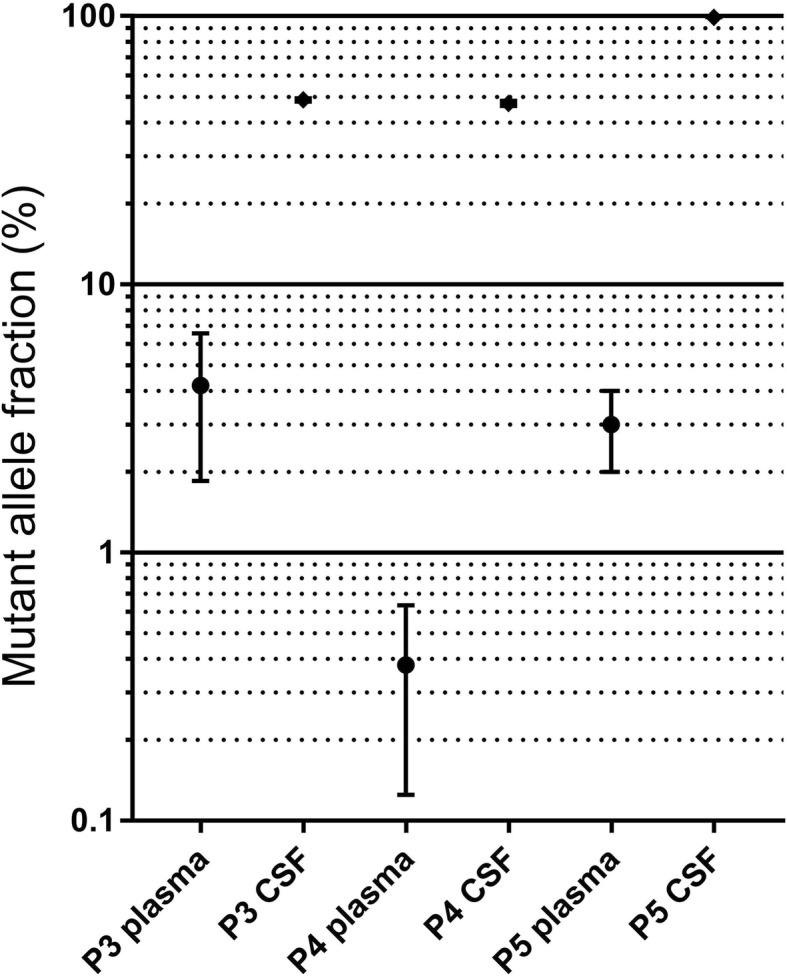
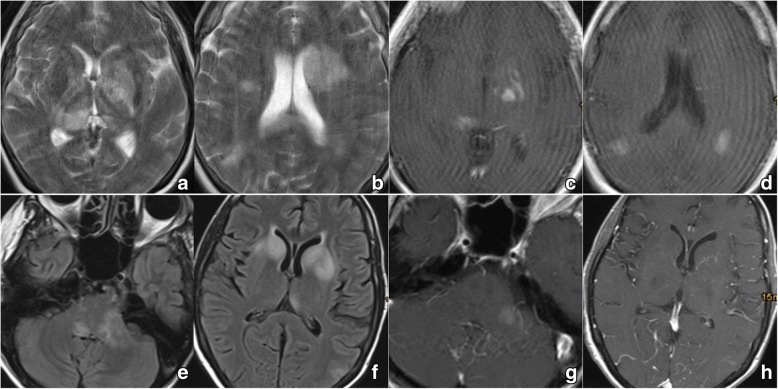
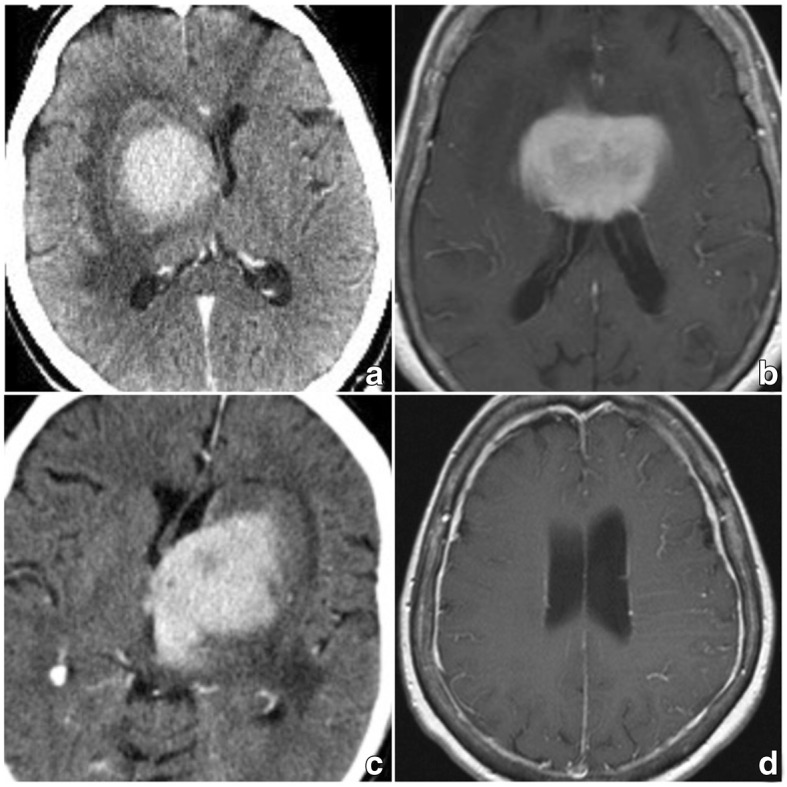
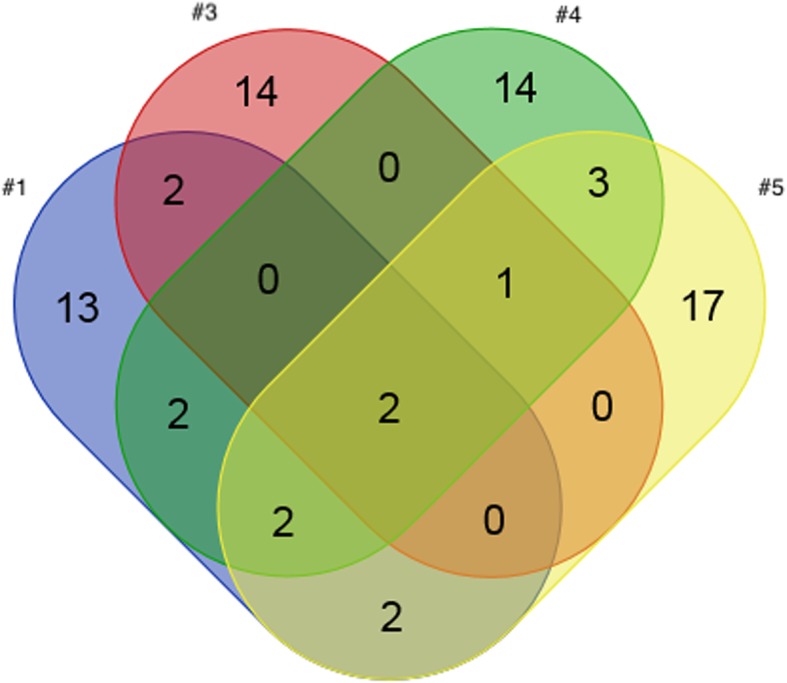
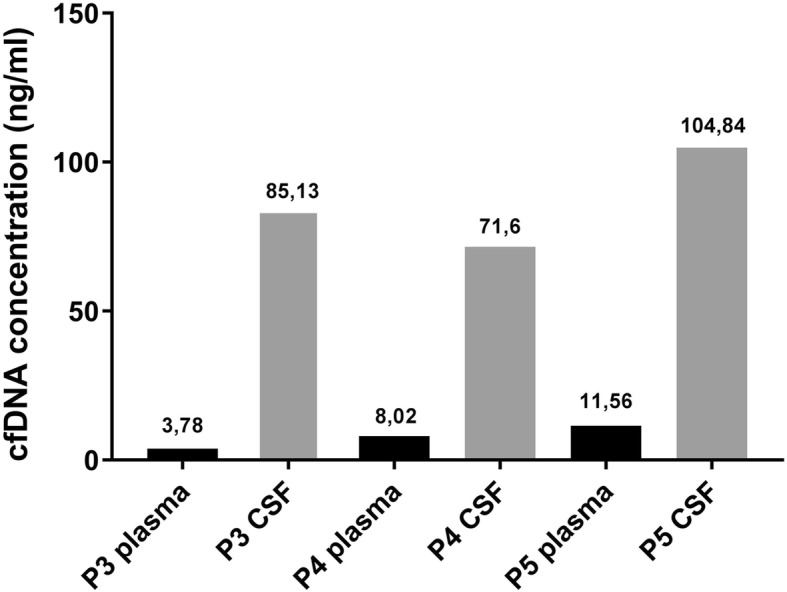
NGS-analysis of biopsy tissue revealed a specific somatic mutation pattern in all confirmed lymphoma samples (n = 5, NGS-sensitivity 100%) and none in the sample identified as normal brain tissue (NGS-specificity 100%). cfDNA-extraction was dependent on the extraction-kit used and feasible in 3 samples, in all of which somatic mutations were detectable (100%). Analysis of CSF-derived cfDNA was superior to plasma-derived cfDNA and routine microscopic analysis (lymphoma cells: n = 2, 40%). One patient showed a divergent molecular pattern, typical of Burkitt-Lymphoma (HIV+, serologic evidence of EBV-infection). Lumbar puncture was tolerated without complications, whereas biopsy caused 3 hemorrhages.
Our investigation provides evidence that analysis of cfDNA in central nervous system tumors is feasible using the described protocol. Molecular characterization of CNSL could be achieved by analysis of CSF-derived cfDNA. Knowledge of a tumor's specific mutation pattern may allow initiation of targeted therapies, treatment surveillance and could lead to minimally-invasive diagnostics in the future.
中枢神经系统淋巴瘤(CNSL)是一种毁灭性疾病。目前,在治疗前需要进行确认性活检。
我们的研究旨在证明一种微创诊断方法用于中枢神经系统淋巴瘤的分子特征分析的可行性。
对 6 例疑似中枢神经系统淋巴瘤患者的组织活检样本进行了分析,使用了一个包含 649 个基因的下一代测序(NGS)肿瘤面板(肿瘤与参考组织(EDTA 血))。个体体细胞突变模式作为分析来自血浆和脑脊液(CSF)样本的循环肿瘤 DNA(ctDNA)的数字 PCR 的基础,在该可行性研究的第一步中确定了一个选定的肿瘤突变。
活检组织的 NGS 分析显示,所有确诊的淋巴瘤样本中均存在特定的体细胞突变模式(n=5,NGS 敏感性为 100%),而在被鉴定为正常脑组织的样本中均未发现(NGS 特异性为 100%)。cfDNA 的提取依赖于所使用的提取试剂盒,在 3 个样本中均可行,在所有样本中均可检测到体细胞突变(100%)。CSF 衍生 cfDNA 的分析优于血浆衍生 cfDNA 和常规显微镜分析(淋巴瘤细胞:n=2,40%)。一名患者表现出与伯基特淋巴瘤(HIV+,EBV 感染的血清学证据)典型的不同分子模式。腰椎穿刺耐受良好,无并发症,而活检导致 3 例出血。
我们的研究提供了证据,表明使用描述的方案分析中枢神经系统肿瘤中的 cfDNA 是可行的。可以通过分析 CSF 衍生的 cfDNA 来实现中枢神经系统淋巴瘤的分子特征分析。了解肿瘤的特定突变模式可能允许启动靶向治疗、治疗监测,并可能导致未来的微创诊断。