Kuo Chun-Yuan, Liu Wei-Hsiu, Chou Yu-Ching, Li Ming-Hsien, Tsai Jo-Ting, Huang David Yc, Lin Jang-Chun
Department of Radiation Oncology, Shuang Ho Hospital, Taipei Medical University, Taipei 11031, Taiwan.
School of Biomedical Engineering, College of Biomedical Engineering, Taipei Medical University, Taipei 11031, Taiwan.
J Clin Med. 2022 Apr 25;11(9):2413. doi: 10.3390/jcm11092413.
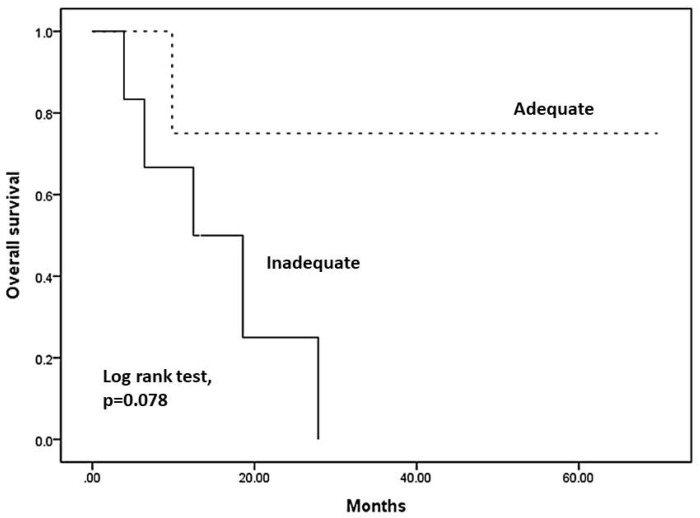
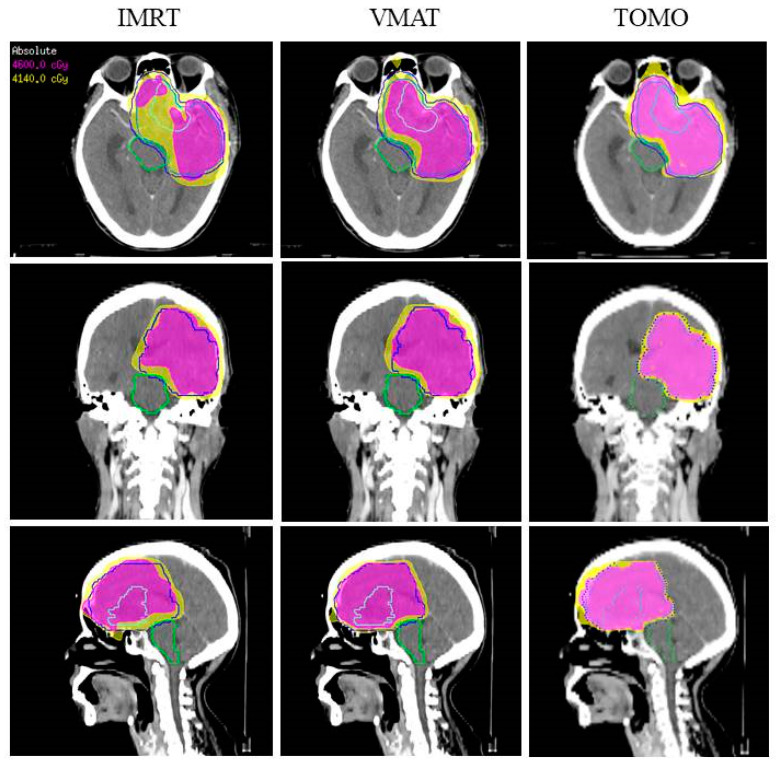
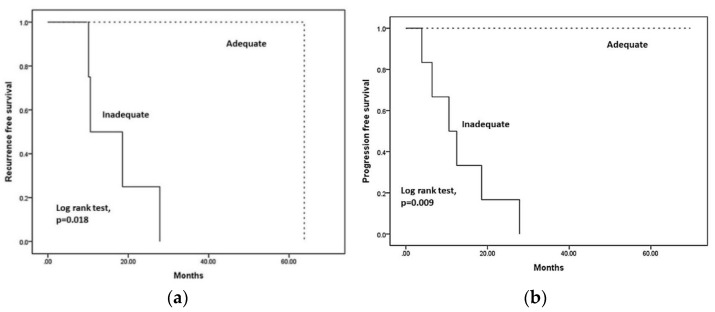
Background: Radiotherapy (RT) provides a modern treatment to enhance the malignant glioma control rate. The purpose of our study was to determine the effect of tumor coverage on disease prognosis and to predict optimal RT plans to achieve a lower normal tissue complication probability (NTCP). Methods: Ten malignant-glioma patients with tumors adjacent to organs at risk (OARs) were collected. The patients were divided into two groups according to adequate coverage or not, and prognosis was analyzed. Then, using intensity-modulated radiation therapy (IMRT), volume-modulated arc therapy (VMAT), and helical tomotherapy (TOMO) to simulate new treatment plans for 10 patients, the advantages of these planning systems were revealed for subsequent prediction of NTCP. Results: The results of clinical analysis indicated that overall survival (p = 0.078) between the adequate and inadequate groups showed no differences, while the adequate group had better recurrence-free survival (p = 0.018) and progression-free survival (p = 0.009). TOMO had better CI (p < 0.001) and also predicted a lower total-irradiated dose to the normal brain (p = 0.001) and a lower NTCP (p = 0.027). Conclusions: The TOMO system provided optimal therapeutic planning, reducing NTCP and achieving better coverage. Combined with the clinical results, our findings suggest that TOMO can make malignant glioma patients close to OARs achieve better disease control.
放射治疗(RT)是一种现代治疗方法,可提高恶性胶质瘤的控制率。我们研究的目的是确定肿瘤覆盖范围对疾病预后的影响,并预测最佳放疗计划以降低正常组织并发症概率(NTCP)。方法:收集10例肿瘤毗邻危及器官(OARs)的恶性胶质瘤患者。根据肿瘤覆盖是否充分将患者分为两组,并分析预后情况。然后,使用调强放射治疗(IMRT)、容积调强弧形治疗(VMAT)和螺旋断层放射治疗(TOMO)为10例患者模拟新的治疗计划,揭示这些计划系统的优势以便后续预测NTCP。结果:临床分析结果表明,充分覆盖组与未充分覆盖组之间的总生存期(p = 0.078)无差异,而充分覆盖组的无复发生存期(p = 0.018)和无进展生存期(p = 0.009)更好。TOMO具有更好的适形指数(CI)(p < 0.001),并且预测对正常脑组织的总照射剂量更低(p = 0.001)以及NTCP更低(p = 0.027)。结论:TOMO系统提供了最佳治疗计划,降低了NTCP并实现了更好的覆盖。结合临床结果,我们的研究结果表明TOMO可使毗邻OARs的恶性胶质瘤患者获得更好的疾病控制。