Bradshaw John E
Honorary Associate, James Hutton Institute, Dundee DD2 5DA, UK.
Plants (Basel). 2022 Apr 21;11(9):1121. doi: 10.3390/plants11091121.
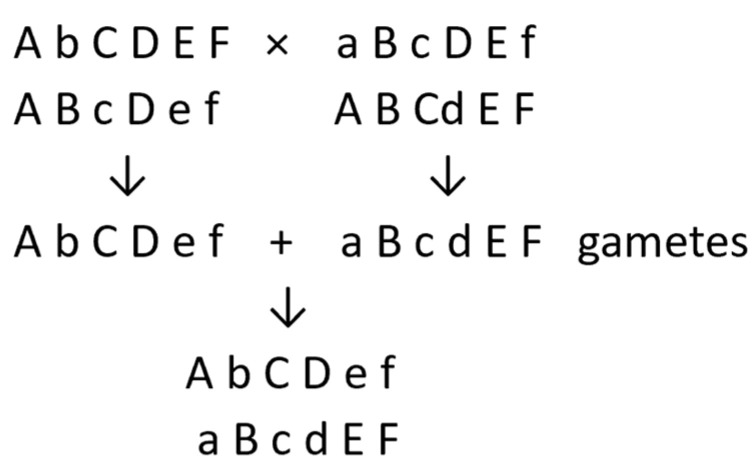
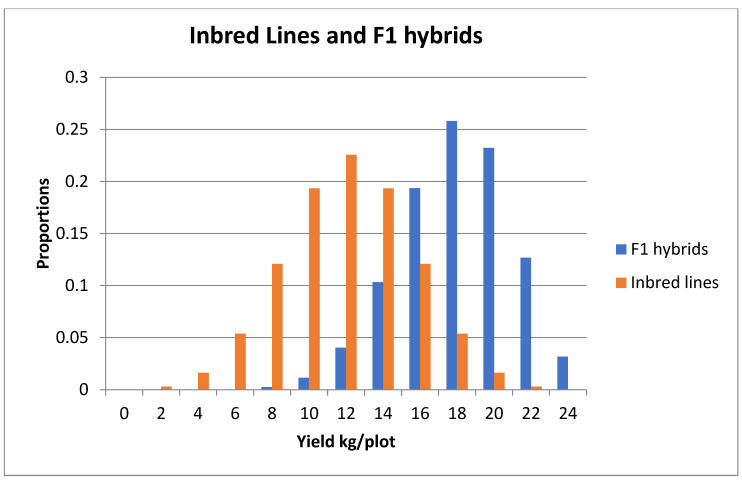
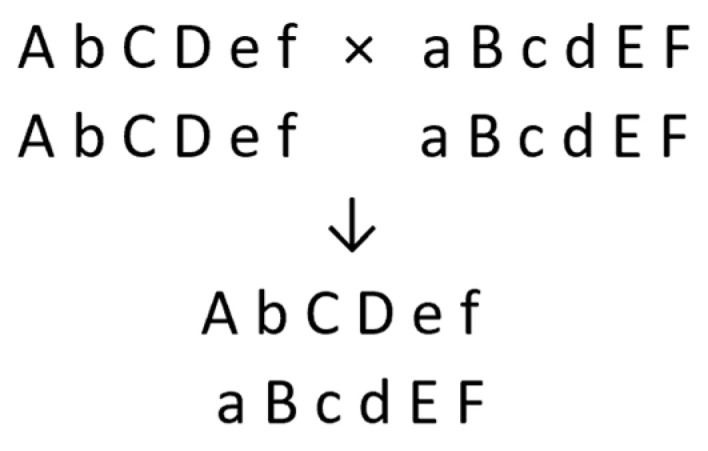
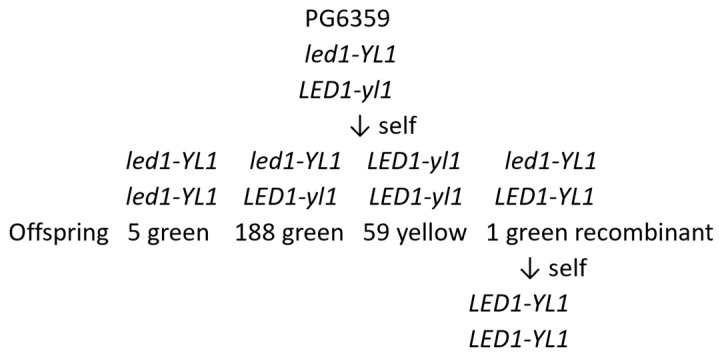
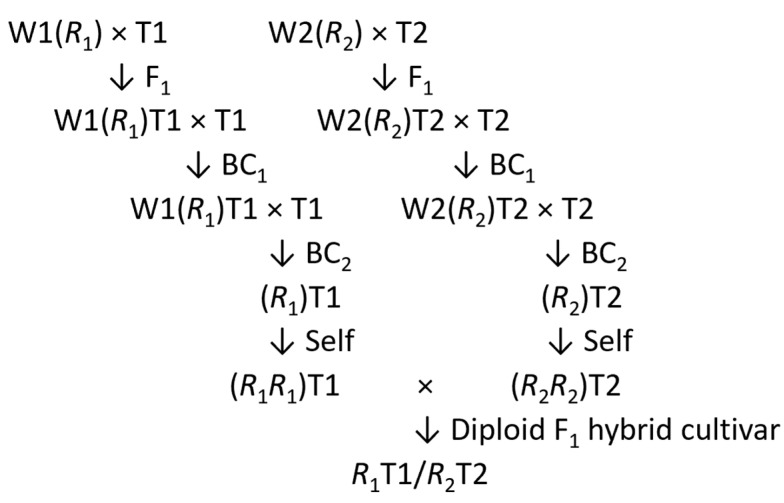
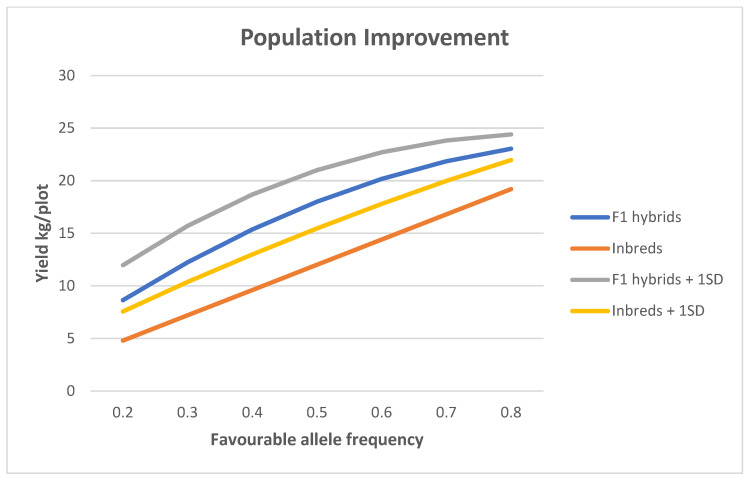
This paper reviews the progress and the way ahead in diploid F hybrid potato breeding by comparisons with expectations from the theory of inbreeding and crossbreeding, and experiences from other diploid outbreeding crops. Diploid potatoes can be converted from an outbreeding species, in which self-pollination is prevented by a gametophytic self-incompatibility system, into one where self-pollination is possible, either through a dominant self-incompatibility inhibitor gene () or knockout mutations in the incompatibility locus. As a result, diploid F hybrid breeding can be used to produce genetically uniform potato cultivars for propagation from true potato seeds by crossing two near-homozygous inbred lines, derived from a number of generations of self-pollination despite inbreeding depression. Molecular markers can be used to detect and remove deleterious recessive mutations of large effect, including those in tight repulsion linkage. Improvements to the inbred lines can be made by introducing and stacking genes and chromosome segments of large desirable effect from wild relatives by backcrossing. Improvements in quantitative traits require a number of cycles of inbreeding and crossbreeding. Seed production can be achieved by hand pollinations. F hybrid planting material can be delivered to farmers as true seeds or young plants, and mini-tubers derived from true seeds.
本文通过与近亲繁殖和杂交理论的预期以及其他二倍体异交作物的经验进行比较,回顾了二倍体F1杂交马铃薯育种的进展和未来方向。二倍体马铃薯可以从一个异交物种转变而来,在该物种中,配子体自交不亲和系统阻止了自花授粉,通过一个显性自交不亲和抑制基因()或不亲和位点的敲除突变,可使其变为能够自花授粉的物种。因此,二倍体F1杂交育种可用于通过杂交两个近纯合自交系来培育遗传上一致的马铃薯品种,以便从实生种子进行繁殖,尽管存在近亲繁殖衰退,但这两个自交系是经过多代自花授粉得到的。分子标记可用于检测和去除具有较大影响的有害隐性突变,包括那些处于紧密相斥连锁中的突变。通过回交从野生近缘种引入和叠加具有较大理想效应的基因和染色体片段,可以对自交系进行改良。数量性状的改良需要多个近亲繁殖和杂交循环。种子生产可以通过人工授粉实现。F1杂交种植材料可以以实生种子、幼苗或由实生种子衍生的微型薯块形式提供给农民。