Pedersen Helene, Fimland Marius Steiro, Schoenfeld Brad J, Iversen Vegard Moe, Cumming Kristoffer Toldnes, Jensen Susanne, Saeterbakken Atle Hole, Andersen Vidar
Faculty of Education, Arts and Sports, Western Norway University of Applied Sciences, PB 133, 6851, Sogndal, Norway.
Department of Neuromedicine and Movement Science, Faculty of Medicine and Health Sciences, Norwegian University of Science and Technology, Trondheim, Norway.
BMC Sports Sci Med Rehabil. 2022 May 14;14(1):87. doi: 10.1186/s13102-022-00481-7.
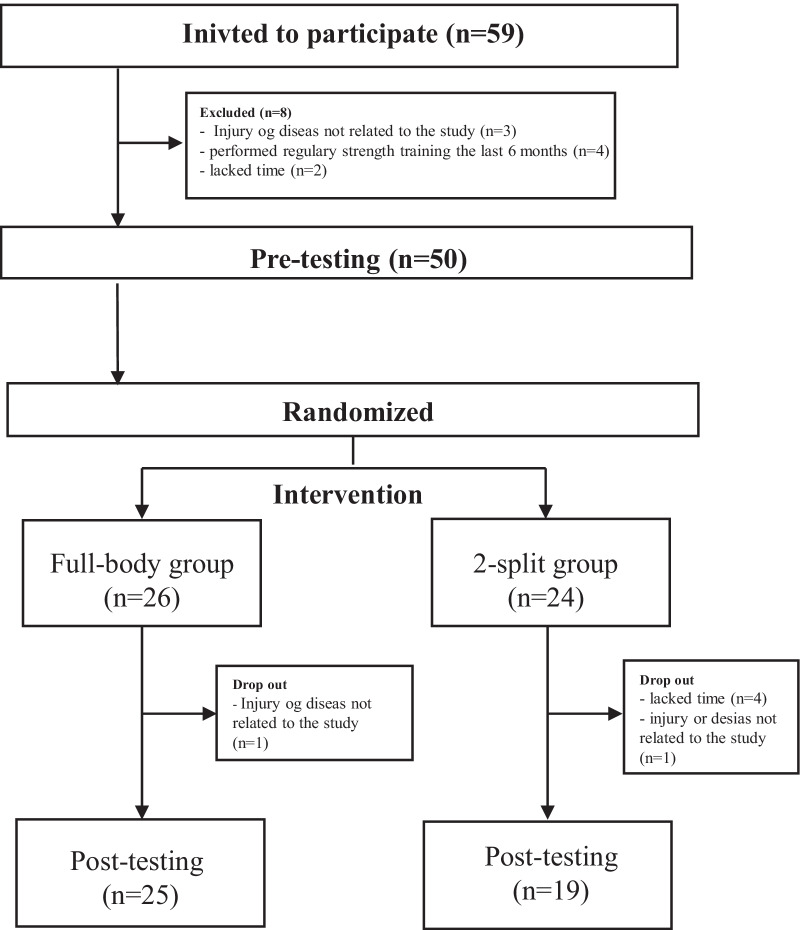
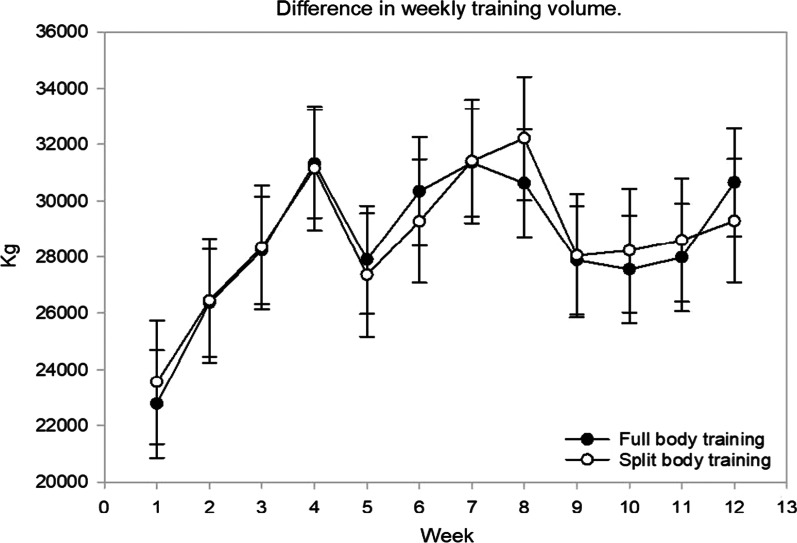
The aim of this study was to assess the efficacy of a 12-week upper/lower split- versus a full-body resistance training program on maximal strength, muscle mass and explosive characteristics. Fifty resistance untrained women were pair-matched according to baseline strength and randomized to either a full-body (FB) routine that trained all of the major muscle groups in one session twice per week, or a split-body program (SPLIT) that performed 4 weekly sessions (2 upper body and 2 lower body). Both groups performed the same exercises and weekly number of sets and repetitions. Each exercise was performed with three sets and 8-12 repetition maximum (RM) loading. Study outcomes included maximal strength, muscle mass, jump height and maximal power output.
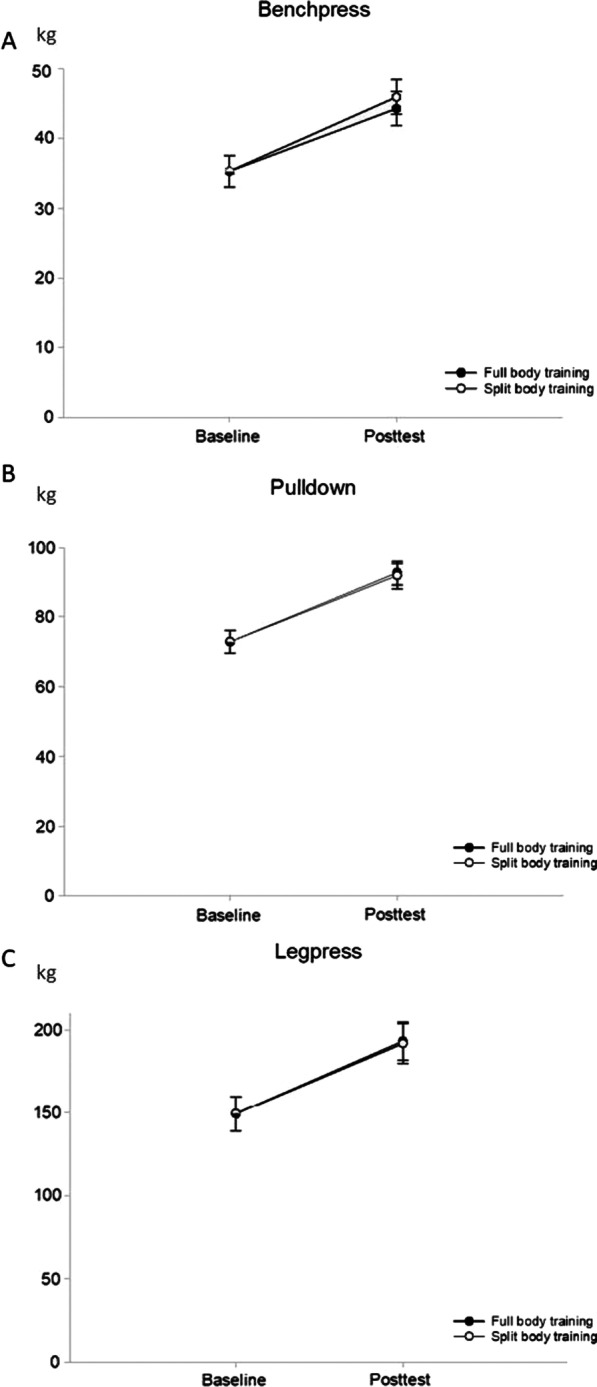
No between-group differences were found in any of the variables. However, both FB and SPLIT increased mean 1-RM from pre- to post-test in the bench press by 25.5% versus 30.0%, lat pulldown by 27.2% versus 26.0% and leg press by 29.2% versus 28.3%, respectively. Moreover, both FB and SPLIT increased jump height by 12.5% versus 12.5%, upper-body power by 20.3% versus 16.7% and muscle mass by 1.9% versus 1.7%, p < 0.01, respectively.
This study did not show any benefits for split-body resistance-training program compared to full-body resistance training program on measures of maximal- and explosive muscle strength, and muscle mass.
ISRCTN81548172, registered 15. February 2022.
本研究旨在评估一项为期12周的上下肢分开训练与全身阻力训练计划对最大力量、肌肉质量和爆发力特征的效果。50名未经训练的女性根据基线力量进行配对,并随机分为两组,一组进行全身(FB)训练,每周两次,每次训练所有主要肌肉群;另一组进行分体训练计划(SPLIT),每周训练4次(2次上肢和2次下肢)。两组进行相同的练习,每周的组数和重复次数相同。每个练习进行三组,采用8 - 12次最大重复量(RM)的负荷。研究结果包括最大力量、肌肉质量、跳跃高度和最大功率输出。
在任何变量中均未发现组间差异。然而,FB组和SPLIT组在测试前后的卧推平均1 - RM分别增加了25.5%和30.0%,下拉分别增加了27.2%和26.0%,腿举分别增加了29.2%和28.3%。此外,FB组和SPLIT组的跳跃高度分别增加了12.5%和12.5%,上肢力量分别增加了20.3%和16.7%,肌肉质量分别增加了1.9%和1.7%,p < 0.01。
与全身阻力训练计划相比,本研究未显示分体阻力训练计划在最大和爆发力肌肉力量以及肌肉质量方面有任何益处。
ISRCTN81548172,于2022年2月15日注册。