Department of Biomedical Sciences, Korea University College of Medicine, Seoul, Republic of Korea; Brain Convergence Research Center, Korea University College of Medicine, Seoul, Republic of Korea.
School of Psychology, University of Nottingham, Nottingham, UK.
Neuroimage Clin. 2022;35:103038. doi: 10.1016/j.nicl.2022.103038. Epub 2022 May 8.
Aphasia is one of the most common causes of post-stroke disabilities. As the symptoms and impact of post-stroke aphasia are heterogeneous, it is important to understand how topographical lesion heterogeneity in patients with aphasia is associated with different domains of language impairments. Here, we aim to provide a comprehensive overview of neuroanatomical basis in post-stroke aphasia through coordinate based meta-analysis of voxel-based lesion-symptom mapping studies.
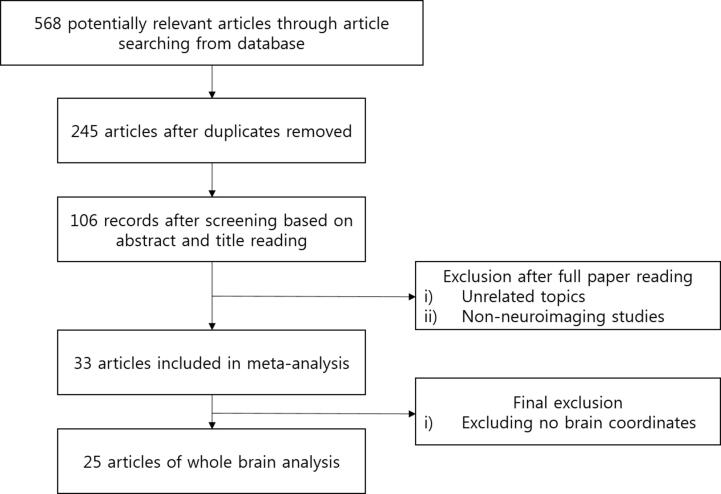
We performed a meta-analysis of lesion-symptom mapping studies in post-stroke aphasia. We obtained coordinate-based structural neuroimaging data for 2,007 individuals with aphasia from 25 studies that met predefined inclusion criteria.
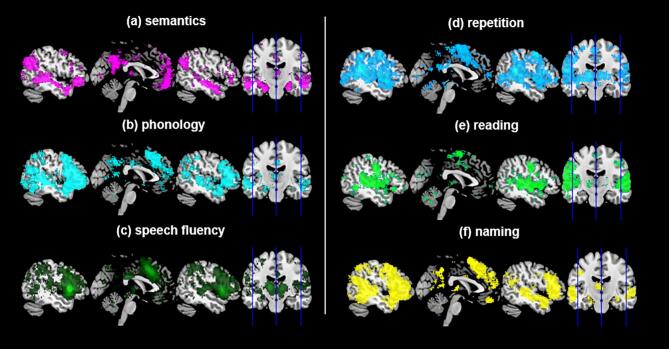
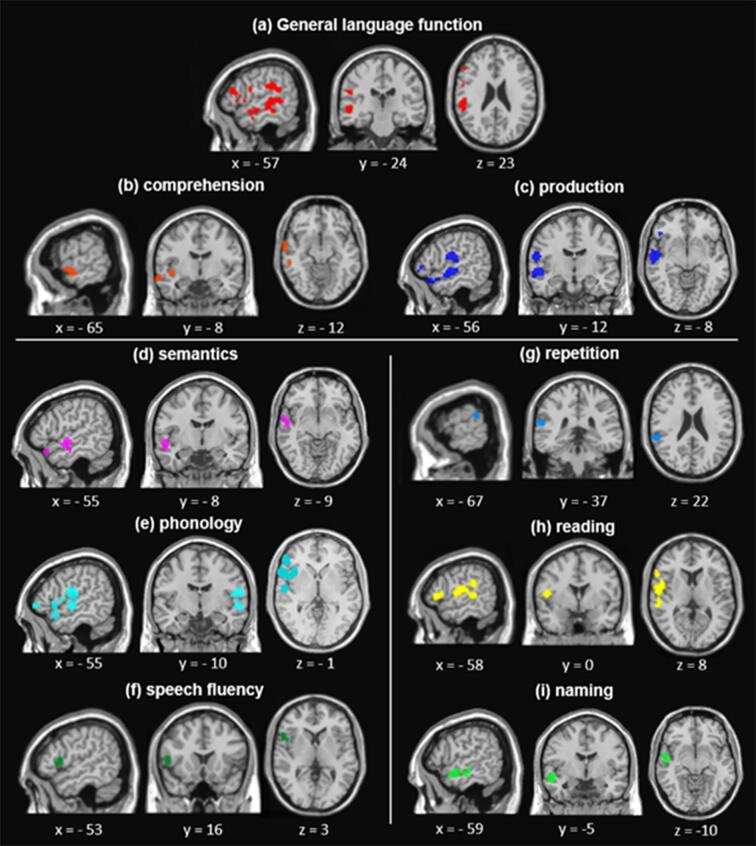
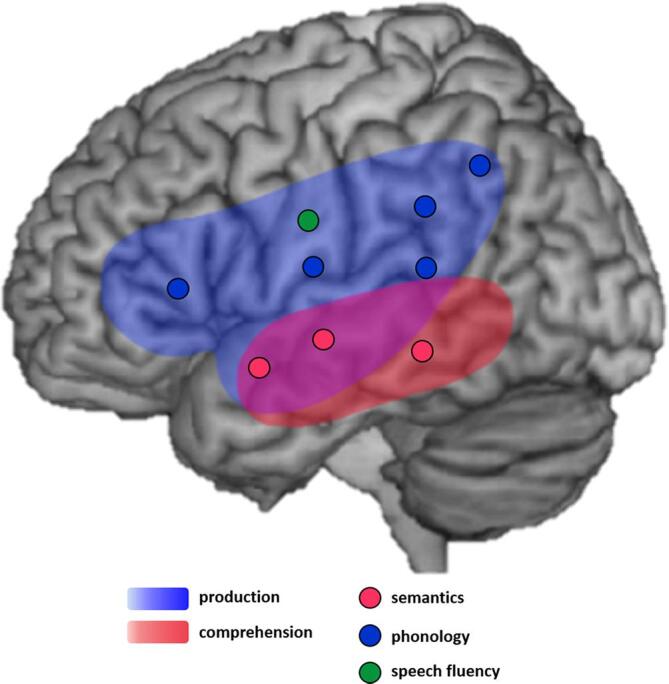
Overall, our results revealed that the distinctive patterns of lesions in aphasia are associated with different language functions and tasks. Damage to the insular-motor areas impaired speech with preserved comprehension and a similar pattern was observed when the lesion covered the insular-motor and inferior parietal lobule. Lesions in the frontal area severely impaired speaking with relatively good comprehension. The repetition-selective deficits only arise from lesions involving the posterior superior temporal gyrus. Damage in the anterior-to-posterior temporal cortex was associated with semantic deficits.
The association patterns of lesion topography and specific language deficits provide key insights into the specific underlying language pathways. Our meta-analysis results strongly support the dual pathway model of language processing, capturing the link between the different symptom complexes of aphasias and the different underlying location of damage.
失语症是中风后残疾的最常见原因之一。由于中风后失语症的症状和影响具有异质性,因此了解失语症患者的局灶性病变异质性与语言损伤的不同领域之间的关系非常重要。在这里,我们旨在通过基于体素的病变-症状映射研究的基于坐标的荟萃分析,提供中风后失语症的神经解剖学基础的综合概述。
我们对中风后失语症的病变-症状映射研究进行了荟萃分析。我们从符合预定纳入标准的 25 项研究中获得了 2007 名失语症患者的基于坐标的结构神经影像学数据。
总体而言,我们的结果表明,失语症中不同的病变模式与不同的语言功能和任务相关。岛叶-运动区的损伤会导致言语受损但理解能力保留,当病变覆盖岛叶-运动区和下顶叶时,会出现类似的模式。额叶损伤会严重影响言语表达,但理解能力相对较好。只有当病变涉及后上颞叶时才会出现重复选择性缺陷。从前到后的颞叶皮层损伤与语义缺陷有关。
病变部位和特定语言缺陷的关联模式为特定的语言通路提供了关键的见解。我们的荟萃分析结果强烈支持语言处理的双通路模型,该模型捕捉到了失语症不同症状群与损伤的不同潜在位置之间的联系。