711th Human Performance Wing, Air Force Research Laboratory, Wright Patterson Air Force Base, Dayton, OH, USA.
Integrative Health and Performance Sciences Division, UES, Inc., Dayton, OH, USA.
Part Fibre Toxicol. 2022 May 15;19(1):36. doi: 10.1186/s12989-022-00471-0.
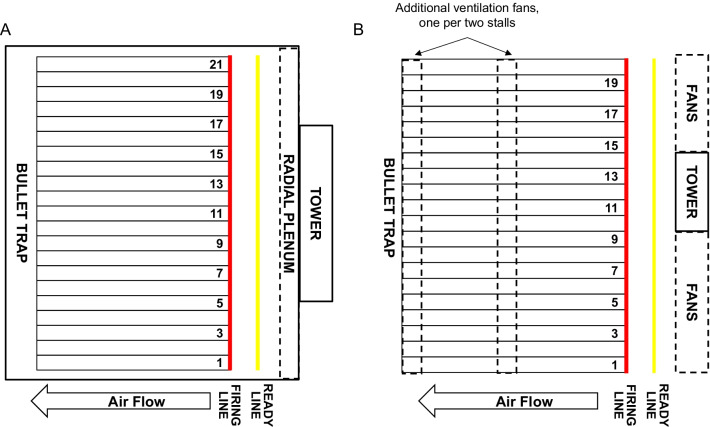
Since the introduction of copper based, lead-free frangible (LFF) ammunition to Air Force small arms firing ranges, instructors have reported symptoms including chest tightness, respiratory irritation, and metallic taste. These symptoms have been reported despite measurements determining that instructor exposure does not exceed established occupational exposure limits (OELs). The disconnect between reported symptoms and exposure limits may be due to a limited understanding of LFF firing byproducts and subsequent health effects. A comprehensive characterization of exposure to instructors was completed, including ventilation system evaluation, personal monitoring, symptom tracking, and biomarker analysis, at both a partially enclosed and fully enclosed range.
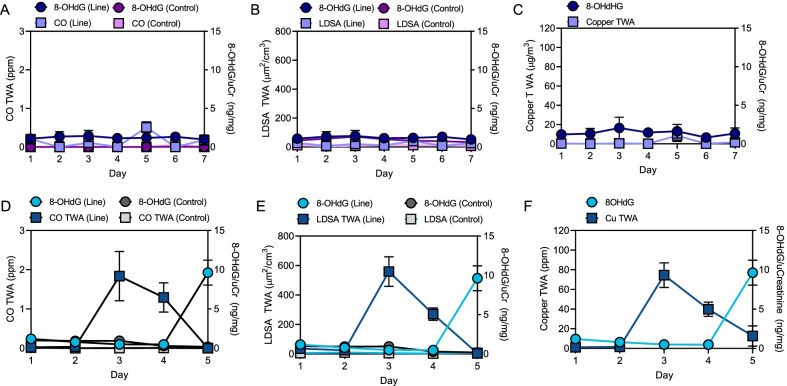
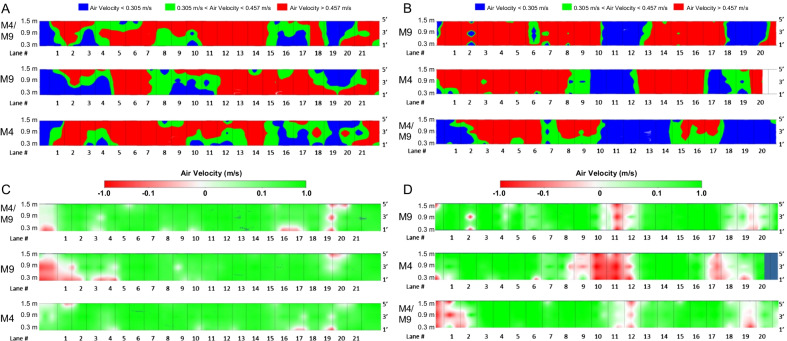
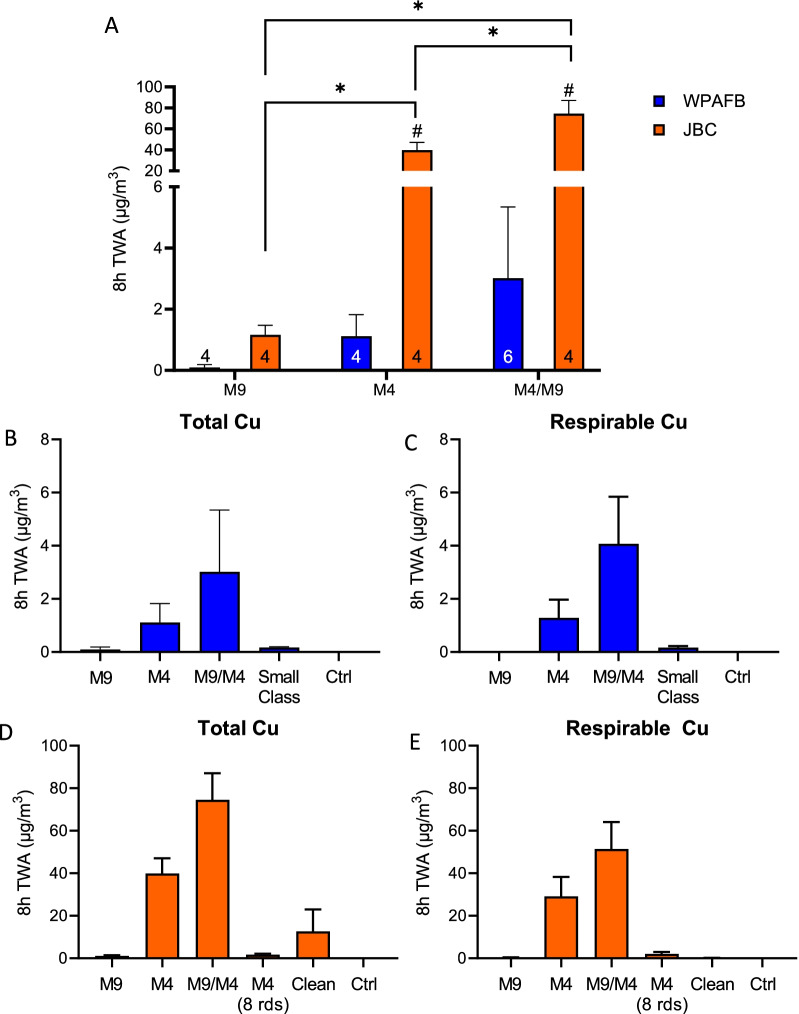
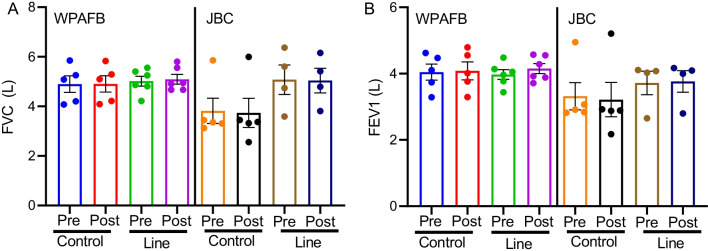
Instructors reported symptoms more frequently after M4 rifle classes compared to classes firing only the M9 pistol. Ventilation measurements demonstrated that airflow velocities at the firing line were highly variable and often outside established standards at both ranges. Personal breathing zone air monitoring showed exposure to carbon monoxide, ultrafine particulate, and metals. In general, exposure to instructors was higher at the partially enclosed range compared to the fully enclosed range. Copper measured in the breathing zone of instructors, on rare occasions, approached OELs for copper fume (0.1 mg/m). Peak carbon monoxide concentrations were 4-5 times higher at the partially enclosed range compared to the enclosed range and occasionally exceeded the ceiling limit (125 ppm). Biological monitoring showed that lung function was maintained in instructors despite respiratory symptoms. However, urinary oxidative stress biomarkers and urinary copper measurements were increased in instructors compared to control groups.
Consistent with prior work, this study demonstrates that symptoms still occurred despite exposures below OELs. Routine monitoring of symptoms, urinary metals, and oxidative stress biomarkers can help identify instructors who are particularly affected by exposures. These results can assist in guiding protective measures to reduce exposure and protect instructor health. Further, a longitudinal study is needed to determine the long-term health consequences of LFF firing emissions exposure.
自从在空军轻武器射击场引入无铅易碎(LFF)的铜基弹药以来,教练报告出现了胸闷、呼吸刺激和金属味等症状。尽管测量结果表明教练的暴露量未超过既定职业暴露限值(OEL),但仍报告了这些症状。报告的症状与暴露限值之间的脱节可能是由于对 LFF 射击副产物及其随后的健康影响的理解有限。在一个部分封闭和完全封闭的范围内,对教练进行了全面的暴露评估,包括通风系统评估、个人监测、症状跟踪和生物标志物分析。
与仅发射 M9 手枪的课程相比,M4 步枪课程后,教练报告的症状更为频繁。通风测量表明,两个范围内的射击线气流速度变化很大,并且经常不符合既定标准。个人呼吸区空气监测显示接触到一氧化碳、超细颗粒和金属。一般来说,部分封闭范围内的教练暴露量高于完全封闭范围内的教练暴露量。在教练的呼吸区中测量到的铜,在极少数情况下,接近铜烟的 OEL(0.1mg/m)。与封闭范围相比,部分封闭范围内的峰值一氧化碳浓度高 4-5 倍,偶尔超过上限(125ppm)。生物监测表明,尽管有呼吸道症状,但教练的肺功能仍保持正常。然而,与对照组相比,教练的尿液氧化应激生物标志物和尿液铜测量值升高。
与先前的工作一致,本研究表明,尽管暴露量低于 OEL,但仍会出现症状。常规监测症状、尿液中的金属和氧化应激生物标志物可以帮助识别受暴露影响特别大的教练。这些结果可以帮助指导采取保护措施,以减少暴露并保护教练的健康。此外,还需要进行一项纵向研究,以确定 LFF 射击排放暴露的长期健康后果。