Potruch Assaf, Schwartz Asaf, Ilan Yaron
Department of Medicine, Faculty of Medicine, Hebrew University and Hadassah Medical Center, Jerusalem, Israel.
Department of Medicine, Faculty of Medicine, Hebrew University and Hadassah Medical Center, Kiryat Hadassah, P.O.B 12000, Jerusalem IL-91120, Israel.
Therap Adv Gastroenterol. 2022 May 9;15:17562848221094214. doi: 10.1177/17562848221094214. eCollection 2022.
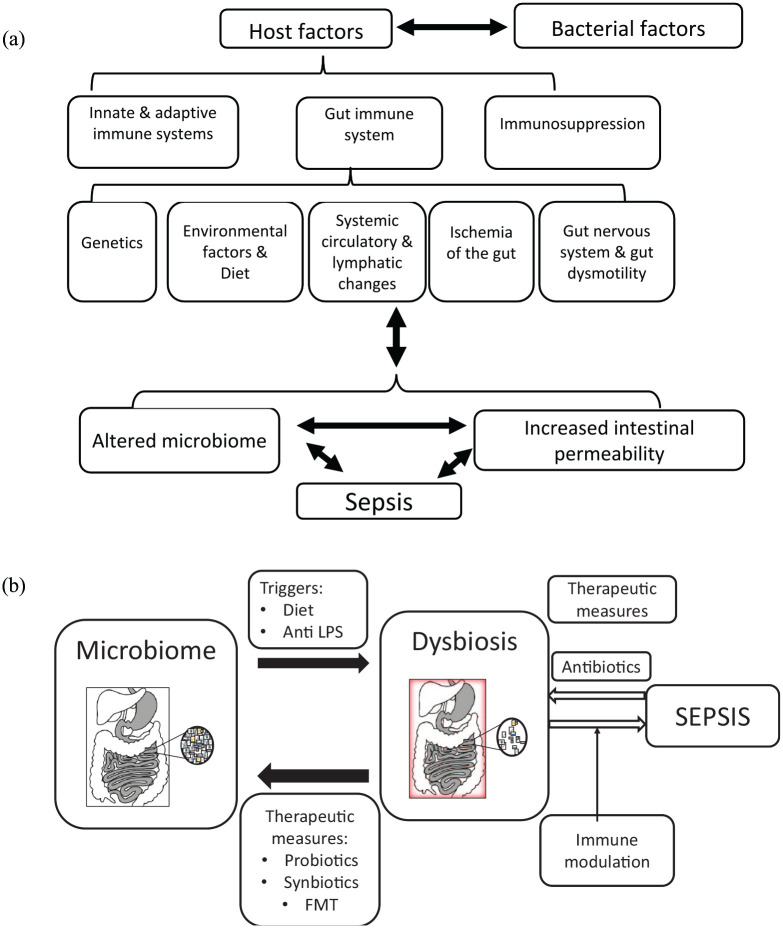
Sepsis is a leading cause of death in critically ill patients, primarily due to multiple organ failures. It is associated with a systemic inflammatory response that plays a role in the pathogenesis of the disease. Intestinal barrier dysfunction and bacterial translocation (BT) play pivotal roles in the pathogenesis of sepsis and associated organ failure. In this review, we describe recent advances in understanding the mechanisms by which the gut microbiome and BT contribute to the pathogenesis of sepsis. We also discuss several potential treatment modalities that target the microbiome as therapeutic tools for patients with sepsis.
脓毒症是危重症患者死亡的主要原因,主要是由于多器官功能衰竭。它与全身炎症反应相关,而全身炎症反应在该疾病的发病机制中起作用。肠道屏障功能障碍和细菌易位在脓毒症及相关器官衰竭的发病机制中起关键作用。在本综述中,我们描述了在理解肠道微生物群和细菌易位促进脓毒症发病机制方面的最新进展。我们还讨论了几种潜在的治疗方式,这些方式将微生物群作为脓毒症患者的治疗工具。